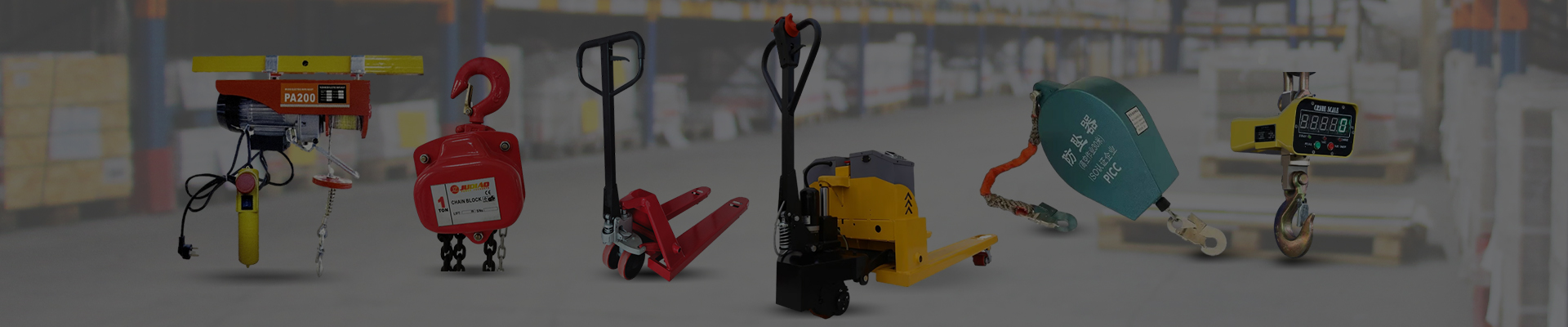


When we think of powerful lifting equipment, bulky machines probably come to mind. But the compact electric hoist is quietly changing that narrative by combining efficiency with portability. Globally, industries from manufacturing to humanitarian relief increasingly rely on this appliance — thanks to its space-saving design and surprisingly strong lifting capacity. Understanding this equipment is crucial because it’s not only reshaping workflows but also playing a role in sustainable practices and safer operations worldwide.
Industry reports suggest that the global hoist market—which includes electric, manual, and pneumatic types—is expected to grow steadily, with a CAGR of about 5.8% through 2028, according to Statista. This growth isn’t just because companies want the latest gadgetry. Instead, it reflects real pressures: tighter spaces in urban work sites, the need for rapid deployment in disaster zones, and ongoing safety regulations that demand reliable lifting solutions.
Consider, for instance, the construction sector where space is always a premium or humanitarian operations responding to disasters in rough terrains. They both face overlapping challenges: How do you safely lift heavy loads without massive cranes? That’s where the compact electric hoist fills the gap — offering strength without the footprint.
Simply put, a compact electric hoist is a small, electrically powered lifting device designed to lift and lower loads efficiently while saving space. Powered by a motor rather than manual effort, it integrates neatly into confined areas — elevators, warehouses, factories, or even remote field locations.
Its relevance today ties closely with modern industry’s push toward automation, operator safety, and miniaturization. In humanitarian contexts, for example, it aids in lifting heavy supplies onto trucks or structures quickly without bulky setup, streamlining relief efforts.
Many compact hoists are made with rugged steel frames and weather-resistant coatings—necessary for standing up to industrial dust, moisture, and heavy use.
Despite their size, these units often handle between 250 kg up to 2,000 kg, striking a balance between portability and power.
Advanced models feature adjustable speeds and smooth braking to allow for delicate positioning in assembly lines or maintenance tasks.
Many come with the option to connect to standard mains electricity, some even have battery variants. This flexibility makes them viable from established factories to off-grid sites.
Limit switches, emergency stop buttons, and overload protection systems are standard. It’s a one-two punch against mishaps.
Mini takeaway: The blend of strength, precision, safety, and durability in a compact design is what sets these hoists apart — making them the Swiss Army knife of lifting in tight spaces.
From sleek European manufacturing floors to the rugged landscapes of Southeast Asia, compact electric hoists serve diverse needs. In post-disaster relief, for instance, organizations like the UN appreciate these hoists for their ability to lift palletized aid quickly where cranes aren’t practical.
In the automotive sector of Germany or Japan, they assist in precision assembly of parts — tasks that demand repeatable accuracy without wasting factory floor space. Meanwhile, mining operations in South America and Australia incorporate them into maintenance routines where safety is paramount.
Interestingly, small and medium enterprises (SMEs) have adopted compact electric hoists broadly because these machines deliver industrial power without requiring a whole rig crew, which reduces labor costs significantly.
| Specification | Typical Range / Feature |
|---|---|
| Load Capacity | 250 kg – 2,000 kg |
| Lift Height | 3 m to 30 m |
| Motor Power | 0.5 kW – 2.5 kW |
| Power Source | AC Mains or Battery |
| Control Options | Wired Remote, Wireless Remote |
| Safety Features | Overload Protection, Emergency Stop |
It’s tempting to dismiss small equipment as “toy-sized” in heavy industries — but that misses the point entirely. Compact electric hoists bring a slew of benefits:
And let's not forget the less tangible but critical aspects: peace of mind for operators, ensured worker dignity through safety, and innovation that signals trustworthiness in suppliers and sites.
We’re seeing a few exciting developments that promise to elevate compact electric hoists beyond their current role:
It feels like the industry is on the cusp of transforming these machines from simple helpers into integral smart devices on the factory floor and beyond.
Despite the benefits, challenges remain. Battery-powered versions sometimes struggle with runtime; operators may need specialized training for certain models; and initial doubts around load accuracy in compact devices can slow adoption. But innovation is answering those concerns:
Manufacturers and end-users collaborating is key — often software updates or custom attachments arrive just when a tricky application shows up.
| Brand | Load Capacity (kg) | Price Range ($) | Battery Option | Warranty |
|---|---|---|---|---|
| QYJuli | 500 – 2,000 | 1,200 – 4,500 | Yes | 3 Years |
| LiftWorks | 250 – 1,500 | 900 – 3,300 | No | 2 Years |
| CompactLift | 300 – 1,800 | 1,000 – 3,800 | Yes | 3 Years |
A1: Most compact electric hoists manage loads between 250 kg and 2,000 kg, ideal for light to medium industrial tasks. For heavier lifting, larger hoists or cranes might be necessary, but for many warehouses and factories, a well-chosen compact hoist covers all the bases.
A2: Absolutely. Many models feature rugged construction and weatherproof components to handle industrial dust, rain, and temperature variations. However, it’s vital to verify the IP rating and manufacturer recommendations for specific conditions.
A3: Electric operation reduces human strain and decreases the risk of lifting errors or accidents. Built-in safety features—like overload sensors and emergency stops—add additional layers of protection not present in manual devices.
A4: While battery-powered hoists offer excellent flexibility in areas without mains power, runtime may be limited by battery size. Advances in battery technology and quick-change packs are making this increasingly viable.
A5: Reputable manufacturers like QYJuli provide a range of options with warranties and after-sales support. Always check vendor reviews, certifications, and service policies.
At the intersection of innovation and practicality lies the compact electric hoist, a tool that is quietly revolutionizing how industries and relief agencies lift and move heavy loads in tight spaces. From cost savings and safety gains to future tech that promises greener and smarter solutions, the compact hoist is a key actor in today’s industrial and humanitarian playbook. Curious to see how it can fit your project? Visit our website and explore the lineup.


 Afrikaans
 Albanian
 Amharic
 Arabic
 Armenian
 Azerbaijani
 Basque
 Belarusian
 Bengali
 Bosnian
 Bulgarian
 Catalan
 Cebuano
 China
China
 China (Taiwan)
 Corsican
 Croatian
 Czech
Czech
 Danish
 Dutch
Dutch
 Esperanto
 Estonian
 Finnish
 French
 Frisian
 Galician
 Georgian
 German
 Greek
Greek
 Gujarati
 Haitian Creole
 Hausa
Hausa
 Hawaiian
 Hebrew
 Hindi
Hindi
 Miao
Miao
 Hungarian
 Icelandic
 Igbo
Igbo
 Indonesian
 Irish
Irish
 Italian
 Japanese
 Javanese
 Kannada
 Kazakh
 Khmer
Khmer
 Rwandese
 Korean
 Kurdish
 Kyrgyz
 Lao
Lao
 Latin
Latin
 Latvian
 Lithuanian
 Luxembourgish
 Macedonian
 Malgashi
 Malay
Malay
 Malayalam
 Maltese
 Maori
Maori
 Marathi
 Mongolian
 Myanmar
 Nepali
 Norwegian
 Norwegian
 Occitan
 Pashto
 Persian
 Polish
 Portuguese
 Punjabi
 Romanian
 Russian
 Samoan
 Scottish Gaelic
 Serbian
 Sesotho
 Shona
Shona
 Sindhi
 Sinhala
 Slovak
 Slovenian
 Somali
 Spanish
 Sundanese
 Swahili
 Swedish
 Tagalog
 Tajik
Tajik
 Tamil
Tamil
 Tatar
Tatar
 Telugu
 Thai
Thai
 Turkish
 Turkmen
 Ukrainian
 Urdu
Urdu
 Uighur
 Uzbek
Uzbek
 Vietnamese
 Welsh
Welsh
 Bantu
Bantu
 Yiddish
 Yoruba
 Zulu
Zulu
 English