

When handling heavy machinery, automotive engines, or industrial equipment, having a reliable lifting solution is non-negotiable. A 3000 lb chain hoist provides the perfect balance of power and portability, allowing operators to lift substantial loads with minimal physical effort and maximum safety. Whether you are equipping a professional workshop or a home garage, understanding the technical nuances of these hoists is key to operational efficiency. In this comprehensive guide, we will explore the features, safety standards, and best practices for utilizing a high-capacity chain hoist to optimize your workflow.
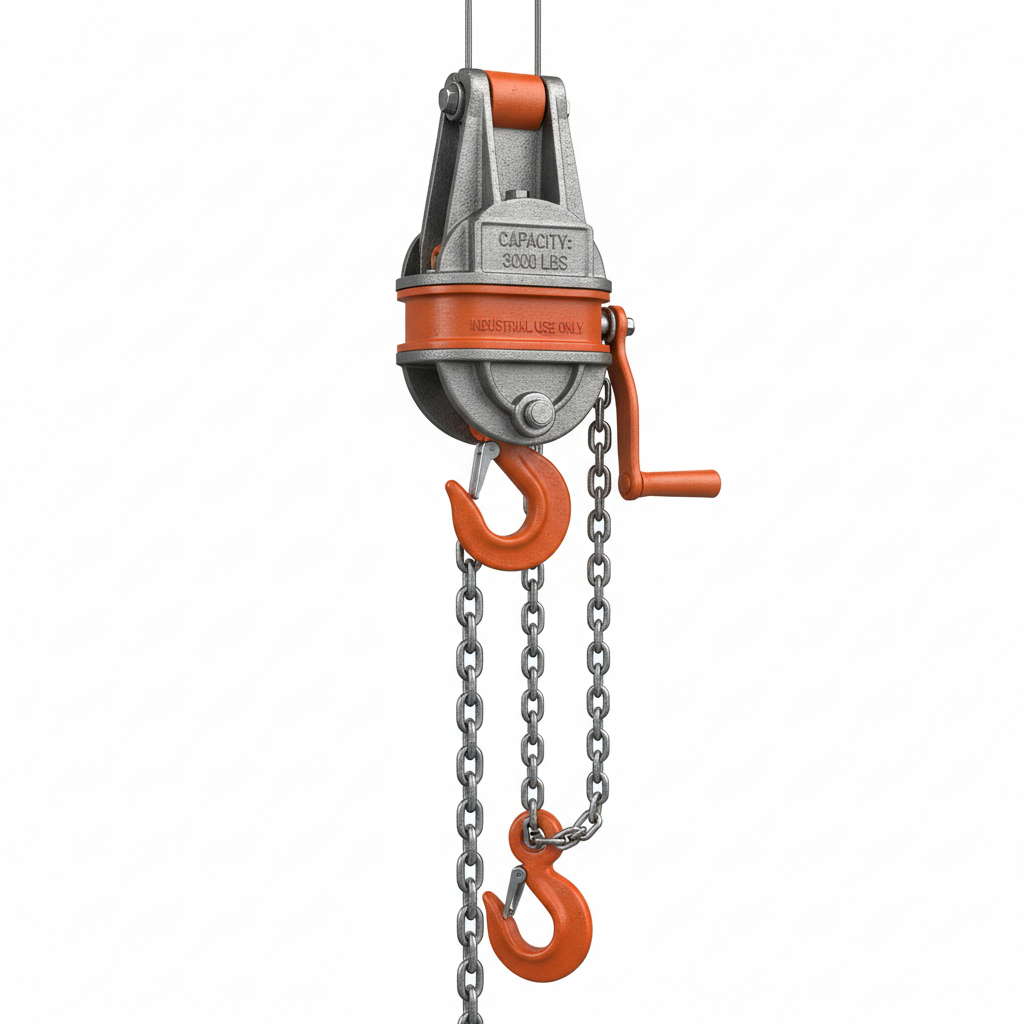
The primary appeal of a 3000 lb chain hoist lies in its mechanical advantage. By utilizing a series of gears and a high-tensile chain, these devices convert a small amount of input force into a massive lifting capacity. This not only reduces worker fatigue but also significantly lowers the risk of workplace injuries associated with manual lifting. Modern hoists are engineered with load-bearing brakes that prevent the load from slipping, ensuring that once a heavy object is raised, it stays securely in place until the operator decides to lower it. This stability is critical in precision environments like engine swaps or assembly lines.
Key Highlights: High-tensile alloy steel construction, automatic braking systems for enhanced safety, and a compact design that fits into tight industrial spaces without compromising on power.
Depending on your project frequency and environment, you may choose between a manual chain fall or an electric version. Manual hoists are prized for their independence from power sources and lower maintenance costs, making them ideal for outdoor sites. Conversely, electric hoists offer unmatched speed and efficiency for high-volume production. When selecting a 3000 lb chain hoist, it is essential to weigh the cost of installation against the time saved during operation. The following table breaks down the critical differences to help you decide.
Safety must always come first when dealing with weights up to 1.5 tons. Before utilizing your 3000 lb chain hoist, perform a thorough pre-lift inspection. Check the chain for signs of wear, twisting, or corrosion. Ensure that the hook is not bent and that the safety latch is fully functional. Never exceed the rated capacity of the hoist; overloading can lead to catastrophic mechanical failure. Additionally, ensure that the load is properly balanced and centered to prevent "side-loading," which can pull the hoist off its axis and cause the load to swing dangerously.
The versatility of the 3000 lb chain hoist makes it a staple in several key industries. In automotive repair, it is used for pulling engines and transmissions from vehicle chassis. In construction, it helps in positioning steel beams or HVAC units in tight areas. Furthermore, in manufacturing plants, these hoists are often integrated into trolleys for moving heavy molds or dies across the shop floor. Its ability to provide precise vertical movement makes it indispensable for any task where accuracy and strength are required simultaneously.
Common Use-Cases:
• Engine and Transmission Removal
• Industrial Mold Positioning
• Small-scale Construction Lifting
• Warehouse Equipment Maintenance
To ensure you are purchasing a hoist that meets your specific needs, it is important to look beyond just the lifting capacity. Factors such as the lift height, chain grade, and gear ratio determine how the hoist performs under load. A high-quality 3000 lb chain hoist should be made from Grade 80 or Grade 100 alloy steel for maximum durability and fatigue resistance. Below are the standard technical specifications typically found in professional-grade models.
Investing in a high-quality 3000 lb chain hoist is more than just a purchase; it is a commitment to workplace safety and operational excellence. By choosing a hoist that combines robust materials with intuitive safety mechanisms, you ensure that your heavy-lifting tasks are handled with precision and ease. Whether you opt for the simplicity of a manual hoist or the speed of an electric one, always prioritize certified equipment and adhere to strict maintenance schedules to maximize the lifespan of your investment.
A 3000 lb chain hoist should undergo a visual inspection before every single lift to ensure there are no obvious cracks, twists, or worn links. Beyond this, a comprehensive professional inspection is recommended every six months or annually, depending on the frequency of use. This involves checking the brake functionality, lubricating the gear assembly, and verifying the load-bearing integrity of the hooks. Regular maintenance prevents unexpected failures and extends the operational life of the device significantly.
Absolutely not. You should never exceed the rated capacity (WLL - Working Load Limit) of any lifting device. Overloading a 3000 lb chain hoist can lead to the chain snapping or the brake failing, which could result in severe injury or death. If your loads frequently exceed 3,000 lbs, we strongly recommend upgrading to a 5,000 lb or higher capacity hoist to maintain a safe margin of error and comply with OSHA or regional safety regulations.
In many industrial contexts, the terms are used interchangeably, but technically, a chain block is a type of manual chain hoist. A "chain hoist" is a broader category that includes both manual (chain blocks) and powered (electric) versions. Both utilize a chain and gear system to lift loads, but electric hoists use a motor to drive the chain, whereas a chain block relies on the user pulling a hand chain to rotate the internal gears. Both are excellent tools when selected based on the specific requirements of the job site.
To prevent rust and ensure smooth operation, the chain should be cleaned and lubricated regularly. Use a high-quality industrial lubricant or a specialized chain oil that penetrates the links. Avoid over-lubricating, as excess oil can attract dust and grit, which may act as an abrasive and wear down the chain over time. Store your hoist in a dry, climate-controlled environment when not in use, especially if it is used in coastal or high-humidity areas. Proper lubrication not only prevents rust but also reduces the friction during lifting, making the process smoother.


 Afrikaans
 Albanian
 Amharic
 Arabic
 Armenian
 Azerbaijani
 Basque
 Belarusian
 Bengali
 Bosnian
 Bulgarian
 Catalan
 Cebuano
 China
China
 China (Taiwan)
 Corsican
 Croatian
 Czech
Czech
 Danish
 Dutch
Dutch
 Esperanto
 Estonian
 Finnish
 French
 Frisian
 Galician
 Georgian
 German
 Greek
Greek
 Gujarati
 Haitian Creole
 Hausa
Hausa
 Hawaiian
 Hebrew
 Hindi
Hindi
 Miao
Miao
 Hungarian
 Icelandic
 Igbo
Igbo
 Indonesian
 Irish
Irish
 Italian
 Japanese
 Javanese
 Kannada
 Kazakh
 Khmer
Khmer
 Rwandese
 Korean
 Kurdish
 Kyrgyz
 Lao
Lao
 Latin
Latin
 Latvian
 Lithuanian
 Luxembourgish
 Macedonian
 Malgashi
 Malay
Malay
 Malayalam
 Maltese
 Maori
Maori
 Marathi
 Mongolian
 Myanmar
 Nepali
 Norwegian
 Norwegian
 Occitan
 Pashto
 Persian
 Polish
 Portuguese
 Punjabi
 Romanian
 Russian
 Samoan
 Scottish Gaelic
 Serbian
 Sesotho
 Shona
Shona
 Sindhi
 Sinhala
 Slovak
 Slovenian
 Somali
 Spanish
 Sundanese
 Swahili
 Swedish
 Tagalog
 Tajik
Tajik
 Tamil
Tamil
 Tatar
Tatar
 Telugu
 Thai
Thai
 Turkish
 Turkmen
 Ukrainian
 Urdu
Urdu
 Uighur
 Uzbek
Uzbek
 Vietnamese
 Welsh
Welsh
 Bantu
Bantu
 Yiddish
 Yoruba
 Zulu
Zulu
 English