

When tackling lifting tasks in industrial settings, construction sites, or even workshops, a reliable and efficient lifting solution is crucial. A 30 ft chain hoist provides the reach and lifting capacity needed for a wide range of applications. This article delves into the functionalities, benefits, safety considerations, and common applications of a 30 ft chain hoist, empowering you to make informed decisions for your lifting needs. Choosing the right hoist can significantly improve efficiency and ensure a safe working environment.
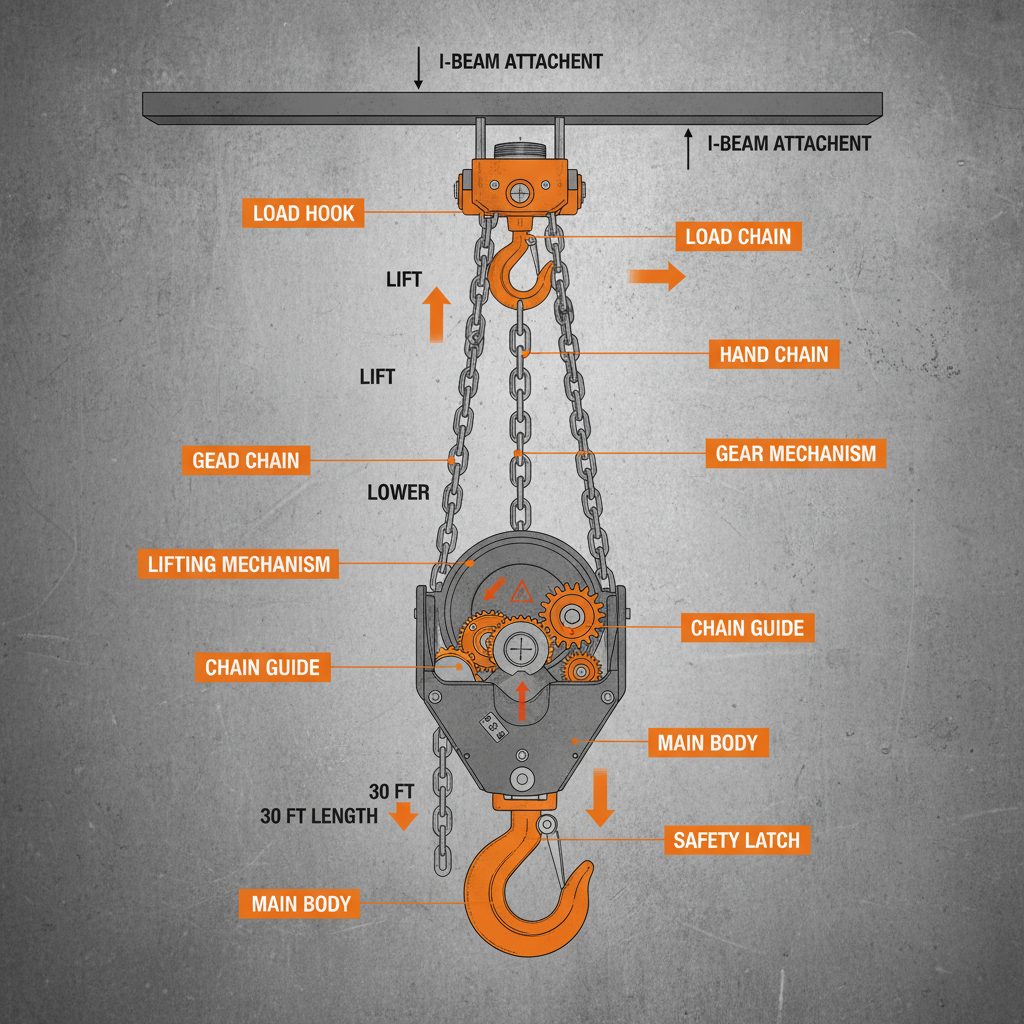
A 30 ft chain hoist, as the name suggests, utilizes a chain mechanism to lift heavy loads vertically. The 30-foot chain length provides a substantial lifting height, making it ideal for applications where considerable vertical reach is required. These hoists are known for their durability, reliability, and relative ease of maintenance. They are commonly available in various lifting capacities, ranging from a few tons to several tons, to accommodate diverse load requirements. Furthermore, many modern chain hoists incorporate features like overload protection and precise lifting control, enhancing both safety and efficiency. Considering a chain hoist is a smart investment for any lifting operation.
Key Highlights: Durable construction ensures long-lasting performance. Variable lifting capacities cater to diverse load requirements. Precise lifting control enhances operational efficiency and safety.
Choosing the correct lifting capacity is paramount for safe operation. A 30 ft chain hoist’s capacity is often specified in tons or kilograms. It’s critical to always select a hoist with a capacity that exceeds the weight of the load being lifted, accounting for any potential dynamic loads or impact forces. The chain grade is also a crucial factor. Higher grade chains offer greater strength and durability. Common chain grades include G80 and G100, with G100 being the stronger option. The chain's Working Load Limit (WLL) must never be exceeded. Utilizing a hoist with an insufficient capacity or a lower-grade chain can lead to catastrophic failure and serious injury.
Chain Grade Information:
• G80 Chain: Suitable for general lifting applications.
• G100 Chain: Ideal for heavier loads and demanding environments.
• Always refer to the manufacturer's specifications for WLL.
When compared to other lifting solutions like wire rope hoists or lever hoists, a 30 ft chain hoist offers unique advantages. Wire rope hoists, while capable of handling very heavy loads, can be more susceptible to wear and tear and require more frequent maintenance. Lever hoists are ideal for short lifts and positioning, but lack the vertical reach of a chain hoist. A chain hoist provides a balance of lifting capacity, durability, and operational ease, making it suitable for a wider range of applications. The 30 ft chain length further extends its versatility compared to hoists with shorter lift heights. Consider your specific lifting requirements and environmental conditions when selecting the optimal solution. Qyjuli offers a comprehensive range of lifting solutions to meet diverse needs.
A 30 ft chain hoist finds applications in diverse industries. In construction, they are used for lifting materials to higher floors. Manufacturing facilities utilize them for moving heavy machinery and components. Workshops employ them for engine lifts and other heavy tasks. Warehouses benefit from their ability to elevate goods for storage and retrieval. Even in entertainment settings, chain hoists are used for rigging and stage equipment. Properly maintained, a 30 ft chain hoist will provide years of reliable service.
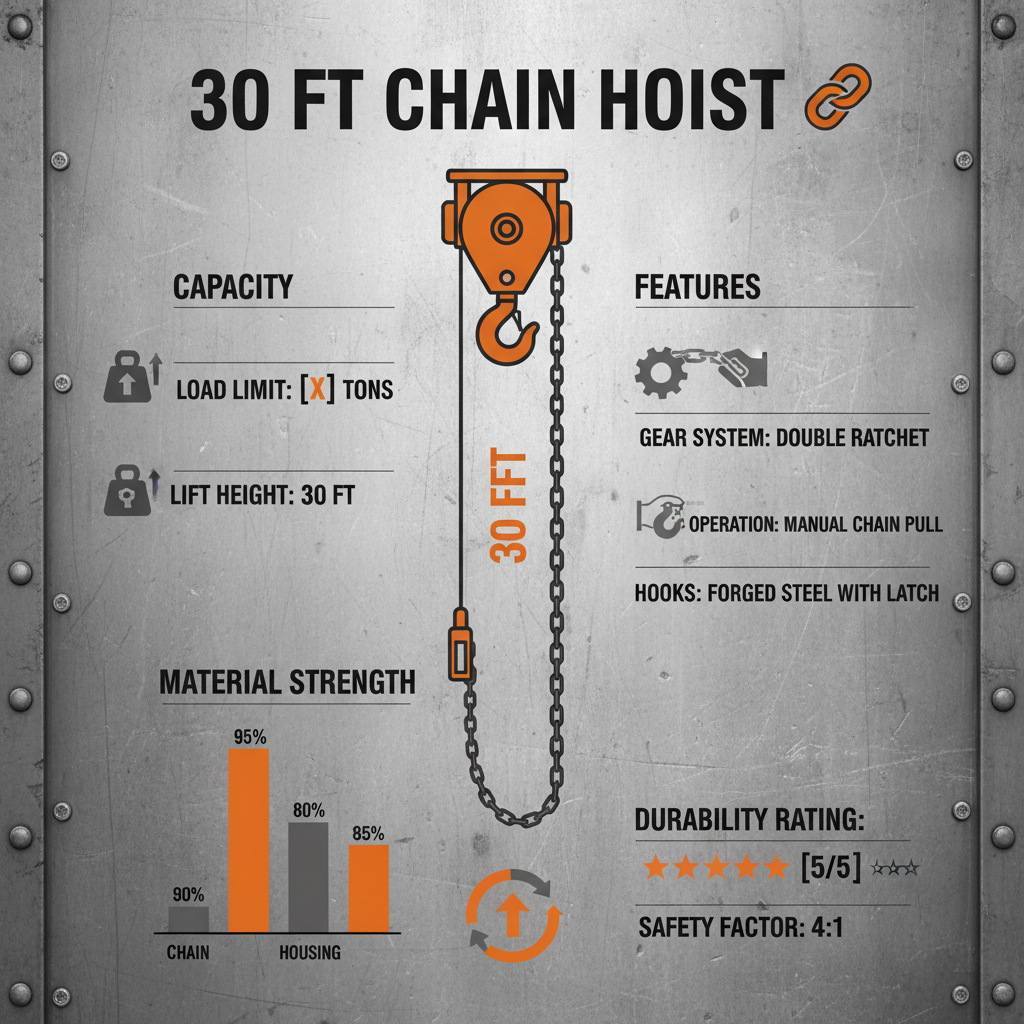
Safety should always be the top priority when operating a 30 ft chain hoist. Before each use, thoroughly inspect the chain, hook, and hoist mechanism for any signs of damage. Ensure the load is properly secured and balanced before lifting. Never exceed the hoist’s rated capacity. Avoid side loading or shock loading. Only trained personnel should operate the hoist. Implement regular maintenance schedules to keep the hoist in optimal condition. Always follow the manufacturer’s instructions and adhere to relevant safety regulations. Investing in safety is investing in the longevity of your operations and the wellbeing of your workforce.
Selecting the appropriate 30 ft chain hoist involves careful consideration of lifting capacity, chain grade, and safety features. A quality hoist from a reputable supplier, like Qyjuli, can provide years of reliable and safe lifting performance. Prioritizing safety, proper maintenance, and operator training are essential for maximizing the benefits of this valuable lifting tool.
Regular maintenance is crucial for ensuring the longevity and safety of your chain hoist. This includes lubricating the chain, inspecting for wear and tear, checking the hook for cracks or deformation, and verifying the proper operation of the lifting mechanism. It is recommended to create a maintenance schedule and adhere to it strictly. Depending on usage frequency, professional inspections should be conducted annually or more often in demanding environments. Proper maintenance can prevent costly repairs and ensure continued safe operation.
Proper storage significantly extends the lifespan of a chain hoist. Store the hoist in a clean, dry environment, protected from the elements. Avoid exposure to corrosive substances, such as saltwater or chemicals. When not in use, fully retract the chain and secure it to prevent dangling. If possible, cover the hoist to protect it from dust and debris. Regular inspection during storage is also recommended to identify any potential issues early on.
Yes, comprehensive training is essential for all chain hoist operators. Training should cover proper inspection procedures, safe lifting techniques, load capacity limits, emergency shutdown procedures, and relevant safety regulations. Operators should be fully aware of the potential hazards associated with lifting operations and equipped to mitigate those risks. Certification programs are available that demonstrate competency and adherence to safety standards. Investing in operator training is a crucial step towards creating a safe and efficient work environment.
If you identify a damaged chain link – whether it's bent, cracked, or excessively worn – immediately remove the hoist from service. Do not attempt to repair the chain yourself. Replace the entire chain with a new chain of the correct grade and Working Load Limit (WLL). Using a damaged chain compromises the structural integrity of the hoist and poses a serious safety hazard. Contact a qualified lifting equipment supplier for assistance with chain replacement and inspection.


 Afrikaans
 Albanian
 Amharic
 Arabic
 Armenian
 Azerbaijani
 Basque
 Belarusian
 Bengali
 Bosnian
 Bulgarian
 Catalan
 Cebuano
 China
China
 China (Taiwan)
 Corsican
 Croatian
 Czech
Czech
 Danish
 Dutch
Dutch
 Esperanto
 Estonian
 Finnish
 French
 Frisian
 Galician
 Georgian
 German
 Greek
Greek
 Gujarati
 Haitian Creole
 Hausa
Hausa
 Hawaiian
 Hebrew
 Hindi
Hindi
 Miao
Miao
 Hungarian
 Icelandic
 Igbo
Igbo
 Indonesian
 Irish
Irish
 Italian
 Japanese
 Javanese
 Kannada
 Kazakh
 Khmer
Khmer
 Rwandese
 Korean
 Kurdish
 Kyrgyz
 Lao
Lao
 Latin
Latin
 Latvian
 Lithuanian
 Luxembourgish
 Macedonian
 Malgashi
 Malay
Malay
 Malayalam
 Maltese
 Maori
Maori
 Marathi
 Mongolian
 Myanmar
 Nepali
 Norwegian
 Norwegian
 Occitan
 Pashto
 Persian
 Polish
 Portuguese
 Punjabi
 Romanian
 Russian
 Samoan
 Scottish Gaelic
 Serbian
 Sesotho
 Shona
Shona
 Sindhi
 Sinhala
 Slovak
 Slovenian
 Somali
 Spanish
 Sundanese
 Swahili
 Swedish
 Tagalog
 Tajik
Tajik
 Tamil
Tamil
 Tatar
Tatar
 Telugu
 Thai
Thai
 Turkish
 Turkmen
 Ukrainian
 Urdu
Urdu
 Uighur
 Uzbek
Uzbek
 Vietnamese
 Welsh
Welsh
 Bantu
Bantu
 Yiddish
 Yoruba
 Zulu
Zulu
 English