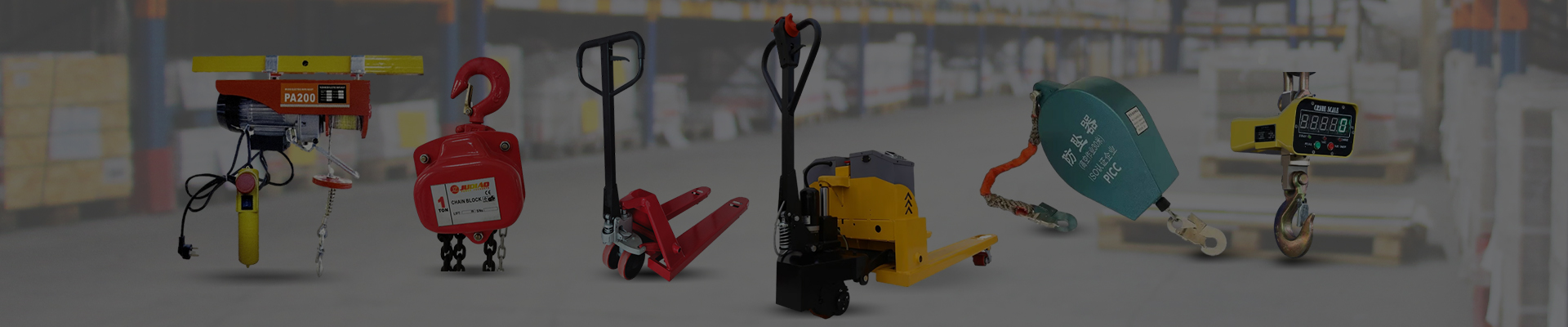


Having spent well over a decade knee-deep in industrial equipment — from assembly lines to heavy-duty maintenance workshops — I can tell you that the chain block pulley system is one of those simple yet brutally reliable pieces of kit that never really gets the spotlight it deserves. Oddly enough, it’s often the quiet hero when you want to lift, pull, or precisely position heavy loads without breaking the bank or calling in a crane.
At its core, this system revolves around a robust gearbox enclosed in a sturdy housing, combined with a set of chain loops. The “block” basically refers to the pulley assembly, which cleverly multiplies your manual effort, giving you mechanical advantage in a compact package. What I like — and so do many engineers I’ve worked with — is how versatile and user-friendly it is. You don’t need fancy electronics or pneumatic power, and it works just as well indoors in tight spaces as it does outdoors on dusty job sites.
One quick story: I was once called to assist with a large HVAC unit installation, stuck halfway up a scaffolding because the electric hoist had given out. In came the trusty chain block pulley system — it felt like a nod to the classics — enabling the team to manually lower and reposition the unit with surprising smoothness. In real terms, you can’t always rely on fancy equipment, so having this tried-and-true system around is a good fallback.
| Specification | Value | Remarks |
|---|---|---|
| Load Capacity | 0.5 – 20 Tons | Varies by model |
| Lifting Height | 1.5 – 20 meters | Customizable chains available |
| Chain Material | Heat-treated alloy steel | Corrosion and fatigue resistant |
| Gearbox Type | Planetary or spur gears | Smooth, efficient transmission |
| Housing Material | Cast iron or steel | Durability in tough environments |
The specs above pretty much cover what you’d find at most reputable suppliers. I’ve noticed that a good chain block pulley will give you not just strength but also peace of mind, due to built-in safety mechanisms like load brakes that prevent accidents if your grip loosens unexpectedly.
| Vendor | Load Capacity Range | Pricing | Lead Time | Customization Options |
|---|---|---|---|---|
| QYJULI Industrial | 0.5 – 20 Tons | Competitive | 2-3 weeks | Chains, heights, load variants |
| GlobalLoad Solutions | 1 – 15 Tons | Mid-range | 3-4 weeks | Limited custom work |
| HeavyLift Co. | 2 – 25 Tons | Premium | 4-6 weeks | Full customization, bespoke designs |
Frankly, choosing the right vendor often hinges on your specific application needs rather than just specs or price. You might need a quick turnaround, in which case lead time matters, or a heavier capacity with special customizations. I’ve seen firms stick with QYJULI Industrial because of their solid reliability and decent customization — and oh, their documentation and warranty support isn’t half bad either.
Before you buy, best practice is to check for ISO certifications and test reports to ensure the system can handle continuous industrial use without breaking down prematurely. I also recommend sizing your capacity a bit above your actual requirement. It feels more secure, and trust me, the chain block pulley system will thank you for not pushing it to the edge daily.
All in all, while the chain block pulley system might seem old-school to some — it’s been around for centuries after all — it continues to thrive because it just works, and does so safely and cost-effectively. And that, whether you’re a site engineer or a maintenance pro, means a lot.
Just a little tip from my years scrapping with heavy loads: always keep the chain lubricated and inspect for wear before every job. A tiny bit of routine care extends the lifespan and keeps things running smoothly.
Feel free to explore more about these systems and their uses over at QYJULI. They’re well worth a look if you want quality with knowledgeable service.
Remember: A strong chain block pulley system is like a trusted teammate — always there when the going gets tough.


 Afrikaans
 Albanian
 Amharic
 Arabic
 Armenian
 Azerbaijani
 Basque
 Belarusian
 Bengali
 Bosnian
 Bulgarian
 Catalan
 Cebuano
 China
China
 China (Taiwan)
 Corsican
 Croatian
 Czech
Czech
 Danish
 Dutch
Dutch
 Esperanto
 Estonian
 Finnish
 French
 Frisian
 Galician
 Georgian
 German
 Greek
Greek
 Gujarati
 Haitian Creole
 Hausa
Hausa
 Hawaiian
 Hebrew
 Hindi
Hindi
 Miao
Miao
 Hungarian
 Icelandic
 Igbo
Igbo
 Indonesian
 Irish
Irish
 Italian
 Japanese
 Javanese
 Kannada
 Kazakh
 Khmer
Khmer
 Rwandese
 Korean
 Kurdish
 Kyrgyz
 Lao
Lao
 Latin
Latin
 Latvian
 Lithuanian
 Luxembourgish
 Macedonian
 Malgashi
 Malay
Malay
 Malayalam
 Maltese
 Maori
Maori
 Marathi
 Mongolian
 Myanmar
 Nepali
 Norwegian
 Norwegian
 Occitan
 Pashto
 Persian
 Polish
 Portuguese
 Punjabi
 Romanian
 Russian
 Samoan
 Scottish Gaelic
 Serbian
 Sesotho
 Shona
Shona
 Sindhi
 Sinhala
 Slovak
 Slovenian
 Somali
 Spanish
 Sundanese
 Swahili
 Swedish
 Tagalog
 Tajik
Tajik
 Tamil
Tamil
 Tatar
Tatar
 Telugu
 Thai
Thai
 Turkish
 Turkmen
 Ukrainian
 Urdu
Urdu
 Uighur
 Uzbek
Uzbek
 Vietnamese
 Welsh
Welsh
 Bantu
Bantu
 Yiddish
 Yoruba
 Zulu
Zulu
 English