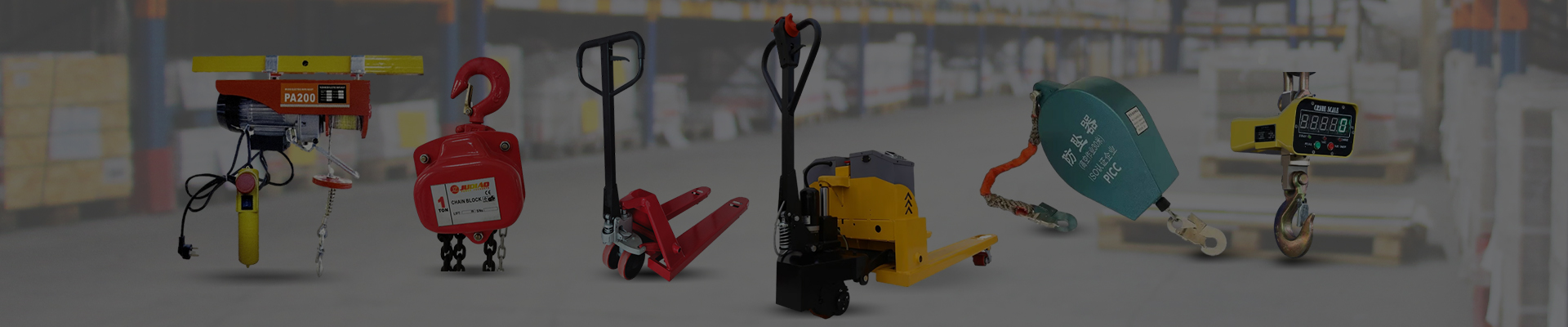


There’s something quietly impressive about a piece of equipment that effortlessly lifts heavy loads day in and day out without a fuss. The PA400B electric hoist is one such tool, and if you haven't encountered one before, this article is a little deep dive into why it's gaining traction worldwide. On a global scale, as industries continue to automate and demand for faster, safer, and more efficient material handling grows, the PA400B electric hoist offers practical solutions to critical challenges.
Why bother understanding one type of hoist? Well, hoisting technology is the silent backbone of logistics, manufacturing, construction, and even humanitarian projects. Not knowing the nuances can lead to costly downtime, injuries, or inefficiencies. So, let's explore this strong yet nimble device that’s quietly moving millions of tons of materials every year.
Industries worldwide, from shipyards to warehouses, rely on electric hoists for lifting and transporting heavy goods. According to the International Labour Organization (ILO), workplace injuries caused by manual handling of heavy loads still account for a substantial portion of industrial accidents. This necessitates reliable mechanization — enter the PA400B electric hoist.
Moreover, the global material handling equipment market is expected to grow by roughly 6% annually through 2028, driven by expanding manufacturing ecosystems in Asia, the Americas, and increasingly digitized warehouses across Europe. The pa400b electric hoist meets these rising demands by offering a compact, powerful, and safe option, easing the pressure on workers and boosting operational throughput.
To throw a problem into the mix: traditional hoists and manual lifting carry risks — from dropped loads to overtime injuries. The PA400B helps reduce these hazards with modern electric controls and durable construction, making the workplace safer and more productive.
Simply put, the PA400B electric hoist is a motor-driven lifting device designed to raise, lower, and sometimes pull heavy loads vertically or horizontally. It typically features a robust electric motor, a gearbox, drum, wire rope or chain, and a control unit.
Compared to older manual or pneumatic hoists, the PA400B electric hoist enhances speed, accuracy, and safety. It’s often found in industrial assembly lines, loading docks, and even in disaster relief contexts where rapid lifting of supplies and equipment is crucial.
In humanitarian operations, lifting heavy materials swiftly can expedite setting up shelters or infrastructure post-disaster, helping save time — and lives — which is where such equipment gains a softer but no less important value.
Engineered with high-grade alloy steel and weatherproof housing, the PA400B is built to withstand heavy usage and harsh environments. Whether it’s a rainy dockside or dusty factory floor, this hoist doesn’t easily give up.
Rated for up to 400 kg (hence the "400" in PA400B), it handles mid-range loads perfectly. The controls are fine-tuned to provide smooth starts and stops, reducing jolts that might otherwise damage cargo or strain operators.
The electric motor uses modern energy-saving tech, minimizing power consumption during operation without sacrificing performance — increasingly important in sustainability-conscious industries.
Equipped with overload protection, emergency brakes, and anti-drop mechanisms, this tool respects its responsibility to keep workers safe.
Installing the PA400B is straightforward — many engineers say it works well standalone or as part of a more complex automated conveyor or lifting system.
| Feature | Specification |
|---|---|
| Lifting Capacity | 400 kg (880 lbs) |
| Lifting Speed | 8 m/min |
| Motor Power | 1.5 kW |
| Voltage | 220V/380V (optional) |
| Rope Diameter | 5 mm |
| Weight | 65 kg |
Frankly, it is everywhere industry meets the challenge of lifting. In Southeast Asia’s bustling factories, these hoists streamline assembly processes. In American warehouses, they speed up inbound and outbound logistics. Even non-profit groups deploying emergency shelters in Africa use PA400B hoists for rapid setup.
What’s odd but telling is how diverse the applications are — from heavy-duty shipyard rigs to delicate historical restoration projects where precision lifting avoids damage to artifacts. Companies in Europe have integrated them into semi-automated workflows, combining human oversight with electric power for better flexibility.
| Vendor | Price (USD) | Warranty | Lead Time | Customization |
|---|---|---|---|---|
| QYJuli Industrial | $1,200 | 24 months | 2-3 weeks | High |
| LiftPro Supplies | $1,350 | 18 months | 3-4 weeks | Medium |
| Elevate Tech | $1,100 | 12 months | 4 weeks+ | Low |
One operator I spoke to mentioned how switching to a reliable electric hoist like the PA400B cut down fatigue and tension-related injuries in his team — the small wins on the floor add up quickly.
The field isn't standing still. We’re seeing integration of IoT sensors for predictive maintenance, smart overload detection algorithms, and lighter composite materials that retain strength but reduce weight. Additionally, greener power sources, such as solar-charged battery packs, are beginning to be trialed, reducing reliance on grid electricity.
Automation and Industry 4.0 concepts increasingly influence electrical hoist designs, making systems smarter and more adaptable. So the PA400B might soon talk to your warehouse management system or alert you before any part wears down.
Despite the many benefits, there are some limitations. For example, in extremely rugged or remote environments, access to electric power might be inconsistent, complicating use. Also, training is essential — improper usage or miscalibrated controls can cause downtime or safety hazards.
Experts recommend pairing electric hoists with power backup solutions, user-friendly interfaces, and scheduled maintenance plans to keep operations smooth. Many companies now provide remote diagnostics and virtual training modules to address these obstacles efficiently.
A: The PA400B includes overload protection, emergency braking, and smooth motor controls to reduce sudden movements, significantly lowering the risk of accidents compared to manual hoists where human error is a bigger factor.
Installation is straightforward as the unit supports common voltage inputs and mounts and integrates well with standard suspension or trolley systems. Many users report quick setup within a day with minimal downtime.
Yes, vendors often offer custom versions or modular upgrades depending on project needs, ranging from lower (below 400 kg) to slightly higher capacities by adjusting motor and gearing.
Not really. The PA400B requires routine inspection of wire ropes, brakes, and electrical systems, generally monthly, plus an annual professional check. Good maintenance extends its lifespan and keeps it safe.
Several worldwide manufacturers distribute these hoists. For quality and warranty support, it's wise to choose a vendor with proven experience like QYJuli, known for swift delivery and service.
Overall, the PA400B electric hoist is more than just an industrial lifting device; it’s a reliable partner in enhancing workplace safety, productivity, and sustainability. Whether you’re upgrading a busy factory, outfitting a warehouse, or gearing up for humanitarian relief, understanding this tool's capacity and advantages is well worth your time. If you’re curious, why not explore more? Visit https://www.qyjuli.com to learn about options that could fit your specific needs — no kidding, it’s worth a look.
Before you go, a quick takeaway: investing in quality hoisting equipment like the PA400B is an investment in operational longevity, employee wellbeing, and environmental responsibility. And that, frankly, pays dividends.


 Afrikaans
 Albanian
 Amharic
 Arabic
 Armenian
 Azerbaijani
 Basque
 Belarusian
 Bengali
 Bosnian
 Bulgarian
 Catalan
 Cebuano
 China
China
 China (Taiwan)
 Corsican
 Croatian
 Czech
Czech
 Danish
 Dutch
Dutch
 Esperanto
 Estonian
 Finnish
 French
 Frisian
 Galician
 Georgian
 German
 Greek
Greek
 Gujarati
 Haitian Creole
 Hausa
Hausa
 Hawaiian
 Hebrew
 Hindi
Hindi
 Miao
Miao
 Hungarian
 Icelandic
 Igbo
Igbo
 Indonesian
 Irish
Irish
 Italian
 Japanese
 Javanese
 Kannada
 Kazakh
 Khmer
Khmer
 Rwandese
 Korean
 Kurdish
 Kyrgyz
 Lao
Lao
 Latin
Latin
 Latvian
 Lithuanian
 Luxembourgish
 Macedonian
 Malgashi
 Malay
Malay
 Malayalam
 Maltese
 Maori
Maori
 Marathi
 Mongolian
 Myanmar
 Nepali
 Norwegian
 Norwegian
 Occitan
 Pashto
 Persian
 Polish
 Portuguese
 Punjabi
 Romanian
 Russian
 Samoan
 Scottish Gaelic
 Serbian
 Sesotho
 Shona
Shona
 Sindhi
 Sinhala
 Slovak
 Slovenian
 Somali
 Spanish
 Sundanese
 Swahili
 Swedish
 Tagalog
 Tajik
Tajik
 Tamil
Tamil
 Tatar
Tatar
 Telugu
 Thai
Thai
 Turkish
 Turkmen
 Ukrainian
 Urdu
Urdu
 Uighur
 Uzbek
Uzbek
 Vietnamese
 Welsh
Welsh
 Bantu
Bantu
 Yiddish
 Yoruba
 Zulu
Zulu
 English