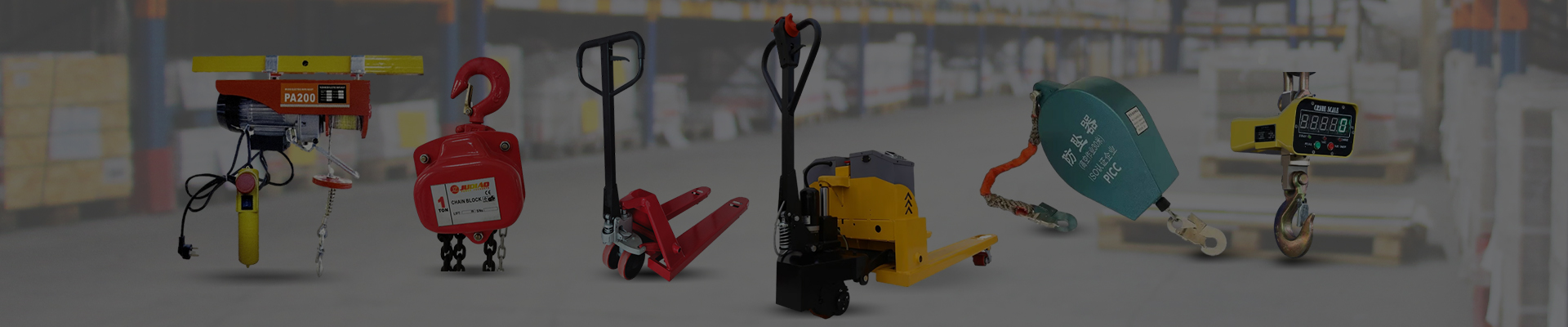


If you’ve ever watched a construction site or warehouse setting, you’ll notice cranes and lifting tools moving heavy loads with impressive ease. Among these, the small electric cable hoist stands out — a nifty gadget that combines power and precision in a compact form. But why are these seemingly modest devices grabbing attention globally? Simply put, they fill a vital role in industries where space, efficiency, and safety converge. Understanding this tool unlocks benefits ranging from safer workplaces to more sustainable industrial practices.
Globally, as manufacturing scales up and the pace of construction accelerates, the demand for reliable lifting solutions rises dramatically. According to the International Organization for Standardization (ISO), workplace safety and efficiency are primary concerns addressed through improved handling equipment (ISO 45001). Small electric cable hoists, with their balance of power and portability, help meet this challenge without the steep costs or bulky footprints of bigger machines.
Mini takeaway: Small electric cable hoists might sound niche, but they’re crucial players in global industrial safety and productivity.
From bustling urban centers in Asia to remote mining operations in Africa, the use of small electric cable hoists has become widespread. According to recent data from the United Nations Industrial Development Organization (UNIDO), efficient material handling devices contribute substantially to increased output and workplace safety in developing economies.
A challenge arises precisely in those cramped or remote locations. Traditional heavy-duty cranes or manual hoists are impractical or unsafe. Here, small electric cable hoists offer a pragmatic solution — lightweight but capable of handling multiple hundreds of kilograms. They help prevent worker injuries due to manual lifting, draft-proof workflows, and — not least — increase uptime when deployed correctly.
Mini takeaway: The hoist is not just a gadget; it’s a solution tailored to emerging industrial needs worldwide.
So, what exactly is a small electric cable hoist? Put simply, it’s a compact motorized device that lifts or lowers loads via a steel cable, managed by an electric motor. Unlike chain hoists, the cable offers flexibility over longer distances with less wear and tear. Users control it remotely or with a pendant switch, a feature that adds convenience and improves safety.
This equipment has found its way beyond traditional factories. Think humanitarian relief scenarios where heavy construction materials or supplies need quick deployment — the cable hoist is robust, but portable enough to support those urgent operations. In modern industries focused on modular building, aerospace components, or even indoor stage rigging, it’s critical.
Mini takeaway: The small electric cable hoist combines simple mechanics with electric power to meet modern lifting demands efficiently.
The backbone is usually a steel frame designed to withstand rigorous use. Cable drums, motors, and brakes crafted from heavy-duty materials ensure longevity. For example, IP55-rated motors protect against dust and water — vital where conditions are less forgiving.
This varies from about 250 kg up to 2,000 kg in smaller models, which covers most medium industrial tasks. Overload protection systems prevent accidents and equipment damage, a non-negotiable feature.
Safety sensors, emergency stops, and panic brakes are often standard.
Energy consumption is frequently optimized through modern electronic controls — this is surprisingly important, particularly when these hoists run on job sites where power might be limited or expensive.
This is a defining feature. Compared to big overhead cranes, small electric cable hoists weigh less and can be mounted flexibly — on beams, trolleys, or even temporary scaffolding.
Remote or pendant controls allow operators to manage lifts without climbing up or exposing themselves to risk zones.
Thanks to modular designs, many models can be quickly serviced with easily replaceable parts, a feature many engineers swear by.
Mini takeaway: The details under the hood matter — a hoist combining durability, safety, energy efficiency, and ease of use is worth every penny.
| Specification | Typical Range / Value |
|---|---|
| Load Capacity | 250 kg – 2000 kg |
| Power Supply | 220V/380V, 50/60 Hz |
| Lifting Speed | 0.8 – 4 m/min |
| Motor Protection Level | IP54 - IP55 |
| Weight | 25 – 60 kg (varies by capacity) |
| Control | Remote/Pendant |
Oddly enough, these devices turn up all over the map:
Mini takeaway: Their global footprint is wide, underscoring how versatile and useful these hoists really are.
Beyond the upfront price tag, the advantages accumulate robustly:
All this adds up to a tool that’s reliable, smart, and increasingly eco-conscious — a nice trifecta in industrial tech.
Here’s where it gets fun — technology is pushing these hoists into smarter, greener territory:
Mini takeaway: The humble cable hoist is quietly becoming a smart device — and likely a green one too.
Most experts agree: thorough training and proper selection are key. A hoist is only as good as the people who use and care for it.
| Brand | Load Capacity | Unique Features | Price Range (USD) |
|---|---|---|---|
| KITO | 250 - 1,000 kg | Advanced motor brake system, compact design | $1,200 - $3,000 |
| Yale | 500 - 2,000 kg | Remote control, overload alarm | $1,500 - $4,000 |
| Demag | 250 - 2,000 kg | Modular design, IoT compatible | $2,000 - $5,000 |
| QYJULI (Our Site) | 300 - 1800 kg | Customizable controls, rugged portability | $1,300 - $3,800 |
A: Cable hoists use steel wires which are lighter and less prone to twisting, making them suitable for longer reaches and smoother operation. Chain hoists tend to be heavier and better for short, rugged lifts. Choosing depends on your application needs.
A: Always factor in the maximum weight you will lift, including any rigging gear. It’s good practice to pick a hoist rated at least 20% above your heaviest expected load for safety.
A: Yes, provided they have the appropriate IP rating and weather protection. Many models include dust and water-resistant coatings, but exposure to extreme environments requires extra precautions.
A: We'll agree that routine checks should be monthly for high-use equipment, with a detailed annual service by certified technicians to ensure safety and longevity.
A: Not at all. Most models come with straightforward control systems. Training sessions focusing on safety protocols and basic operations typically take just a few hours.
At the end of the day, the small electric cable hoist ticks a lot of boxes: affordable, safe, versatile, and increasingly smart. Whether you’re managing a tightly packed urban construction site or improving supply chains in a challenging environment, this tool provides the muscle and finesse you need.
Keep in mind that choosing the right hoist involves more than specs — it’s about matching your operational rhythm and safety needs. Ready to upgrade your lifting game? Take a peek at our latest models with customizable options at QYJULI.
Thanks for sticking with me here; I imagine there’s plenty more to say, but for now... happy lifting!


 Afrikaans
 Albanian
 Amharic
 Arabic
 Armenian
 Azerbaijani
 Basque
 Belarusian
 Bengali
 Bosnian
 Bulgarian
 Catalan
 Cebuano
 China
China
 China (Taiwan)
 Corsican
 Croatian
 Czech
Czech
 Danish
 Dutch
Dutch
 Esperanto
 Estonian
 Finnish
 French
 Frisian
 Galician
 Georgian
 German
 Greek
Greek
 Gujarati
 Haitian Creole
 Hausa
Hausa
 Hawaiian
 Hebrew
 Hindi
Hindi
 Miao
Miao
 Hungarian
 Icelandic
 Igbo
Igbo
 Indonesian
 Irish
Irish
 Italian
 Japanese
 Javanese
 Kannada
 Kazakh
 Khmer
Khmer
 Rwandese
 Korean
 Kurdish
 Kyrgyz
 Lao
Lao
 Latin
Latin
 Latvian
 Lithuanian
 Luxembourgish
 Macedonian
 Malgashi
 Malay
Malay
 Malayalam
 Maltese
 Maori
Maori
 Marathi
 Mongolian
 Myanmar
 Nepali
 Norwegian
 Norwegian
 Occitan
 Pashto
 Persian
 Polish
 Portuguese
 Punjabi
 Romanian
 Russian
 Samoan
 Scottish Gaelic
 Serbian
 Sesotho
 Shona
Shona
 Sindhi
 Sinhala
 Slovak
 Slovenian
 Somali
 Spanish
 Sundanese
 Swahili
 Swedish
 Tagalog
 Tajik
Tajik
 Tamil
Tamil
 Tatar
Tatar
 Telugu
 Thai
Thai
 Turkish
 Turkmen
 Ukrainian
 Urdu
Urdu
 Uighur
 Uzbek
Uzbek
 Vietnamese
 Welsh
Welsh
 Bantu
Bantu
 Yiddish
 Yoruba
 Zulu
Zulu
 English