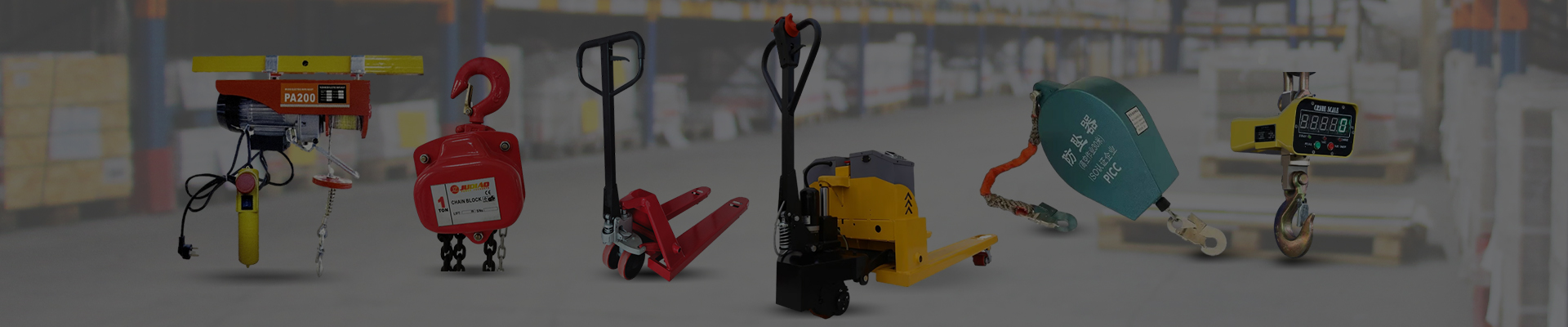


In the complex web of modern industry and humanitarian projects, the micro electric rope hoist plays an unexpectedly pivotal role. Why does something that sounds so technical and niche draw global attention? Well, this tiny powerhouse dramatically simplifies the lifting and moving of loads in confined spaces, difficult terrains, and even post-disaster zones where reliability can save lives. Understanding its benefits and applications opens doors to safer, cost-effective, and sustainable solutions in sectors from manufacturing to emergency relief.
The global manufacturing and construction industries combined are valued in the trillions of dollars — and they rely heavily on efficient material handling equipment like electric rope hoists. According to the International Organization for Standardization (ISO), safety and precision standards push for compact and efficient lifting technologies. What’s fascinating is that micro electric rope hoists answer a growing challenge worldwide: how to maintain potent lifting capacity without needing massive, costly machinery.
In a 2023 report by the World Bank on infrastructure growth, many emerging economies highlighted logistics bottlenecks that could be eased with smarter equipment. Freight yards in Southeast Asia and manufacturing plants in Europe are adopting micro hoists to optimize operations — shrinking carbon footprints while improving worker safety. The problem is that heavy conventional hoists are often too bulky or require infrastructure upgrades — a lagging drag in efficiency and cost.
In straightforward terms, a micro electric rope hoist is a compact lifting device using a steel rope wound around a drum, powered by an electric motor. Unlike bigger counterparts, it’s designed for smaller loads, constrained spaces, and precise operations. Think of it as a smart little muscle in the broader machinery family, adaptable, scalable, and surprisingly resilient.
Beyond just factories, these hoists are also vital in humanitarian work — imagine carrying emergency supplies over uneven ground or setting up temporary bridges or platforms quickly. The micro rope hoist blends engineering with real human necessity.
For a device that often works under strain, durability is paramount. Manufacturers typically use alloy steel ropes with high tensile strength coupled with corrosion-resistant coatings. The results? Devices that can operate in harsh environments — from humid coastal shipyards to dusty mining sites — with minimal downtime.
One might think “micro” means less power. Not quite. The compact design allows these hoists to fit where larger ones can’t: inside tight industrial cells, narrow construction scaffolds, or even in mobile relief units. This portability enhances deployment speed and accessibility immensely.
Many models now incorporate energy-saving motors with improved control electronics. This advantage is not minor. Energy consumption metrics show a downward trend, which means long-term operational savings and alignment with environmental standards.
With lifting comes risk, so built-in features like overload protection, emergency brakes, and smooth speed control make micro electric rope hoists not just wonders of engineering but guardians of worker safety.
Because industries vary so much, many micro hoists come with modular features or variable lifting capacities, enabling easy customization to specific tasks, whether lifting fragile equipment in electronics manufacturing or heavier components in automotive assembly.
Their real worth shines when we look at global applications:
For example, a Southeast Asian telecom company employed micro electric rope hoists across rooftop tower install sites, reducing setup time by 30%. Small, but game-changing.
Looking forward, watch for smarter materials using composites to shave even more weight without losing strength. AI-driven controls and IoT connectivity will make hoists even more predictive and proactive in maintenance. Renewable energy integration might allow solar-powered deployment units, perfect for off-grid environments.
Policy-wise, tighter safety regulations combined with global pushes for carbon-neutral operations likely mean these micro hoists will become standard in more sectors. The fusion of automation and miniaturization feels like the future knocking gently but persistently.
Of course, micro electric rope hoists aren’t perfect. Limitations include weight capacity caps, sometimes higher per-unit cost for advanced models, and dependency on power sources in remote locations. But solutions are evolving:
| Feature | Specification | Typical Use Case |
|---|---|---|
| Lifting Capacity | 500 – 2000 kg | Light to medium industrial loads |
| Rope Material | Galvanized steel wire rope | Corrosion resistance in outdoor uses |
| Motor Power | 1.5 kW to 3.7 kW | Variable speed control |
| Safety Features | Overload protection, emergency stop | Worker safety assurance |
| Dimensions (LxWxH) | 650 x 480 x 430 mm (typical) | Compact footprint for tight spaces |
| Vendor | Price Range | Customization Options | Warranty & Support | Global Reach |
|---|---|---|---|---|
| Alpha Hoist Co. | $2000 - $3500 | Basic rope and motor upgrades | 2-year warranty, online support | North America, Europe |
| Beta Lifting Solutions | $2500 - $4000 | Wide range including IoT-enabled controls | 3-year warranty, local technicians | Asia, Europe, Africa |
| Gamma Tech | $1800 - $3000 | Standard models, fast delivery | 1-year warranty, remote assistance | Global |
Micro electric rope hoists might seem modest in scale, but their impact stretches widely — from improving safety and cost efficiency to advancing sustainable industrial practices worldwide. They fit the modern story of doing more with less, adapting flexibly to technical, economic, and humanitarian challenges.
Ready to explore what the right micro electric rope hoist can do for your operation? Visit our website for a closer look and expert advice tailored just for you.


 Afrikaans
 Albanian
 Amharic
 Arabic
 Armenian
 Azerbaijani
 Basque
 Belarusian
 Bengali
 Bosnian
 Bulgarian
 Catalan
 Cebuano
 China
China
 China (Taiwan)
 Corsican
 Croatian
 Czech
Czech
 Danish
 Dutch
Dutch
 Esperanto
 Estonian
 Finnish
 French
 Frisian
 Galician
 Georgian
 German
 Greek
Greek
 Gujarati
 Haitian Creole
 Hausa
Hausa
 Hawaiian
 Hebrew
 Hindi
Hindi
 Miao
Miao
 Hungarian
 Icelandic
 Igbo
Igbo
 Indonesian
 Irish
Irish
 Italian
 Japanese
 Javanese
 Kannada
 Kazakh
 Khmer
Khmer
 Rwandese
 Korean
 Kurdish
 Kyrgyz
 Lao
Lao
 Latin
Latin
 Latvian
 Lithuanian
 Luxembourgish
 Macedonian
 Malgashi
 Malay
Malay
 Malayalam
 Maltese
 Maori
Maori
 Marathi
 Mongolian
 Myanmar
 Nepali
 Norwegian
 Norwegian
 Occitan
 Pashto
 Persian
 Polish
 Portuguese
 Punjabi
 Romanian
 Russian
 Samoan
 Scottish Gaelic
 Serbian
 Sesotho
 Shona
Shona
 Sindhi
 Sinhala
 Slovak
 Slovenian
 Somali
 Spanish
 Sundanese
 Swahili
 Swedish
 Tagalog
 Tajik
Tajik
 Tamil
Tamil
 Tatar
Tatar
 Telugu
 Thai
Thai
 Turkish
 Turkmen
 Ukrainian
 Urdu
Urdu
 Uighur
 Uzbek
Uzbek
 Vietnamese
 Welsh
Welsh
 Bantu
Bantu
 Yiddish
 Yoruba
 Zulu
Zulu
 English