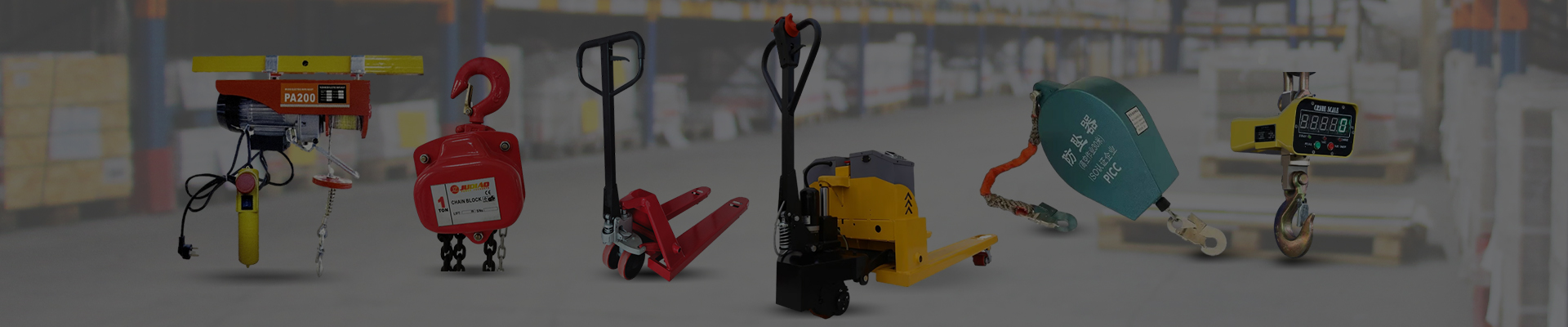


If you’ve ever wondered how heavy loads are lifted smoothly and safely in tight industrial spaces or even humanitarian relief zones, the pa micro electric rope hoist might be one of those unsung heroes you haven’t thought about yet. This device, while small in size, plays a vital role worldwide—from construction sites in China to remote aid operations in Africa. It’s not just about physics and metal ropes; it’s about efficiency, safety, and sometimes, downright life-saving practicality.
Why does understanding this matter globally? Because infrastructure development, disaster relief, and industrial automation depend on reliable lifting tools. The benefits of knowing your way around these hoists go beyond the workshop floor. It’s about empowering workers, enhancing safety protocols, and even addressing logistical challenges in places where every kilogram counts.
Here's a bit of eye-opening context: According to the International Organization for Standardization (ISO), over 70% of industrial accidents on lifting operations happen due to improper equipment or training. With the world pushing toward more compact, efficient machines, the pa micro electric rope hoist taps into a niche where power meets precision.
Consider that the global construction market is expected to reach $842 billion by 2030 (World Bank data), and with increasing urban density, hoists that save space while maximizing capacity become key players. Plus, in humanitarian operations, raising equipment safely in chaotic locales can directly impact relief timelines.[1]
But here’s the challenge: traditional hoists don’t always work where space is a luxury or where power reliability is questionable. These micro hoists fill that gap, enabling work in tight corners or makeshift conditions with surprising versatility.
Breaking it down, think of the pa micro electric rope hoist as a compact, electric-powered lifting device using steel ropes, designed for hoisting loads vertically. “PA” here usually references a series or design model from manufacturers specializing in light but robust hoisting solutions.
Unlike bulky cranes or manual hoists, these micro versions are meant for delicate environments where every inch and every kilo matters. It’s a marriage of technology and user-friendliness—something that suits modern industry needs but also crosses over to aid and emergency response sectors where swift, reliable lifting equals saved time and lives.
This small but mighty device is all about precision, compactness, and delivering heavy lifting safely in challenging, space- or power-restricted environments.
Many engineers swear by steel wire ropes paired with high-grade alloy bodies that resist corrosion and wear. It’s about lifting countless loads day after day without faltering—essential when you’re at a job site that won’t pause for maintenance breaks.
While “micro” suggests small, these hoists often handle loads from 100 kg up to 2000 kg. That’s roughly the weight of small vehicles or tons of construction materials. The clever part? They scale with modular design to suit different projects.
Many models now feature low-voltage, high-efficiency motors that reduce consumption while improving lifting smoothness. It’s an engineering plus when your site’s power grid isn’t exactly stable or when you want to reduce operational costs.
From emergency stop buttons to limit switches preventing over-hoisting, these hoists integrate safety thoroughly. Considering lifting accidents can cause serious injuries, such features aren’t just bonuses — they’re necessities.
One underrated aspect is portability. These hoists can be mounted on compact trolleys or existing beams, often with minimal tools. For mobile operations like disaster relief, this flexibility is crucial.
Everything about the PA micro electric rope hoist boils down to smart, reliable engineering that blends strength, safety, and convenience.
For example, an NGO working in Southeast Asia shared how a pa micro electric rope hoist helped install temporary water pumps faster than manual lifting, cutting deployment time by half.
The versatility of these hoists means they’re right at home from industrial megaprojects to grass-roots humanitarian efforts.
Frankly, the emotional value can’t be ignored — workers tend to trust gear that "feels" solid and safe, especially when stakes are high. That sense of trust makes all the difference on a tough day.
| Specification | Details |
|---|---|
| Load Capacity | 100 – 2000 kg |
| Lifting Height | 3 to 30 meters (customizable) |
| Power Supply | 220 V / 380 V AC (single or three-phase) |
| Motor Type | High efficiency, insulated, thermal protection |
| Safety Features | Overload protection, emergency stop, limit switches |
| Material | Steel wire rope, alloy housing |
| Vendor | Load Range | Price Range | Unique Features | Warranty |
|---|---|---|---|---|
| QYJULI | 100-2000 kg | $$ – $$$ | Modular design, energy-efficient motor | 24 months |
| LiftPro | 150-1500 kg | $ – $$ | Lightweight frame, quick install | 18 months |
| HoistMaster | 100-1800 kg | $$$ | Smart controls, IoT ready | 36 months |
The future looks exciting. Automation integration — imagine hoists connected to IoT platforms forecasting maintenance or syncing with warehouse robots — is underway. Then there’s the rise of green technologies, with manufacturers adopting brushless motors and solar power compatibility to reduce carbon footprints.
Materials science is not lagging either. Stronger, lighter composites could one day replace steel ropes, making hoists even more portable without sacrificing strength. Frankly, the pace of change might surprise even seasoned operators.
Of course, no tech is perfect. The main issues we hear about include:
Innovative vendors like QYJULI offer remote diagnostic tools and modular parts to counter these issues, making life easier for users in varied environments.
A1: Typically, these hoists handle from 100 to around 2000 kg depending on the model. Always check manufacturer specs and avoid overloading for safety and longevity.
A2: Many designs emphasize ease of installation and transport. Some even come with integrated trolleys, making them ideal for disaster relief or temporary sites.
A3: Emergency stops, overload protection, and limit switches are standard. These ensure safe lift limits and quick stops during emergencies.
A4: Efficient motor designs help, but in areas with unstable power, users often supplement with voltage stabilizers or battery backups.
A5: Yes, many manufacturers offer variable lift heights and remote control options to suit different environments and operator preferences.
In a world where every second counts and safety cannot be compromised, the pa micro electric rope hoist stands out as a nimble, trustworthy partner. Whether you’re a factory owner optimizing workflow, an NGO racing against time to help disaster survivors, or an engineer designing the next urban center, this tool packs the punch of heavy-duty lifting into a manageable, smart package.
If you’re looking for reliable, efficient, and versatile lifting solutions, take a deeper look at the pa micro electric rope hoist. It might just be the small thing with the biggest impact.


 Afrikaans
 Albanian
 Amharic
 Arabic
 Armenian
 Azerbaijani
 Basque
 Belarusian
 Bengali
 Bosnian
 Bulgarian
 Catalan
 Cebuano
 China
China
 China (Taiwan)
 Corsican
 Croatian
 Czech
Czech
 Danish
 Dutch
Dutch
 Esperanto
 Estonian
 Finnish
 French
 Frisian
 Galician
 Georgian
 German
 Greek
Greek
 Gujarati
 Haitian Creole
 Hausa
Hausa
 Hawaiian
 Hebrew
 Hindi
Hindi
 Miao
Miao
 Hungarian
 Icelandic
 Igbo
Igbo
 Indonesian
 Irish
Irish
 Italian
 Japanese
 Javanese
 Kannada
 Kazakh
 Khmer
Khmer
 Rwandese
 Korean
 Kurdish
 Kyrgyz
 Lao
Lao
 Latin
Latin
 Latvian
 Lithuanian
 Luxembourgish
 Macedonian
 Malgashi
 Malay
Malay
 Malayalam
 Maltese
 Maori
Maori
 Marathi
 Mongolian
 Myanmar
 Nepali
 Norwegian
 Norwegian
 Occitan
 Pashto
 Persian
 Polish
 Portuguese
 Punjabi
 Romanian
 Russian
 Samoan
 Scottish Gaelic
 Serbian
 Sesotho
 Shona
Shona
 Sindhi
 Sinhala
 Slovak
 Slovenian
 Somali
 Spanish
 Sundanese
 Swahili
 Swedish
 Tagalog
 Tajik
Tajik
 Tamil
Tamil
 Tatar
Tatar
 Telugu
 Thai
Thai
 Turkish
 Turkmen
 Ukrainian
 Urdu
Urdu
 Uighur
 Uzbek
Uzbek
 Vietnamese
 Welsh
Welsh
 Bantu
Bantu
 Yiddish
 Yoruba
 Zulu
Zulu
 English