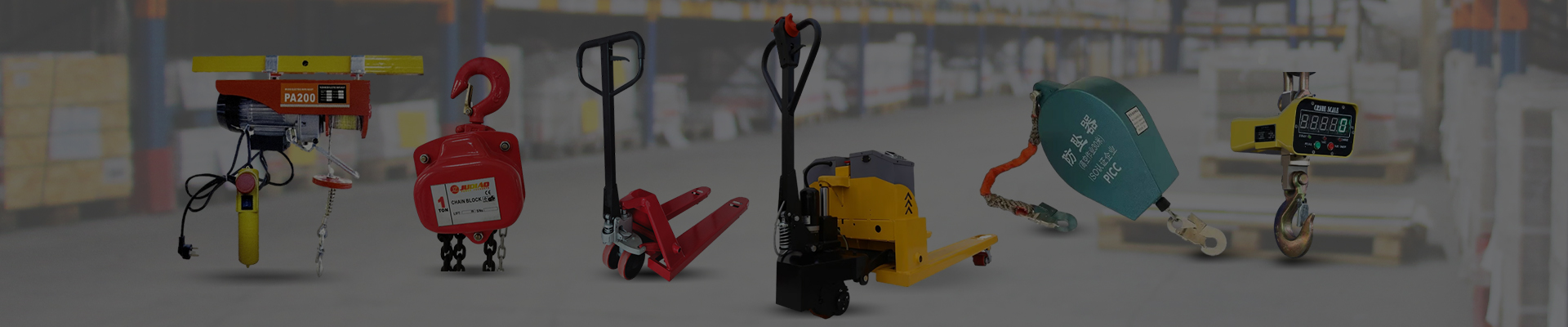


Imagine the quiet power behind the scenes of warehouses, construction sites, or even emergency relief setups—the humble light duty electric hoist is often a key player. It might not get the spotlight like cranes or forklifts, but it’s fundamental when it comes to lifting lighter loads efficiently and safely. Globally, its reach is expansive, from bustling factories in Asia to disaster relief zones in Africa. Understanding this tool isn’t just about machinery, it’s about improving productivity and safety across countless industries.
Globally, light duty electric hoists play a surprisingly pivotal role. According to industry data, the global material handling equipment market is expected to exceed $130 billion by 2027 (source: Statista). Within this, electric hoists—especially ones designed for lighter loads—are crucial for small and medium enterprises that can’t justify large overhead cranes but still need reliable lifting solutions. They address key challenges like worker safety, space constraints, and operational efficiency.
Consider this: in many emerging economies, light duty electric hoists are essential in sectors ranging from manufacturing to agriculture and logistics—sometimes the difference between damaged goods and well-managed inventory. They also find a surprising place in humanitarian aid, where quick, portable lifting solutions can accelerate setup or recovery efforts.
Simply put, a light duty electric hoist is a powered lifting device made to move loads typically up to one or two tons. Unlike heavy industrial hoists mounted on massive cranes, these are compact, often portable, and designed to optimize smaller-scale lifting tasks. The “electric” part means these hoists run on electricity, which allows for consistent lifting power with less manual effort.
These hoists typically come equipped with steel wire ropes or chains, hooks for load attachment, and controls for safe, precise operation. Their simplicity masks an essential contribution to many modern industrial and humanitarian workflows, where speed and safety are paramount.
| Specification | Details |
|---|---|
| Load Capacity | 1000 kg (1 ton) |
| Lift Height | 6 meters |
| Power Supply | 220V single phase |
| Weight of Hoist | 35 kg |
| Control | Wired push button pendent |
| Safety | Overload protection & emergency stop |
It’s fascinating how the light duty electric hoist finds utility in such diverse contexts worldwide. In manufacturing hubs of Southeast Asia, it streamlines assembly lines. In Europe, they’re common in warehouses, helping move goods efficiently, reducing workplace injuries.
Oddly enough, their role in disaster relief deserves mention. In post-disaster reconstruction in earthquake-prone zones, these hoists help NGOs lift and position emergency shelters and equipment quickly. In remote mining or oil fields, where heavy machinery is impractical, they’re a lifeline for daily operations.
Even in agriculture, smaller farms increasingly use these hoists for lifting feedbags or equipment, reflecting growing mechanization in traditionally manual sectors.
From an emotional standpoint, operators often feel a sense of dignity and ease when heavy tasks are managed by trusted machines, rather than risking injury through manual lifts.
The future looks promising for light duty electric hoists. Battery-powered models are gaining traction, enabling use in areas without reliable electricity. Digital controls with IoT connectivity allow remote monitoring and predictive maintenance, reducing downtime.
Material advances mean lighter but stronger components, making hoists even more portable. Sustainability drives innovations around recyclable parts and energy-efficient motors. And frankly, as automation becomes mainstream, these hoists are increasingly integrated with robotic systems for seamless, smart lifting.
Of course, no technology is perfect. Common issues include power supply limitations in remote areas and concerns about overload misuse. But manufacturers are tackling these by offering solar-compatible battery units and better user training. Advanced sensors detect overload conditions in real time, automatically stopping the hoist to prevent accidents.
Another challenge is that not all hoists are created equal—finding a vendor that balances cost, quality, and after-sales service can be tricky. I suppose that’s where careful comparison pays off.
| Feature | Vendor A | Vendor B | Vendor C |
|---|---|---|---|
| Max Load (kg) | 1000 | 1500 | 1200 |
| Power Supply | 220V AC | Battery & AC | 110V AC |
| Control Type | Wired pendant | Wireless remote | Wired pendant |
| Overload Protection | Yes | Yes | No |
| Weight (kg) | 40 | 38 | 45 |
| Warranty | 2 years | 3 years | 1 year |
Light duty electric hoists blend practicality with safety, supporting operations that rely on efficient material handling every day. Whether in factories, warehouses, or emergency relief zones, their ability to lift loads reliably yet gently changes workflows for the better. If you’re in the market, consider how these tools can align with your operational priorities—cost, safety, and sustainability.
Ready to explore your options? Visit our website: https://www.qyjuli.com for trusted products and expert advice.
Sometimes, the smallest tool quietly lifts the greatest weight.


 Afrikaans
 Albanian
 Amharic
 Arabic
 Armenian
 Azerbaijani
 Basque
 Belarusian
 Bengali
 Bosnian
 Bulgarian
 Catalan
 Cebuano
 China
China
 China (Taiwan)
 Corsican
 Croatian
 Czech
Czech
 Danish
 Dutch
Dutch
 Esperanto
 Estonian
 Finnish
 French
 Frisian
 Galician
 Georgian
 German
 Greek
Greek
 Gujarati
 Haitian Creole
 Hausa
Hausa
 Hawaiian
 Hebrew
 Hindi
Hindi
 Miao
Miao
 Hungarian
 Icelandic
 Igbo
Igbo
 Indonesian
 Irish
Irish
 Italian
 Japanese
 Javanese
 Kannada
 Kazakh
 Khmer
Khmer
 Rwandese
 Korean
 Kurdish
 Kyrgyz
 Lao
Lao
 Latin
Latin
 Latvian
 Lithuanian
 Luxembourgish
 Macedonian
 Malgashi
 Malay
Malay
 Malayalam
 Maltese
 Maori
Maori
 Marathi
 Mongolian
 Myanmar
 Nepali
 Norwegian
 Norwegian
 Occitan
 Pashto
 Persian
 Polish
 Portuguese
 Punjabi
 Romanian
 Russian
 Samoan
 Scottish Gaelic
 Serbian
 Sesotho
 Shona
Shona
 Sindhi
 Sinhala
 Slovak
 Slovenian
 Somali
 Spanish
 Sundanese
 Swahili
 Swedish
 Tagalog
 Tajik
Tajik
 Tamil
Tamil
 Tatar
Tatar
 Telugu
 Thai
Thai
 Turkish
 Turkmen
 Ukrainian
 Urdu
Urdu
 Uighur
 Uzbek
Uzbek
 Vietnamese
 Welsh
Welsh
 Bantu
Bantu
 Yiddish
 Yoruba
 Zulu
Zulu
 English