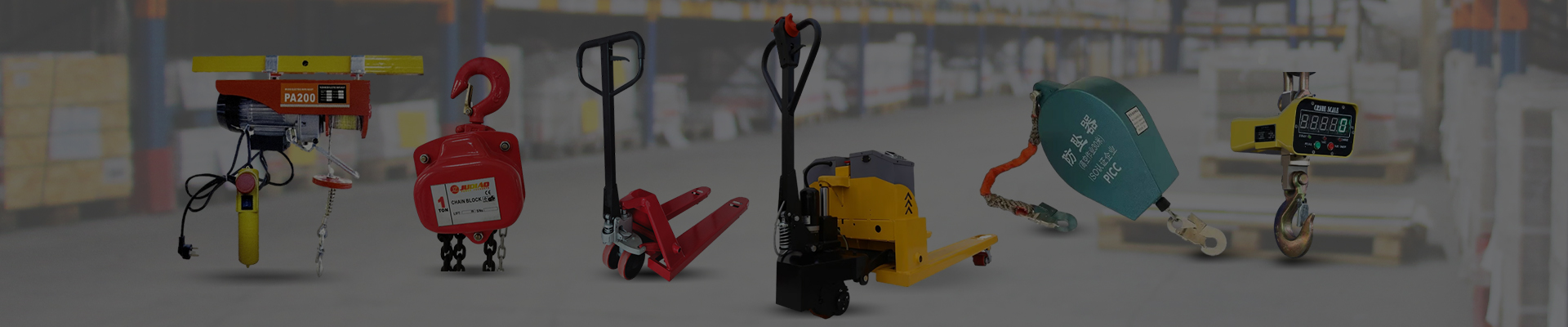


When you talk about heavy lifting, especially in tight, challenging environments where electricity or hydraulics aren’t available, the manual chain block 1 ton often becomes indispensable. This deceptively simple tool carries a surprising global footprint and remains crucial across industries—from construction sites in developing regions to emergency humanitarian missions. Understanding the value and mechanics of this device isn’t just for engineers; it’s important for businesses, aid workers, and anyone tackling heavy loads safely and affordably.
According to the International Labour Organization, over 60% of the world’s workforce operates in manual labor-intensive roles where lifting and material handling are everyday tasks. Tools like the manual chain block help mitigate injuries and improve efficiency, especially where power sources are unreliable or absent. The global construction industry alone is projected to top $15 trillion by 2030 (MarketWatch), and lifting equipment with a capacity around 1 ton (or 1000 kg) is standard for many small to mid-scale operations. Yet, the equipment must be reliable, safe, and cost-effective—qualities the manual chain block 1 ton has perfected over decades.
Oddly enough, even with all modern machinery, manual chain blocks remain popular because sometimes, you just need a rugged, independent solution that works anywhere.
So, what exactly is a manual chain block 1 ton? In plain terms, it’s a compact, hand-operated hoist designed to lift and lower heavy loads up to one metric ton. It works by pulling a hand chain that turns a system of gears and sprockets, which multiplies force and safely raises the load attached to the lifting hook. No electricity, no batteries — just pure mechanical advantage.
Its simplicity belies its importance: whether in warehouses, repair workshops, or emergency disaster relief camps, this tool provides vital muscle where machines can’t reach or power isn’t granted.
Mini takeaway: The manual chain block 1 ton balances mechanical ingenuity with rugged reliability—a tool that’s as honest and straightforward as it gets.
The uses span continents and sectors. For example:
If you’ve ever visited industrial zones or disaster recovery sites, you’ve probably seen these tools quietly at work — the unsung heroes of lifting.
| Specification | Details |
|---|---|
| Load Capacity | 1 Ton (1000 kg) |
| Lift Height | 1.5 to 3 meters (varies by model) |
| Material | Alloy Steel |
| Brake Type | Load-Holding Mechanical Brake |
| Chain Type | Heat-treated G80 Load Chain |
| Weight | Approx. 10-15 kg |
| Supplier | Load Test Certification | Warranty | Price Range (USD) | Global Availability |
|---|---|---|---|---|
| QYJULI Industrial | ISO 9001, CE Certified | 2 Years | 150 - 250 | Worldwide |
| LiftMaster Co. | CE Certified | 1 Year | 140 - 220 | Asia, Europe |
| HeavyGear Inc. | ISO & OSHA Compliance | 3 Years | 180 - 260 | North America |
Choosing a manual chain block 1 ton offers clear benefits. Its mechanical simplicity translates to lower maintenance costs and fewer breakdowns compared to powered alternatives. The absence of electrical components means fewer safety hazards in wet or explosive atmospheres. Plus, operators often feel safer using a controlled hand device with an intuitive brake system rather than big, noisy machines.
On a social level, it empowers workers in less developed settings, providing a dignified way to handle tough lifting tasks without injury. It also reduces dependency on costly power infrastructure, which supports sustainability. Frankly, it’s a tool designed for trust and reliability—which counts for a lot in critical operations.
While the core concept of the manual chain block hasn’t changed much, we are seeing improvements in materials—such as lighter alloys and corrosion-resistant coatings—that extend service life. Ergonomic designs are making handling less strenuous, and some vendors integrate smart sensors for load monitoring, bridging manual operation with digital safety oversight.
Sustainability is also a trend, with manufacturers adopting greener production techniques and encouraging reuse or recycling policies. Oddly enough, even as automation rises, manual chain blocks remain relevant—not as delivery machines, but as reliable human-mechanical hybrids.
One common issue is wear on chains and gears, particularly in harsh environments. Regular maintenance and using certified load chains minimize failures. Some users find manual operation strenuous for frequent, high-volume use; here powered hoists complement rather than replace their chain blocks.
Another hurdle is limited lifting height, often capped at 3 meters, requiring planning or supplementary equipment. Providers now often offer modular add-ons or tandem setups for more flexibility.
The manual chain block 1 ton remains a cornerstone lifting device, marrying simplicity with reliability at an affordable price point. Its role stretches from bustling industrial workshops to challenging environments devoid of power infrastructure. If your operations require safe, dependable lifting without the fuss of engines or batteries, this tool is a sturdy choice.
Curious to see the latest models and specs? Visit our website: https://www.qyjuli.com for reliable options, detailed technical sheets, and expert advice tailored for your projects.
Reflecting on its history and evolving use, the manual chain block 1 ton’s staying power speaks volumes—sometimes the simplest tools wield the greatest impact.
Quick takeaway: Whether you’re lifting steel beams or lifesaving cargo, the manual chain block 1 ton offers a trusted, practical solution grounded in decades of proven performance.


 Afrikaans
 Albanian
 Amharic
 Arabic
 Armenian
 Azerbaijani
 Basque
 Belarusian
 Bengali
 Bosnian
 Bulgarian
 Catalan
 Cebuano
 China
China
 China (Taiwan)
 Corsican
 Croatian
 Czech
Czech
 Danish
 Dutch
Dutch
 Esperanto
 Estonian
 Finnish
 French
 Frisian
 Galician
 Georgian
 German
 Greek
Greek
 Gujarati
 Haitian Creole
 Hausa
Hausa
 Hawaiian
 Hebrew
 Hindi
Hindi
 Miao
Miao
 Hungarian
 Icelandic
 Igbo
Igbo
 Indonesian
 Irish
Irish
 Italian
 Japanese
 Javanese
 Kannada
 Kazakh
 Khmer
Khmer
 Rwandese
 Korean
 Kurdish
 Kyrgyz
 Lao
Lao
 Latin
Latin
 Latvian
 Lithuanian
 Luxembourgish
 Macedonian
 Malgashi
 Malay
Malay
 Malayalam
 Maltese
 Maori
Maori
 Marathi
 Mongolian
 Myanmar
 Nepali
 Norwegian
 Norwegian
 Occitan
 Pashto
 Persian
 Polish
 Portuguese
 Punjabi
 Romanian
 Russian
 Samoan
 Scottish Gaelic
 Serbian
 Sesotho
 Shona
Shona
 Sindhi
 Sinhala
 Slovak
 Slovenian
 Somali
 Spanish
 Sundanese
 Swahili
 Swedish
 Tagalog
 Tajik
Tajik
 Tamil
Tamil
 Tatar
Tatar
 Telugu
 Thai
Thai
 Turkish
 Turkmen
 Ukrainian
 Urdu
Urdu
 Uighur
 Uzbek
Uzbek
 Vietnamese
 Welsh
Welsh
 Bantu
Bantu
 Yiddish
 Yoruba
 Zulu
Zulu
 English