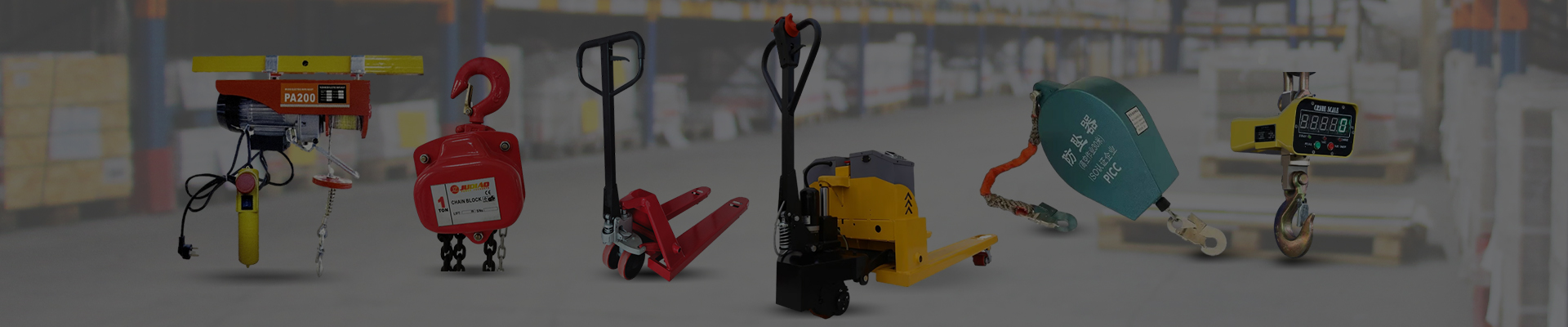


If you asked me a year ago about small cable hoists, I might have pictured just a niche piece of equipment tucked away in some industrial corner. But, oddly enough, this little mechanical marvel plays an outsized role in industries worldwide—from construction sites dotting the skylines of megacities to post-disaster relief operations where every ounce counts. Understanding the small cable hoist, why it’s relevant globally, and what it brings to the table feels more crucial than ever, especially as industries push for safer, more cost-efficient, and reliable lifting solutions in tighter spaces.
Globally, construction and industrial sectors have been booming, with the UN estimating that by 2030, nearly 60% of the world’s population will live in urban areas. This rapid urbanization demands innovative equipment that can handle increasingly intricate lifting tasks without hogging space or energy. That’s where the small cable hoist steps in. According to ISO standards for lifting gear, smaller, efficient, and safer hoisting solutions are gaining focus as industries look to optimize their operations and reduce workplace injuries.
Yet, the challenge remains: How do you balance load capacity, portability, and safety without sacrificing budget? Small cable hoists — compact yet robust — answer that call, especially in space-constrained environments, where traditional cranes or larger hoists just won't cut it. Whether it’s in remote mining sites with limited power or humanitarian relief zones where rapid deployment is critical, these hoists are quietly revolutionizing the lifting game.
Simply put, a small cable hoist is a compact mechanical lifting device that uses a steel cable wound on a drum to lift or lower loads. What distinguishes it from its bulkier cousins is its size and functionality optimized for smaller loads — typically in the range of a few hundred kilograms to a couple of tons. It connects seamlessly with modern industrial setups, offering portability and efficiency. But don’t let the “small” fool you: these devices help industries handle big challenges, from assembling delicate machinery to safely maneuvering heavy equipment around tight corners.
Many engineers emphasize how critical the build quality is. The hoist’s drum, cable, and gearbox must withstand constant friction, heavy loads, and variable weather conditions. Manufacturers typically use galvanized steel cables and corrosion-resistant housings to ensure longevity, especially in harsh outdoor environments.
The beauty of these small cable hoists lies in their adaptability. Some models handle lighter loads, perfect for delicate lifting, while others are beefed up to tackle up to 2 tons. Depending on the application—whether in construction or logistics—choosing a hoist with the right rated load is key.
This is a big one. Small cable hoists are designed to be lightweight and mounted quickly onto existing structures like beams or scaffolding. In fact, I recall a site supervisor mentioning how a new small cable hoist saved half a day in setup compared to older rigging methods.
Given the move toward sustainability, many new small cable hoists come with energy-saving motors or offer manual options when power sources are unreliable—perfect for remote or emergency operations.
It’s not just the initial price tag that matters but ongoing upkeep. The simpler the design and the easier it is to service, the better it fares in the long run. Users often choose models with modular parts to swap out worn components without scrapping the entire unit.
From what I’ve gathered, small cable hoists find themselves in surprisingly diverse spots worldwide. In Southeast Asia’s sprawling construction projects, these hoists maneuver steel beams in tight urban confines. Meanwhile, NGOs deploying emergency medical tents post-natural disasters in the Caribbean rely on small cable hoists to quickly erect complex shelters. And then there are mining operations in Australia’s Outback, where power is scarce but heavy lifting is a daily must.
These examples underscore the versatility and necessity of the small cable hoist across continents, industries, and crises.
Cost savings is the obvious winner here. A smaller footprint generally means less material use, easier transport, and faster setup. But there’s a deeper social impact too: safer lifting reduces workplace accidents and enhances dignity by preventing risky manual lifts.
Innovation also plays a role. Many units come with smart controls or remote operation—features that increase precision and reduce operator fatigue. Plus, their reliability has engineers swearing off older, bulkier equipment. For companies chasing leaner, greener operations, these hoists present a logical step forward.
Frankly, the future looks exciting. Carbon fiber cables are slowly being introduced to reduce weight without compromising strength. On the automation front, IoT-enabled cable hoists provide real-time load monitoring and predictive maintenance alerts, which means less downtime and safer lifts.
Green energy integration is another development. Solar-powered hoists are emerging, ideal for isolated locations where grid energy is patchy. Such advances dovetail perfectly with sustainability drives championed by ISO standards and global climate goals.
No solution is perfect, and small cable hoists are no exception. One common issue is cable wear and the risk of sudden failure. Manufacturers are addressing this with higher-grade materials and automated cable retraction systems to extend cable life.
Another challenge is balancing load capacity with weight. Too heavy defeats portability; too light limits use cases. Some companies are experimenting with hybrid designs that shift between manual and powered modes depending on the task.
| Specification | Model A1 | Model B2 | Model C3 |
|---|---|---|---|
| Max Load Capacity | 500 kg | 1,000 kg | 2,000 kg |
| Cable Length | 15 m | 20 m | 30 m |
| Power Source | Electric (230 V) | Electric (110 V) | Manual Options |
| Weight | 18 kg | 25 kg | 30 kg |
| Dimensions (L×W×H) | 38×15×26 cm | 45×18×30 cm | 50×20×35 cm |
| Vendor | Price Range | Warranty | Key Feature | Customer Rating |
|---|---|---|---|---|
| LiftPro | $850 - $1,200 | 2 Years | Lightweight Aluminum Housing | 4.5/5 |
| CableTech | $900 - $1,500 | 3 Years | Energy-Efficient Motor | 4.7/5 |
| HoistMaster | $750 - $1,100 | 1.5 Years | Compact Manual/Power Hybrid | 4.2/5 |
In journeying through the world of small cable hoists, I’ve come to appreciate their quiet ingenuity. They’re not flashy, but their practical benefits ripple across industries—saving time, money, and often lives. For businesses and relief organizations alike, investing in a reliable, efficient small cable hoist makes sense. If you’re wondering where to start or want to explore models that suit your unique lifting tasks, you might want to browse specialized options here. In the end, it’s about making lifting easier, safer, and more sustainable—something we all can agree is a win.


 Afrikaans
 Albanian
 Amharic
 Arabic
 Armenian
 Azerbaijani
 Basque
 Belarusian
 Bengali
 Bosnian
 Bulgarian
 Catalan
 Cebuano
 China
China
 China (Taiwan)
 Corsican
 Croatian
 Czech
Czech
 Danish
 Dutch
Dutch
 Esperanto
 Estonian
 Finnish
 French
 Frisian
 Galician
 Georgian
 German
 Greek
Greek
 Gujarati
 Haitian Creole
 Hausa
Hausa
 Hawaiian
 Hebrew
 Hindi
Hindi
 Miao
Miao
 Hungarian
 Icelandic
 Igbo
Igbo
 Indonesian
 Irish
Irish
 Italian
 Japanese
 Javanese
 Kannada
 Kazakh
 Khmer
Khmer
 Rwandese
 Korean
 Kurdish
 Kyrgyz
 Lao
Lao
 Latin
Latin
 Latvian
 Lithuanian
 Luxembourgish
 Macedonian
 Malgashi
 Malay
Malay
 Malayalam
 Maltese
 Maori
Maori
 Marathi
 Mongolian
 Myanmar
 Nepali
 Norwegian
 Norwegian
 Occitan
 Pashto
 Persian
 Polish
 Portuguese
 Punjabi
 Romanian
 Russian
 Samoan
 Scottish Gaelic
 Serbian
 Sesotho
 Shona
Shona
 Sindhi
 Sinhala
 Slovak
 Slovenian
 Somali
 Spanish
 Sundanese
 Swahili
 Swedish
 Tagalog
 Tajik
Tajik
 Tamil
Tamil
 Tatar
Tatar
 Telugu
 Thai
Thai
 Turkish
 Turkmen
 Ukrainian
 Urdu
Urdu
 Uighur
 Uzbek
Uzbek
 Vietnamese
 Welsh
Welsh
 Bantu
Bantu
 Yiddish
 Yoruba
 Zulu
Zulu
 English