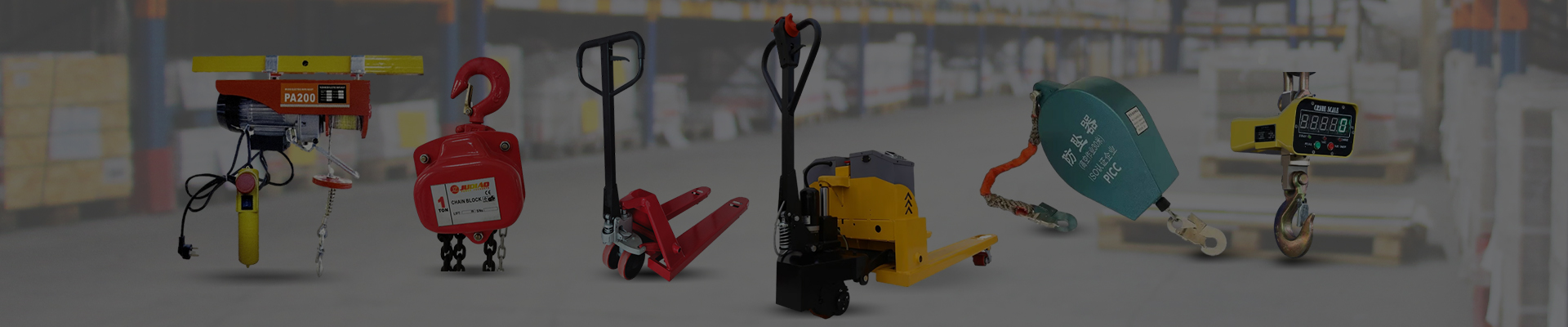


Having clocked in more than a decade in the industrial equipment sector, I’ve seen a lot of innovations come and go, but few have nailed the perfect blend of portability and power like the mobile electric hoist. Frankly, it feels like these machines are the Swiss army knives for modern warehouses and construction sites.
What drew me to mobile electric hoists initially was the sheer practicality. It’s not just about lifting heavy loads — it’s about moving them quickly and safely across locations without lugging around bulky gear. Many engineers say that this kind of flexibility reduces downtime and boosts productivity, and I can’t help but agree.
The design of these hoists tends to focus on lightweight yet robust frames — often built from high-grade steel alloys for durability and corrosion resistance — paired with electric motors calibrated for precise control. Oddly enough, despite their power, they often feel balanced and easy to maneuver. I remember one job where we had to reposition a 2-ton batch in a cramped warehouse corner. The mobile electric hoist made it look like a breeze.
In real terms, safety standards are stringent around such equipment. Mobile electric hoists generally come equipped with overload protection, emergency stop buttons, and smooth braking systems. Manufacturers run rigorous tests — vibration resistance, thermal endurance, and dynamic load trials — to ensure reliability in tough environments.
Customization is another aspect worth mentioning. From hook types to control methods (wired or wireless remote), you can often tailor the device to your exact needs. Some setups even allow integration with automation systems. I suppose this adaptability explains their rising popularity in automated warehouses.
| Feature | Details |
|---|---|
| Lifting Capacity | 500 kg to 5,000 kg |
| Lifting Height | Up to 30 meters |
| Power Supply | AC 220V/380V, 50/60Hz |
| Control Type | Wired or wireless remote |
| Material | Alloy steel with anti-corrosion coating |
| Speed | 8-12 m/min (variable) |
| Vendor | Lifting Capacity | Portability | Price Range | Extra Features |
|---|---|---|---|---|
| QYJuli | Up to 5,000 kg | Highly portable with modular design | $$$ | Wireless remote, overload protection |
| LiftPro | Up to 3,000 kg | Standard trolley system | $$ | Emergency stop, wired control |
| SteelHoist | Up to 4,500 kg | Heavyframe design (less portable) | $$$$ | Advanced braking system, rugged build |
I once worked with a client who needed to install heavy HVAC units on rooftops with limited crane access. The mobile electric hoist became the hero of the project — it handled loads smoothly, helped avoid downtime, and honestly, it saved everyone’s backs more than once. It’s moments like these that really highlight the value of thoughtful machinery.
If you’re in the market for industrial lifting solutions, the combination of portability, power, and safety that a mobile electric hoist offers is something to seriously consider. It’s not just about moving weight, but moving efficiently and confidently.
In the end, it’s these reliable, versatile tools that keep big projects moving smoothly — one load at a time.
References:
1. Industrial Lifting Equipment Standards, ISO 9927-1
2. QYJuli Product Manual and Specs, 2023 Edition
3. "Safety and Ergonomics in Hoist Operation," Journal of Industrial Safety, 2022


 Afrikaans
 Albanian
 Amharic
 Arabic
 Armenian
 Azerbaijani
 Basque
 Belarusian
 Bengali
 Bosnian
 Bulgarian
 Catalan
 Cebuano
 China
China
 China (Taiwan)
 Corsican
 Croatian
 Czech
Czech
 Danish
 Dutch
Dutch
 Esperanto
 Estonian
 Finnish
 French
 Frisian
 Galician
 Georgian
 German
 Greek
Greek
 Gujarati
 Haitian Creole
 Hausa
Hausa
 Hawaiian
 Hebrew
 Hindi
Hindi
 Miao
Miao
 Hungarian
 Icelandic
 Igbo
Igbo
 Indonesian
 Irish
Irish
 Italian
 Japanese
 Javanese
 Kannada
 Kazakh
 Khmer
Khmer
 Rwandese
 Korean
 Kurdish
 Kyrgyz
 Lao
Lao
 Latin
Latin
 Latvian
 Lithuanian
 Luxembourgish
 Macedonian
 Malgashi
 Malay
Malay
 Malayalam
 Maltese
 Maori
Maori
 Marathi
 Mongolian
 Myanmar
 Nepali
 Norwegian
 Norwegian
 Occitan
 Pashto
 Persian
 Polish
 Portuguese
 Punjabi
 Romanian
 Russian
 Samoan
 Scottish Gaelic
 Serbian
 Sesotho
 Shona
Shona
 Sindhi
 Sinhala
 Slovak
 Slovenian
 Somali
 Spanish
 Sundanese
 Swahili
 Swedish
 Tagalog
 Tajik
Tajik
 Tamil
Tamil
 Tatar
Tatar
 Telugu
 Thai
Thai
 Turkish
 Turkmen
 Ukrainian
 Urdu
Urdu
 Uighur
 Uzbek
Uzbek
 Vietnamese
 Welsh
Welsh
 Bantu
Bantu
 Yiddish
 Yoruba
 Zulu
Zulu
 English