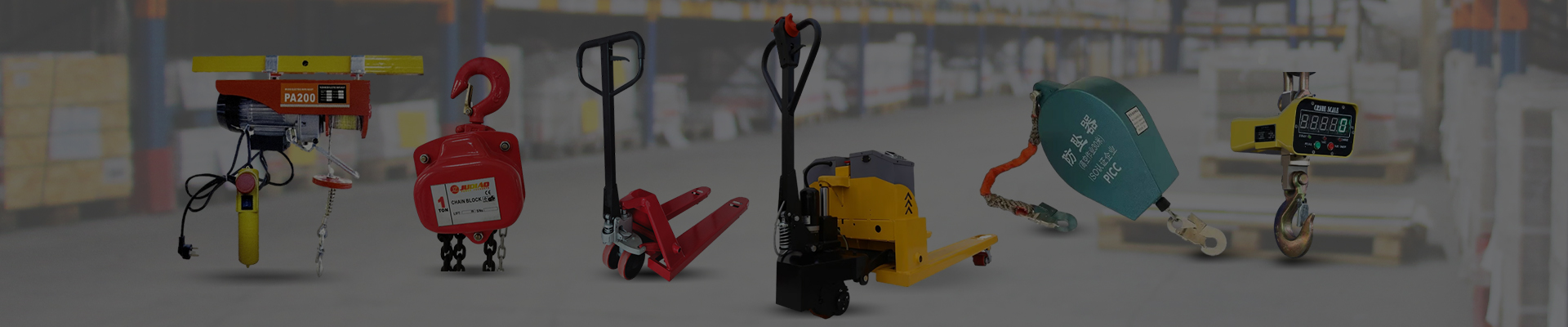


When you hear “1 ton chain block,” you might think just another piece of industrial equipment. But honestly, it’s a surprisingly vital tool that's quietly powering everything from construction sites to disaster relief efforts worldwide. In simple terms, a 1 ton chain block is a manual lifting device designed to hoist loads up to one ton safely and efficiently. Given its widespread use across industries, understanding this tool is more than niche knowledge – it’s about grasping a fundamental link in the global supply and infrastructure chain.
So why does it matter? Globally, with industries growing and infrastructure demands increasing exponentially (the United Nations estimates global infrastructure investment needs to reach $94 trillion by 2040 [1]), reliable lifting equipment that balances power, safety, and cost becomes a cornerstone. A 1 ton chain block offers both simplicity and durability, making it indispensable in regions where electrical or hydraulic alternatives are impractical or too expensive.
Go anywhere from bustling urban construction zones in Asia, remote mining operations in Africa, or even humanitarian hubs during emergencies, and you’ll likely find a chain block in action. The device’s simple, rugged design allows for portability and maintenance in tough environments, unlike more complex machinery that might fail without electricity or specialized parts.
For example, the International Labour Organization (ILO) highlights that proper lifting aids significantly reduce occupational injuries in manual handling tasks [2]. The 1 ton chain block, by supporting ergonomic lifting, helps address workplace injuries and boosts productivity worldwide.
Let’s break it down. A 1 ton chain block, also called a chain hoist, is a mechanical device with a chain wrapped around a wheel and gearing system to lift heavy loads vertically by pulling on a hand chain. The "1 ton" simply refers to its maximum safe working load capacity, approximately 1000 kilograms or 2200 pounds.
It’s a completely manual system — meaning no electricity or compressed air needed — which explains its versatility in places without a reliable power supply or where low-tech solutions are preferred.
In real terms, these factors allow the chain block to be the go-to tool for lifting in construction, manufacturing, and rescue efforts where reliability trumps sophistication.
| Specification | Details |
|---|---|
| Maximum Load Capacity | 1 Ton (1000 kg / 2200 lbs) |
| Lift Height | 3 meters (standard) |
| Material | Alloy steel for chains and hooks with corrosion-resistant finish |
| Brake Type | Load holding mechanical brake |
| Weight | Approx. 8-10 kg |
| Operation | Manual hand chain pulling |
Across continents and industries, the 1 ton chain block pulls more than just weight — it supports lives and economies. Consider these examples:
Oddly enough, its simplicity makes it a favorite in humanitarian logistics, where power can be unreliable, and weight accuracy is critical.
| Brand | Price Range (USD) | Material Quality | Warranty | Additional Features |
|---|---|---|---|---|
| ABC Hoists | $85 - $110 | High-grade alloy steel | 2 years | Ergonomic chain handle |
| GlobalLift Co. | $95 - $130 | Stainless steel with rustproof coating | 3 years | Overload warning system |
| LiftMaster | $70 - $90 | Carbon steel with powder coating | 1 year | Compact design for portability |
The benefits go far beyond the straightforward “lifting heavy things.” Here’s the gist:
If you’re managing operations on a budget but still need dependable performance, the 1 ton chain block seems like a no-brainer.
While the basic design is old-school, incremental improvements keep this tool relevant. Expect:
Frankly, while it might not replace powered hoists, the chain block's simplicity is its superpower.
Some typical limitations include:
Solutions? Many companies provide training modules on proper technique. There’s also a rise in assisted chain blocks with geared cranks or partial motorization to ease pulling. In safety terms, regular inspection protocols and certified components are non-negotiable standards today.
The humble 1 ton chain block is so much more than just a “lifting device.” It embodies decades of engineering wisdom — balancing simplicity, durability, and safety — that serve industries and emergency responders worldwide. Its adaptability, cost-effectiveness, and inherent reliability make it a fundamental tool as the world pushes to build safer, greener, and more resilient infrastructures.
If you want to explore trustworthy chain blocks for your operations or projects, do check out 1 ton chain block selections and product details. It’s always better to invest in quality and expert support — because when safety and efficiency matter, cutting corners isn’t an option.
Takeaway: Sometimes, simple tools quietly power complex worlds.
References:
1. United Nations Sustainable Development Goals Report 2023 - unstats.un.org
2. International Labour Organization - Safety and Health at Work - ilo.org
3. ISO 12100:2010 - Safety of machinery — General principles for design - iso.org


 Afrikaans
 Albanian
 Amharic
 Arabic
 Armenian
 Azerbaijani
 Basque
 Belarusian
 Bengali
 Bosnian
 Bulgarian
 Catalan
 Cebuano
 China
China
 China (Taiwan)
 Corsican
 Croatian
 Czech
Czech
 Danish
 Dutch
Dutch
 Esperanto
 Estonian
 Finnish
 French
 Frisian
 Galician
 Georgian
 German
 Greek
Greek
 Gujarati
 Haitian Creole
 Hausa
Hausa
 Hawaiian
 Hebrew
 Hindi
Hindi
 Miao
Miao
 Hungarian
 Icelandic
 Igbo
Igbo
 Indonesian
 Irish
Irish
 Italian
 Japanese
 Javanese
 Kannada
 Kazakh
 Khmer
Khmer
 Rwandese
 Korean
 Kurdish
 Kyrgyz
 Lao
Lao
 Latin
Latin
 Latvian
 Lithuanian
 Luxembourgish
 Macedonian
 Malgashi
 Malay
Malay
 Malayalam
 Maltese
 Maori
Maori
 Marathi
 Mongolian
 Myanmar
 Nepali
 Norwegian
 Norwegian
 Occitan
 Pashto
 Persian
 Polish
 Portuguese
 Punjabi
 Romanian
 Russian
 Samoan
 Scottish Gaelic
 Serbian
 Sesotho
 Shona
Shona
 Sindhi
 Sinhala
 Slovak
 Slovenian
 Somali
 Spanish
 Sundanese
 Swahili
 Swedish
 Tagalog
 Tajik
Tajik
 Tamil
Tamil
 Tatar
Tatar
 Telugu
 Thai
Thai
 Turkish
 Turkmen
 Ukrainian
 Urdu
Urdu
 Uighur
 Uzbek
Uzbek
 Vietnamese
 Welsh
Welsh
 Bantu
Bantu
 Yiddish
 Yoruba
 Zulu
Zulu
 English