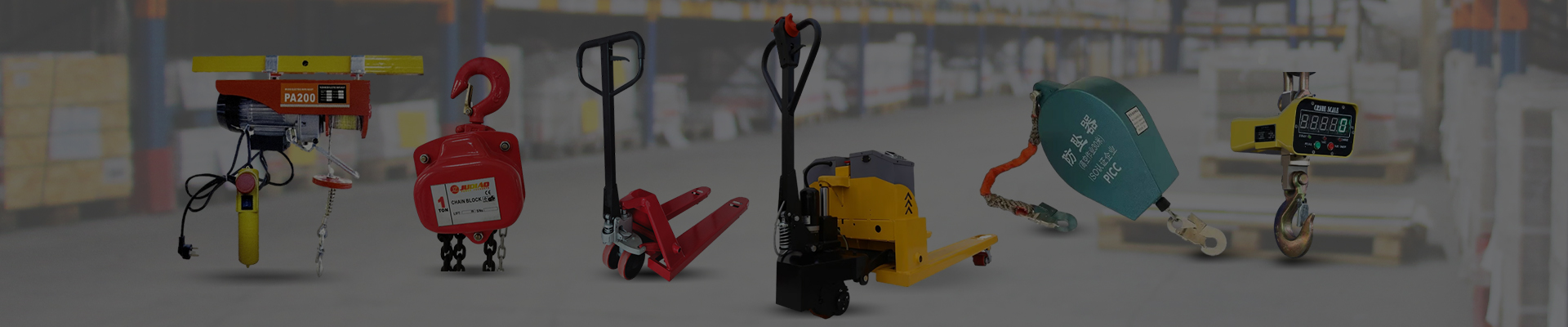


Having spent over a decade in industrial equipment supply and maintenance, I’ve come to appreciate how seemingly simple tools can make a world of difference on the factory floor. Take the chain pulley block with trolley, for instance. It’s one of those pieces of kit that, frankly, doesn’t get the spotlight it deserves, yet it’s a cornerstone for safe and efficient lifting operations in countless industries.
Now, you might wonder what sets a chain pulley block with trolley apart from the run-of-the-mill hoist. In real terms, the addition of a trolley transforms the pulley block from a fixed lifting aid into a mobile solution — capable of shifting heavy loads across beams, usually on an overhead track. This mobility combined with the mechanical advantage of the chain mechanism allows operators to maneuver and position bulky items with surprising ease and precision.
Over the years, I’ve noticed the products vary quite a bit depending on their build quality, load capacity, and especially the robustness of their trolleys. In industries like manufacturing or construction, the equipment faces rugged conditions — dust, vibrations, and the occasional accidental knock. So, a sturdy frame and smooth trolley wheels aren't just perks; they’re necessities for longevity and safety.
The specifications often tell the story: load capacity, lift height, chain size, and trolley adjustability. For example, a typical industrial-grade unit might offer load capacities ranging from 500 kg up to 10 tons. The lift height can be customized, but most standard models clock around 3 to 6 meters of vertical reach. The chains themselves usually comply with international safety standards, often made of high-grade alloy steel that balances strength with flexibility.
| Specification | Details |
|---|---|
| Load Capacity | 500 kg to 10 tons |
| Lift Height | 3 - 6 meters (customizable) |
| Chain Material | Heat-treated alloy steel |
| Trolley Type | Manual push or geared |
| Safety Standard | ISO 9001 / CE Certified |
From my experience, the smoother the trolley’s movement, the better. I remember one plant where a poorly designed trolley caused minor delays during load shifting, and it was a constant source of frustration for the operators. On the flip side, models with high-quality bearings and proper wheel alignment made a marked difference — reducing physical strain and speeding up workflow.
If you’re in the market, the vendor’s credibility and after-sales support can be as important as the product specs themselves. Here’s a quick comparison of three reputable suppliers I’ve encountered, focusing on product range, quality, and customer service.
| Vendor | Product Range | Quality Assurance | After-Sales Support |
|---|---|---|---|
| QY Juli | Wide (0.5-10 ton, varied trolley types) | ISO 9001 & CE compliant, rigorous testing | Responsive, customization available |
| Vendor B | Moderate (0.75-7 ton) | CE compliant, batch testing | Average response times |
| Vendor C | Limited (up to 5 ton) | Basic testing, no certifications | Minimal technical support |
Oddly enough, many engineers I’ve spoken to tend to lean towards vendors like QY Juli because they balance solid build quality with attentive service. It’s no good having impressive specs if you can’t get technical assistance quickly or if spare parts aren’t readily available.
Before I forget, one interesting story comes to mind: a medium-sized fabrication shop switched from a local generic chain pulley block to a branded unit with an integrated trolley from QY Juli. The result? Their material handling speed increased by about 20%, and there were zero reported incidents related to equipment failure six months post-installation. Small change, big impact — you know how that goes.
To wrap up, if you’re considering a chain pulley block with trolley, focus on safety certifications, sturdy construction, and vendor reliability. It feels like an investment that pays off over and over, especially when heavy lifting is a routine part of your operation.
Hope this helps – and don’t underestimate the humble chain pulley block. It’s a simple machine, but with a bit of know-how, it can be a game changer.
— From someone who’s seen a few million tons lifted (or tried to) over the years.


 Afrikaans
 Albanian
 Amharic
 Arabic
 Armenian
 Azerbaijani
 Basque
 Belarusian
 Bengali
 Bosnian
 Bulgarian
 Catalan
 Cebuano
 China
China
 China (Taiwan)
 Corsican
 Croatian
 Czech
Czech
 Danish
 Dutch
Dutch
 Esperanto
 Estonian
 Finnish
 French
 Frisian
 Galician
 Georgian
 German
 Greek
Greek
 Gujarati
 Haitian Creole
 Hausa
Hausa
 Hawaiian
 Hebrew
 Hindi
Hindi
 Miao
Miao
 Hungarian
 Icelandic
 Igbo
Igbo
 Indonesian
 Irish
Irish
 Italian
 Japanese
 Javanese
 Kannada
 Kazakh
 Khmer
Khmer
 Rwandese
 Korean
 Kurdish
 Kyrgyz
 Lao
Lao
 Latin
Latin
 Latvian
 Lithuanian
 Luxembourgish
 Macedonian
 Malgashi
 Malay
Malay
 Malayalam
 Maltese
 Maori
Maori
 Marathi
 Mongolian
 Myanmar
 Nepali
 Norwegian
 Norwegian
 Occitan
 Pashto
 Persian
 Polish
 Portuguese
 Punjabi
 Romanian
 Russian
 Samoan
 Scottish Gaelic
 Serbian
 Sesotho
 Shona
Shona
 Sindhi
 Sinhala
 Slovak
 Slovenian
 Somali
 Spanish
 Sundanese
 Swahili
 Swedish
 Tagalog
 Tajik
Tajik
 Tamil
Tamil
 Tatar
Tatar
 Telugu
 Thai
Thai
 Turkish
 Turkmen
 Ukrainian
 Urdu
Urdu
 Uighur
 Uzbek
Uzbek
 Vietnamese
 Welsh
Welsh
 Bantu
Bantu
 Yiddish
 Yoruba
 Zulu
Zulu
 English