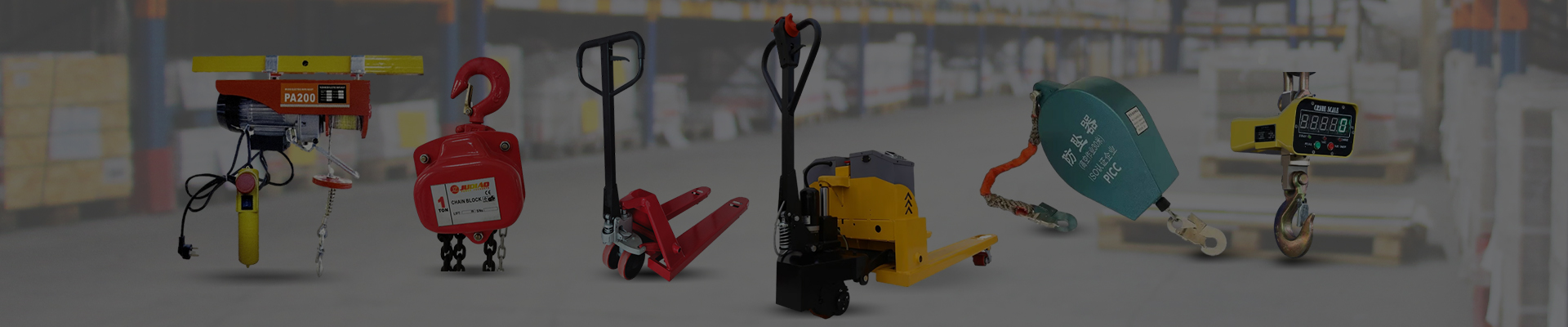


After spending more than a decade wrangling with industrial equipment—cranes, hoists, you name it—I’ve come to appreciate the humble power of a chain pulley 10 ton. There’s something oddly satisfying about a tool that refuses to quit under serious load. Frankly, in factories or on construction sites, this kind of equipment isn’t just a gadget — it’s an essential partner.
The really solid 10-ton chain pulley models out there tend to balance durability with user-friendly design. I recall an old site where a well-maintained chain pulley was handed down from one shift crew to another, and it kept working like a champ. No fancy bells and whistles, just pure mechanical muscle.
| Specification | Details |
|---|---|
| Lifting Capacity | 10 Ton (20,000 lbs) |
| Chain Material | High-grade alloy steel, heat treated |
| Load Chain Diameter | 10-12 mm |
| Safety Factor | 4:1 (industry standard) |
| Operation Type | Manual hand chain |
| Weight (approx.) | 55 kg (121 lbs) |
You know, one thing that tends to get overlooked is the chain material itself. Many engineers I know swear by heat-treated alloy steel chains because they stand up better to abrasion and corrosion, which really matters overtime on the shop floor. Oddly enough, a common failure point in cheaper pulleys can be the chain’s breakage under inconsistent maintenance.
I often remind newcomers that these pulleys are tested rigorously before they land on your shop floor — through load tests well above the rated 10 tons, ensuring compliance with ISO 12100 standards. It’s reassuring to know your hoist won’t give up mid-lift, especially when your safety depends on it.
| Vendor | Build Quality | Price Range | Warranty | Key Feature |
|---|---|---|---|---|
| QY Juli | High-grade alloy steel, heat treated | $$$ | 2 years | Smooth chain operation; ergonomic hand chain |
| Brand X | Standard steel, basic heat treatment | $$ | 1 year | Compact size, lightweight |
| Brand Y | Medium grade steel | $$$ | 3 years | Reinforced braking system |
Choosing the right vendor can feel a little like a minefield — but if you ask me, going with a trusted manufacturer who backs their product with a solid warranty and detailed specs is the way to go. The last thing you want is downtime or, worse, a safety incident caused by equipment failure.
On a site I supervised last year, switching our chain pulley supplier to QY Juli’s gear solved persistent maintenance headaches. The smoother chain and better corrosion resistance made all the difference — the crews noticed immediately. It's just a subtle thing that keeps stressful workflow interruptions at bay.
To sum it up, if you’re in the market for a chain pulley 10 ton, prioritize tough materials, a trusted warranty, and ease of use. After all, your equipment should hold up as long as your team does — if not longer. And that gives me peace of mind every time I lift a load.
References:
1. ISO 12100 – Safety of machinery - General principles
2. QY Juli Official Product Specs and User Manuals
3. Industry Reports on Industrial Hoisting Equipment Reliability, 2022


 Afrikaans
 Albanian
 Amharic
 Arabic
 Armenian
 Azerbaijani
 Basque
 Belarusian
 Bengali
 Bosnian
 Bulgarian
 Catalan
 Cebuano
 China
China
 China (Taiwan)
 Corsican
 Croatian
 Czech
Czech
 Danish
 Dutch
Dutch
 Esperanto
 Estonian
 Finnish
 French
 Frisian
 Galician
 Georgian
 German
 Greek
Greek
 Gujarati
 Haitian Creole
 Hausa
Hausa
 Hawaiian
 Hebrew
 Hindi
Hindi
 Miao
Miao
 Hungarian
 Icelandic
 Igbo
Igbo
 Indonesian
 Irish
Irish
 Italian
 Japanese
 Javanese
 Kannada
 Kazakh
 Khmer
Khmer
 Rwandese
 Korean
 Kurdish
 Kyrgyz
 Lao
Lao
 Latin
Latin
 Latvian
 Lithuanian
 Luxembourgish
 Macedonian
 Malgashi
 Malay
Malay
 Malayalam
 Maltese
 Maori
Maori
 Marathi
 Mongolian
 Myanmar
 Nepali
 Norwegian
 Norwegian
 Occitan
 Pashto
 Persian
 Polish
 Portuguese
 Punjabi
 Romanian
 Russian
 Samoan
 Scottish Gaelic
 Serbian
 Sesotho
 Shona
Shona
 Sindhi
 Sinhala
 Slovak
 Slovenian
 Somali
 Spanish
 Sundanese
 Swahili
 Swedish
 Tagalog
 Tajik
Tajik
 Tamil
Tamil
 Tatar
Tatar
 Telugu
 Thai
Thai
 Turkish
 Turkmen
 Ukrainian
 Urdu
Urdu
 Uighur
 Uzbek
Uzbek
 Vietnamese
 Welsh
Welsh
 Bantu
Bantu
 Yiddish
 Yoruba
 Zulu
Zulu
 English