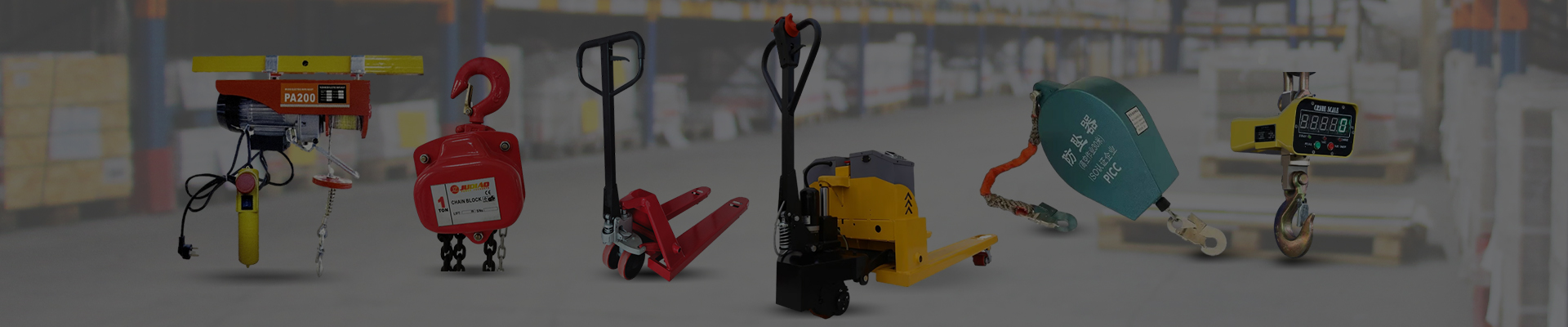


Let’s face it, in industries and humanitarian crises around the world, the ability to lift and transport loads quickly and safely is more than just a convenience – it’s a lifeline. The mini hoist crane 500kg might seem modest in size and capacity, but its impact can ripple across construction projects, manufacturing, logistics, and disaster relief efforts. Understanding how this tool fits into the bigger picture helps us appreciate why it keeps gaining ground globally.
Whether you’re in a bustling industrial zone or a remote aid site, knowing what to expect from a mini hoist crane 500kg can mean smoother operations, faster turnarounds, and safer environments.
Globally, the handling equipment market is booming; according to the International Organization for Standardization (ISO), demand for compact, efficient lifting devices has grown steadily as more industries embrace mechanization and automation. In 2023, the UN estimated over 50 million construction workers worldwide, many of whom rely on medium-to-small lifting solutions like mini hoist cranes.
But here’s the rub: Many locations still wrestle with infrastructure limits. Heavy cranes might be overkill, bulky, or prone to downtime, while manual labor risks injury and delays. The mini hoist crane 500kg answers that by offering nimbleness, cost-effectiveness, and safety in one tidy package.
In simple terms, a mini hoist crane designed for a 500kg capacity is a compact lifting device tailored to move medium-weight loads (around half a ton) vertically or horizontally in constrained spaces. It’s often electric- or manual-powered, featuring a winch and pulley system built into a compact frame.
These cranes have become staples not just in factories or shops but also in emergency settings like post-disaster rebuilds and humanitarian supply chains where payload capacity isn’t huge—but reliability and portability are crucial.
While “mini” might imply fragility, these cranes are usually crafted from steel alloys, with corrosion-resistant coatings for harsh environments. Think dusty sites in sub-Saharan Africa or humid setups in Southeast Asia — the mini hoist crane 500kg holds up.
Because they often weigh less than 100kg themselves and have compact frames, these cranes can be transported in small vehicles or even by hand in certain setups. It’s a game-changer when access roads are sketchy or infrastructure is damaged.
Many models come with either electric motors running on low voltage or manual winches for more basic needs. The latter is popular in remote locations without reliable power, giving operators fine control over lift speed and accuracy.
From overload protection and emergency stop buttons to mechanical brakes, these cranes are designed to minimize risks—even in less controlled environments. After all, moving 500kg without safeguards is asking for trouble.
Some suppliers offer modular options, letting users add extensions or integrate the crane with other lifting systems. This makes the mini hoist crane 500kg adaptable to shifting needs on dynamic job sites.
| Feature | Specification |
|---|---|
| Maximum Load Capacity | 500 kg (approx. 1100 lbs) |
| Power Source | Electric (220V/110V) or Manual |
| Lift Height | Up to 12 meters |
| Weight of Crane | Approx. 70–90 kg depending on model |
| Material | Steel Alloy with Corrosion-Resistant Coating |
| Control Mechanism | Remote or Manual Lever |
| Vendor | Price Range | Warranty | Unique Feature | Global Shipping |
|---|---|---|---|---|
| QYJULI | $1200 - $1600 | 2 years | Modular extensions | Yes |
| LiftPro Inc. | $1350 - $1800 | 3 years | Smart overload sensors | Limited |
| CompactCrane Solutions | $1100 - $1500 | 1 year | Manual and electric dual mode | Yes |
It’s fascinating to see how this compact lifting hero performs across regions and industries. In Southeast Asia’s manufacturing hubs, these cranes speed up assembly lines while fitting into crowded workshops. In post-disaster zones—think earthquake rebuilding efforts in Nepal or hurricane recovery in the Caribbean—portable mini hoist cranes enable relief teams to shift debris and unload supplies where bigger machines can’t reach.
Interestingly, remote mining and energy projects in Africa also rely on the mini hoist crane 500kg when heavy machinery access is restricted, and safety is paramount.
Mini takeaway: Whether it’s urban or rural, commercial or humanitarian, these cranes bridge the gap between heavy capacity and practical portability, which many stakeholders say is unmatched.
It feels almost poetic that something so “mini” carries such weight in real-world value.
In the dusty corners of innovation labs, engineers are working on integrating IoT sensors for real-time load monitoring, digital remote controls for precision, and lightweight composite materials to shave extra kilos off these cranes—making them even easier to deploy.
Green energy integration is another exciting trend. Solar-powered electric mini hoist cranes are slowly becoming a thing, promising almost zero operational emissions.
Automation may be aiming higher, but these nimble cranes likely keep their niche where human-in-the-loop control reigns—sort of a balance between tech and traditional reliability.
No device is perfect. For mini hoist cranes, the biggest hurdles remain limited maximum load, power source dependency, and occasional maintenance headaches in rough conditions.
Experts often recommend modular upgrades and hybrid power systems (manual plus electric) to keep downtime low. Plus, routine inspections aligned with ISO 9927-1 standards—covering the maintenance of cranes—pay off long-term.
Typically, loads up to 500 kilograms, like medium-sized machinery parts, construction materials, or humanitarian aid packages. It’s perfect when you don’t need a heavy crane but require reliable lifting power.
When properly operated and maintained, yes. Safety features such as overload protection and emergency stops make them suitable for unpredictable environments, provided users are trained.
Absolutely. Many mini hoist cranes offer manual winch options for areas without a stable power grid, ensuring functionality even off the beaten path.
Most models weigh around 70–90 kg and come with compact frames, making them transportable by small vehicles or even carried short distances by a team.
Vendors like QYJULI specialize in these cranes with global shipping options and robust warranties—ideal for businesses or NGOs worldwide.
In the end, the mini hoist crane 500kg isn't just another piece of equipment. It’s a compact yet powerful solution meeting very real needs in fast-evolving industries and critical humanitarian operations. Offering a practical balance of performance, safety, and portability, these cranes help keep the wheels turning on projects that build, sustain, and recover communities globally.
If you’ve been thinking about upgrading your lifting toolkit, or need dependable load lifting on the go, check out options like those offered by QYJULI. There’s a lot of power packed in something this size.
Mini takeaway: Sometimes, smaller solutions carry the heaviest weight in progress.


 Afrikaans
 Albanian
 Amharic
 Arabic
 Armenian
 Azerbaijani
 Basque
 Belarusian
 Bengali
 Bosnian
 Bulgarian
 Catalan
 Cebuano
 China
China
 China (Taiwan)
 Corsican
 Croatian
 Czech
Czech
 Danish
 Dutch
Dutch
 Esperanto
 Estonian
 Finnish
 French
 Frisian
 Galician
 Georgian
 German
 Greek
Greek
 Gujarati
 Haitian Creole
 Hausa
Hausa
 Hawaiian
 Hebrew
 Hindi
Hindi
 Miao
Miao
 Hungarian
 Icelandic
 Igbo
Igbo
 Indonesian
 Irish
Irish
 Italian
 Japanese
 Javanese
 Kannada
 Kazakh
 Khmer
Khmer
 Rwandese
 Korean
 Kurdish
 Kyrgyz
 Lao
Lao
 Latin
Latin
 Latvian
 Lithuanian
 Luxembourgish
 Macedonian
 Malgashi
 Malay
Malay
 Malayalam
 Maltese
 Maori
Maori
 Marathi
 Mongolian
 Myanmar
 Nepali
 Norwegian
 Norwegian
 Occitan
 Pashto
 Persian
 Polish
 Portuguese
 Punjabi
 Romanian
 Russian
 Samoan
 Scottish Gaelic
 Serbian
 Sesotho
 Shona
Shona
 Sindhi
 Sinhala
 Slovak
 Slovenian
 Somali
 Spanish
 Sundanese
 Swahili
 Swedish
 Tagalog
 Tajik
Tajik
 Tamil
Tamil
 Tatar
Tatar
 Telugu
 Thai
Thai
 Turkish
 Turkmen
 Ukrainian
 Urdu
Urdu
 Uighur
 Uzbek
Uzbek
 Vietnamese
 Welsh
Welsh
 Bantu
Bantu
 Yiddish
 Yoruba
 Zulu
Zulu
 English