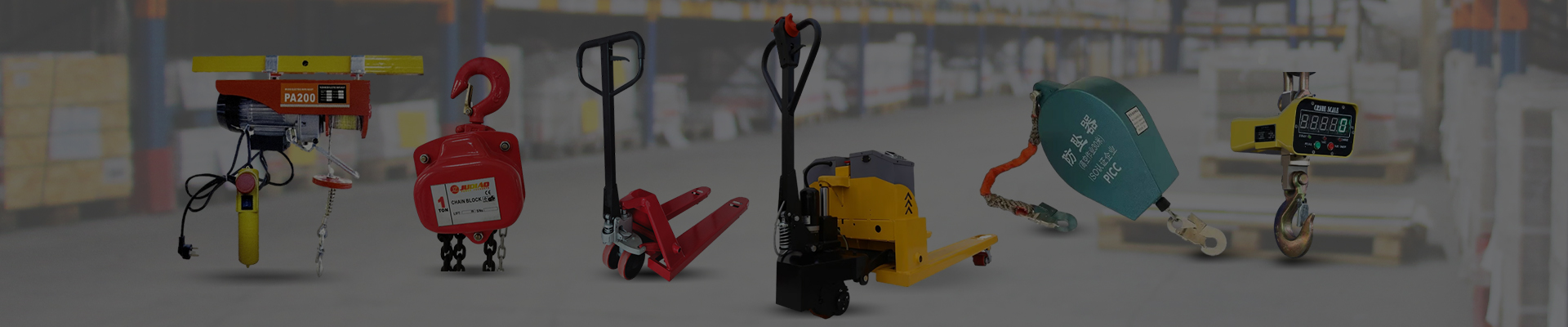


If you've ever been near a construction site, an industrial warehouse, or even a disaster relief operation, you might have seen those awesome mechanical tools quietly doing their job — the heavy duty chain block. It’s one of those unsung heroes of lifting, moving, and securing heavy loads that keep industries running and emergencies managed. But beyond the nuts and bolts, understanding why this device matters globally opens up a world of insight about safety, durability, and innovation across sectors.
More than just a lifting tool, the heavy duty chain block embodies engineering reliability and efficiency. With global infrastructure booming and industries scaling up, knowing what makes these devices tick and how they adapt is not only practical but fascinating. Let's dive in and see what’s behind this simple yet indispensable machine, along with why it’s so vital worldwide.
Industries across the globe handle heavier, larger loads than ever before. According to the International Organization for Standardization (ISO), standards for lifting equipment have tightened significantly due to rising safety and environmental concerns (1). Trillions of dollars are spent annually in construction, warehousing, and manufacturing, and the efficiency of tools like heavy duty chain blocks directly impacts project success and worker safety.
In developing regions, particularly in Asia-Pacific and parts of Africa, heavy duty chain blocks are essential for infrastructure development. The World Bank reports that with rapid urbanization, the demand for efficient material handling is surging (2). Yet, challenges such as inconsistent supply chains, maintenance issues, and lack of technical training often hamper effective deployment. These are exactly the pain points where a reliable heavy duty chain block comes into play, turning heavy lifting from a hazard into a manageable process.
At its core, a heavy duty chain block is a manual or powered hoist that uses a chain and pulley system to lift or lower heavy objects safely and steadily. Unlike basic lifting equipment, these blocks are engineered with reinforced steel, high-grade gears, and precision brakes to handle weights upward of several tonnes.
They’re commonly used in construction, maritime operations, mining, and disaster relief efforts—anywhere heavy loads need careful handling. In humanitarian contexts, for instance, heavy duty chain blocks facilitate fast deployment of shelters, water tanks, and other critical infrastructure in challenging terrains.
Heavy duty chain blocks aren’t just about brute strength. They’re about combining precision, durability, and safety—an understanding that helps industries operate smarter worldwide.
Most are forged from heat-treated alloy steel and stainless steel, offering resistance against corrosion, fatigue, and wear. This is crucial for heavy industrial use or harsh environmental conditions like salty seaports.
Ranges vary between 1 to 50 tonnes or more. Safety catches, braking systems, and overload protection prevent accidents. Many modern blocks feature dual braking for redundancy—engineers swear by it.
Despite their strength, many chain blocks are surprisingly compact and easily transported. Whether on a remote mining site or a sprawling shipyard, adaptability to fit different riggings or height requirements is key.
Periodic lubrication, chain inspection, and load testing extend the device’s life. Some models come with sealed components requiring less maintenance, which is a boon in tough locations.
While upfront costs vary, the balance of durability and low-maintenance design means the total cost of ownership remains competitive, especially versus electric or hydraulic alternatives.
| Specification | Details |
|---|---|
| Load Capacity | 1 to 50 tonnes |
| Chain Material | Heat-treated alloy steel |
| Brake Type | Dual load and hand chain brake |
| Lift Height | 3m to 12m (varies by model) |
| Operating Temperature | -20°C to +50°C |
| Weight | Starting at 10 kg for 1 tonne model |
The heavy duty chain block’s smart engineering lets it juggle high loads safely—almost like a well-trained weightlifter who never breaks a sweat.
Globally, these tools are transforming how we handle material lifting:
Whether building skyscrapers or saving lives, heavy duty chain blocks provide steady strength wherever heavy lifting is non-negotiable.
Let's be honest — you want equipment that just works, without constant fuss or danger. In that light, heavy duty chain blocks offer:
On an emotional level, having dependable gear builds team confidence. Nobody wants to fudge safety with shortcuts, especially when lifting tons of equipment. The heavy duty chain block quietly assures, "I’ve got this."
Oddly enough, even a device as straightforward as a chain block has evolved. Here’s what’s coming down the pipeline:
The future looks more connected and sustainable, blending tradition with technology to make heavy duty chain blocks smarter and greener.
No tool is perfect, and chain blocks face issues like:
Many manufacturers now supply digital manuals and remote support, too — quite handy if you’re stuck a few hundred miles from a servicing center.
| Vendor | Load Capacity Range | Unique Feature | Warranty | Price Range |
|---|---|---|---|---|
| QYJuli | 1–50 tonnes | Industry-best corrosion resistance | 3 years | $$ - $$$ |
| LiftMaster Pro | 2–40 tonnes | Digital overload sensor | 2 years | $$$ |
| Global Hoist Co. | 0.5–30 tonnes | Ultra-lightweight chains | 1 year | $ - $$ |
A: Load capacity, lift height, chain material quality, safety features, and maintenance demands are critical. Also think about the environment — outdoor salty air needs corrosion resistance. Don’t forget warranty and vendor support, which make a big difference in the long run.
A: OSHA recommends routine inspections before every use and comprehensive maintenance every 6 months or annually depending on frequency of use. Chains, hooks, brakes, and load-bearing parts must be checked to ensure safety.
A: Manual blocks work well for intermittent moderate loads. For continuous or very heavy lifting, powered or hybrid models reduce operator fatigue and improve efficiency — though manual ones remain reliable backups.
A: Yes, provided they have corrosion-resistant coatings and proper lubrication. Some models are rated for cold or hot climates but always verify manufacturer specs for your conditions.
A: Trusted suppliers often have clear certifications (ISO, CE) and offer after-sale support. QYJuli is a notable example with strong international distribution and a solid reputation for quality.
The heavy duty chain block might not be flashy, but it’s a core pillar for safe, efficient heavy lifting the world over. From the towering skyscrapers in Dubai to the rugged mining sites down under, these machines are invisible partners in progress. Investing in quality means protecting human lives, saving costs, and enabling projects that push our civilization forward.
If you’re looking to explore heavy duty chain blocks with guaranteed quality and innovation, visit QYJuli today — their performance and support are, frankly, hard to beat.
Behind every heavy load lifted safely lies smart engineering, solid maintenance, and a bit of trust in the humble chain block. That’s a tool worth knowing.


 Afrikaans
 Albanian
 Amharic
 Arabic
 Armenian
 Azerbaijani
 Basque
 Belarusian
 Bengali
 Bosnian
 Bulgarian
 Catalan
 Cebuano
 China
China
 China (Taiwan)
 Corsican
 Croatian
 Czech
Czech
 Danish
 Dutch
Dutch
 Esperanto
 Estonian
 Finnish
 French
 Frisian
 Galician
 Georgian
 German
 Greek
Greek
 Gujarati
 Haitian Creole
 Hausa
Hausa
 Hawaiian
 Hebrew
 Hindi
Hindi
 Miao
Miao
 Hungarian
 Icelandic
 Igbo
Igbo
 Indonesian
 Irish
Irish
 Italian
 Japanese
 Javanese
 Kannada
 Kazakh
 Khmer
Khmer
 Rwandese
 Korean
 Kurdish
 Kyrgyz
 Lao
Lao
 Latin
Latin
 Latvian
 Lithuanian
 Luxembourgish
 Macedonian
 Malgashi
 Malay
Malay
 Malayalam
 Maltese
 Maori
Maori
 Marathi
 Mongolian
 Myanmar
 Nepali
 Norwegian
 Norwegian
 Occitan
 Pashto
 Persian
 Polish
 Portuguese
 Punjabi
 Romanian
 Russian
 Samoan
 Scottish Gaelic
 Serbian
 Sesotho
 Shona
Shona
 Sindhi
 Sinhala
 Slovak
 Slovenian
 Somali
 Spanish
 Sundanese
 Swahili
 Swedish
 Tagalog
 Tajik
Tajik
 Tamil
Tamil
 Tatar
Tatar
 Telugu
 Thai
Thai
 Turkish
 Turkmen
 Ukrainian
 Urdu
Urdu
 Uighur
 Uzbek
Uzbek
 Vietnamese
 Welsh
Welsh
 Bantu
Bantu
 Yiddish
 Yoruba
 Zulu
Zulu
 English