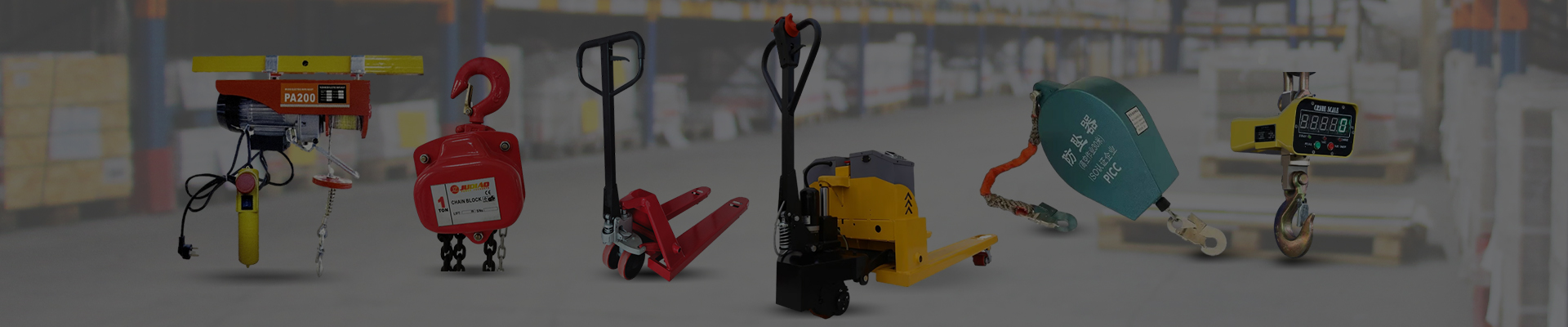


If you've ever handled heavy equipment, you probably know how challenging it can be to lift or move loads safely and efficiently. The 1 ton chain hoist is one such device that plays a quiet but vital role in construction sites, factories, warehouses, and even disaster relief zones around the world. Oddly enough, while it doesn’t get headlines, understanding this simple yet powerful tool reveals a lot about global industry logistics and safety priorities.
In this article, we’ll explore what a 1 ton chain hoist is, why it matters globally, and how its design and applications make a big difference across sectors — from manufacturing to humanitarian aid.
The global construction and manufacturing industries are expected to grow steadily by about 4.5% annually according to the International Labor Organization and World Bank data. With this growth comes increasing demand for reliable lifting equipment of all sizes. The 1 ton chain hoist — capable of hoisting loads up to 1,000 kilograms — strikes a practical balance: it’s strong enough for moderate industrial tasks yet compact and affordable enough for smaller operations or emergency deployments.
These hoists address challenges like manual handling injuries, delays caused by inadequate lifting gear, and the need for portable equipment in remote locations. In humanitarian contexts, such as post-disaster relief, having dependable chain hoists expedites debris removal and infrastructure repair, which ultimately helps communities recover more quickly.
Mini takeaway: The 1 ton chain hoist is a keystone device bridging industrial productivity and crisis response worldwide.
Simply put, a 1 ton chain hoist is a mechanical device that uses a chain loop pulled by hand or powered motor to lift and lower heavy loads up to 1 ton (roughly 2,200 pounds). The hoist has gears and brakes inside a durable casing that multiply the operator’s force, making the lifting possible without strain.
It’s a crucial tool in modern industry because it allows precise control over load movement — safer and more efficient than manual handling or bulky cranes for smaller-scale lifting tasks. From factory assembly lines to humanitarian logistics hubs, this hoist kind helps workers lift with confidence and reduce injury risk.
These factors not only determine how well the hoist functions but also how adaptable it is across multiple industries. For example, a hoist with robust weatherproofing becomes invaluable in outdoor construction zones, while a lightweight design aids mobile repair teams and NGOs.
Mini takeaway: Durability, safety, and portability are the holy trinity for 1 ton chain hoist effectiveness worldwide.
The versatility of the 1 ton chain hoist means it turns up in many surprising places:
You can find detailed product options here: 1 ton chain hoist.
Mini takeaway: Whether rebuilding after a typhoon in the Philippines or assembling machinery in a German factory, the 1 ton chain hoist adapts with ease.
| Specification | Details |
|---|---|
| Load Capacity | 1 ton (1000 kg / 2200 lbs) |
| Chain Material | Alloy Steel (Grade 80 or 100) |
| Lift Height | Various (Standard 3–6 meters) |
| Operation | Manual Pull or Electric Motor |
| Brake System | Automatic Load-Holding Brake |
| Safety Features | Overload Protection, Corrosion Resistance |
| Vendor | Price Range (USD) | Warranty | Materials | Key Strength |
|---|---|---|---|---|
| QYJuli Hoists | $120–$200 | 2 years | Heat-treated alloy steel | Robust design & corrosion resistance |
| LiftMaster Inc. | $150–$220 | 1.5 years | Carbon Steel | Advanced brake system |
| SteelPro Tools | $110–$190 | 2 years | Alloy Steel | Lightweight with ergonomic design |
The benefits of investing in a sturdy 1 ton chain hoist are quite tangible. Firstly, it improves workplace safety by dramatically reducing manual handling injuries — a significant factor according to the International Labor Organization’s safety reports. Then, there’s cost-efficiency: these hoists require minimal maintenance, last for years, and don’t demand specialized operators like cranes.
On a more human level, knowing that load-lifting is handled safely bolsters worker confidence and dignity. In emergency situations, rapid deployment of these hoists speeds up relief efforts — that emotional reassurance adds priceless value well beyond the equipment cost.
The industry is evolving with the times: emerging innovations include integrating digital load monitoring to prevent overloading, leveraging lightweight yet stronger materials like titanium alloys, and even hybrid electric-manual models for energy efficiency.
Sustainability is also on the agenda. Some manufacturers are exploring eco-friendly coatings and recyclable chains, aligning with global standards such as ISO 14001. Automation, perhaps integration with smart construction sites, isn’t far off either.
While 1 ton chain hoists are reliable workhorses, challenges like corrosion, chain stretch, and brake wear can limit lifespan. Experts suggest routine inspections, using protective covers in harsh environments, and timely lubrication to ensure longevity. More innovative approaches include IoT sensors that monitor chain health in real time, cutting unexpected downtime.
The 1 ton chain hoist, while seemingly straightforward, packs a huge punch in practical, global applications — from factory floors to disaster zones. Its blend of portability, safety, longevity, and adaptability make it a wise investment for a spectrum of industries and organizations.
Curious to explore more or find the perfect model for your needs? Check out trusted suppliers like 1 ton chain hoist, where reliability meets innovation.
Thanks for sticking with me — sometimes it's the simplest tools that hold the most transformative power.


 Afrikaans
 Albanian
 Amharic
 Arabic
 Armenian
 Azerbaijani
 Basque
 Belarusian
 Bengali
 Bosnian
 Bulgarian
 Catalan
 Cebuano
 China
China
 China (Taiwan)
 Corsican
 Croatian
 Czech
Czech
 Danish
 Dutch
Dutch
 Esperanto
 Estonian
 Finnish
 French
 Frisian
 Galician
 Georgian
 German
 Greek
Greek
 Gujarati
 Haitian Creole
 Hausa
Hausa
 Hawaiian
 Hebrew
 Hindi
Hindi
 Miao
Miao
 Hungarian
 Icelandic
 Igbo
Igbo
 Indonesian
 Irish
Irish
 Italian
 Japanese
 Javanese
 Kannada
 Kazakh
 Khmer
Khmer
 Rwandese
 Korean
 Kurdish
 Kyrgyz
 Lao
Lao
 Latin
Latin
 Latvian
 Lithuanian
 Luxembourgish
 Macedonian
 Malgashi
 Malay
Malay
 Malayalam
 Maltese
 Maori
Maori
 Marathi
 Mongolian
 Myanmar
 Nepali
 Norwegian
 Norwegian
 Occitan
 Pashto
 Persian
 Polish
 Portuguese
 Punjabi
 Romanian
 Russian
 Samoan
 Scottish Gaelic
 Serbian
 Sesotho
 Shona
Shona
 Sindhi
 Sinhala
 Slovak
 Slovenian
 Somali
 Spanish
 Sundanese
 Swahili
 Swedish
 Tagalog
 Tajik
Tajik
 Tamil
Tamil
 Tatar
Tatar
 Telugu
 Thai
Thai
 Turkish
 Turkmen
 Ukrainian
 Urdu
Urdu
 Uighur
 Uzbek
Uzbek
 Vietnamese
 Welsh
Welsh
 Bantu
Bantu
 Yiddish
 Yoruba
 Zulu
Zulu
 English