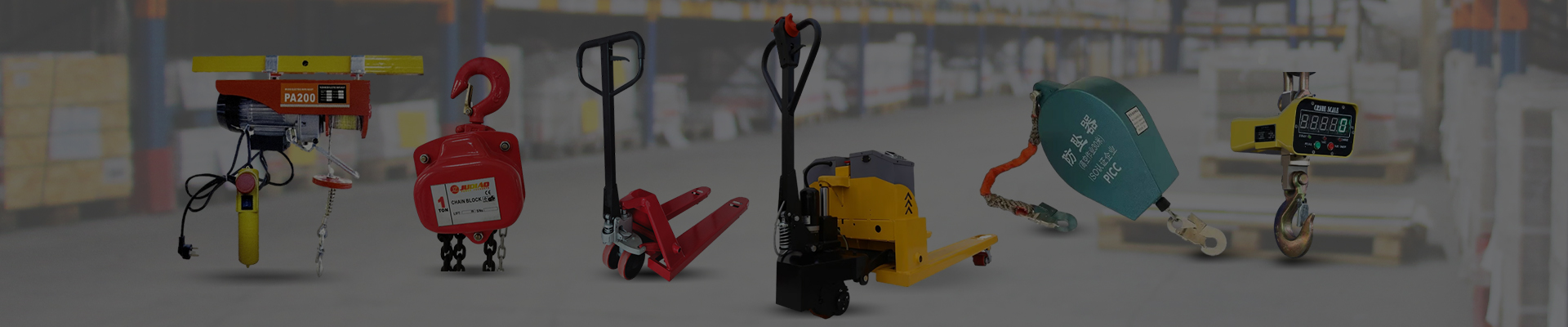


Having spent more than a decade battling the grime and sweat of industrial sites, I’ve come to respect certain tools that just never let you down. One that consistently earns its keep? The chain and block pulley. Honestly, it’s one of those unsung heroes you barely think about until you need to lift something seriously heavy, safely, and without fuss.
Well, let’s unpack it a bit. Chain and block pulleys, often called chain hoists or block and tackle systems, have been around in various forms for centuries. But the modern industrial versions? They’re precision-engineered beasts, designed for demanding environments – from shipyards to construction sites to assembly lines. The charm is in their simplicity and robustness.
These pulleys use a hand-operated or motorized chain loop to drive a gear train that lifts heavy loads vertically with minimal effort. The metal blocks house the gears and chain wheel; often, these components are crafted from heat-treated steel or alloy steel for maximum strength and durability. I recall working on a dockyard project where the pulley had to perform in salty, corrosive conditions – the manufacturers’ use of corrosion-resistant coatings made all the difference. It’s funny how the little things like material selection hugely impact reliability in the field.
In real terms, the advantages are straightforward but significant: compact, portable, and capable of lifting loads from under a ton to several tons. The neat thing is, you don’t always need power; manual pulleys remain a staple where electricity isn’t safe or practical. Many engineers I know prefer the tactile control of chain and block systems when precise positioning is needed. There’s something satisfying about the mechanical feedback you get – it makes the whole process feel more connected.
Customization is another interesting dimension. Some vendors offer bespoke chain lengths, load capacities, or even specially treated chains for harsh environments. It reminds me of a recent call I had with a customer who needed a pulley system for a glass manufacturing plant. They wanted ultra-smooth operation to avoid any jerks that could crack their product. The solution involved special gearing tolerances and lubrication – a fine example of how the basic design adapts to unique industrial needs.
On the topic of quality, it’s wise to verify certifications and testing standards. Reliable suppliers test their hoists under 125% of rated load capacity as a safety margin – I always check those specs carefully. It’s one of those things where cutting corners just isn’t worth it. A failure could cause serious injury or equipment damage, so a certified, tested block pulley is a non-negotiable.
Below is a quick specs rundown of a typical industrial chain and block pulley rated for 2 tons, just to give you the flavor:
| Specification | Details |
|---|---|
| Load Capacity | 2 tons (2000 kg) |
| Chain Material | Alloy Steel, heat-treated |
| Lift Height | 3 meters (standard, customizable) |
| Weight | 15 kg |
| Finish | Corrosion-resistant paint |
Now, if you’re considering where to source a reliable unit, the market has plenty of options. But from my experience—and through conversations with other pros—these three vendors consistently pop up as go-to choices. Here’s a quick comparison:
| Vendor | Max Load | Build Quality | Price Range | Lead Time |
|---|---|---|---|---|
| QYJuli | Up to 5 tons | High, ISO certified | $$$ | 2-3 weeks |
| XYZ Hoists | Up to 3 tons | Medium, CE marked | $$ | 1-2 weeks |
| HeavyLift Co. | Up to 10 tons | Premium, extensive testing | $$$$ | 4-6 weeks |
You know, in all those years on various industrial sites, the right pulley has saved more than a few backaches and awkward maneuvers. Frankly, good equipment might cost a bit more upfront, but it pays off in durability and peace of mind. And if you’re looking for reliability coupled with solid customer service, QYJuli comes highly recommended within the trenches.
In closing, while it’s easy to overlook something as “basic” as a chain and block pulley, they are the backbone of so many lifting operations. There’s a satisfying mechanical elegance to watching a heavy load ascend smoothly, controlled by nothing but a loop of chain and some well-engineered gears. It feels like a testament to how simple machines continue to serve us well in increasingly complex industrial worlds.
So next time you hear that clink-clank of a chain pulley working away, you might just pause and appreciate a small but mighty marvel of engineering.
References:


 Afrikaans
 Albanian
 Amharic
 Arabic
 Armenian
 Azerbaijani
 Basque
 Belarusian
 Bengali
 Bosnian
 Bulgarian
 Catalan
 Cebuano
 China
China
 China (Taiwan)
 Corsican
 Croatian
 Czech
Czech
 Danish
 Dutch
Dutch
 Esperanto
 Estonian
 Finnish
 French
 Frisian
 Galician
 Georgian
 German
 Greek
Greek
 Gujarati
 Haitian Creole
 Hausa
Hausa
 Hawaiian
 Hebrew
 Hindi
Hindi
 Miao
Miao
 Hungarian
 Icelandic
 Igbo
Igbo
 Indonesian
 Irish
Irish
 Italian
 Japanese
 Javanese
 Kannada
 Kazakh
 Khmer
Khmer
 Rwandese
 Korean
 Kurdish
 Kyrgyz
 Lao
Lao
 Latin
Latin
 Latvian
 Lithuanian
 Luxembourgish
 Macedonian
 Malgashi
 Malay
Malay
 Malayalam
 Maltese
 Maori
Maori
 Marathi
 Mongolian
 Myanmar
 Nepali
 Norwegian
 Norwegian
 Occitan
 Pashto
 Persian
 Polish
 Portuguese
 Punjabi
 Romanian
 Russian
 Samoan
 Scottish Gaelic
 Serbian
 Sesotho
 Shona
Shona
 Sindhi
 Sinhala
 Slovak
 Slovenian
 Somali
 Spanish
 Sundanese
 Swahili
 Swedish
 Tagalog
 Tajik
Tajik
 Tamil
Tamil
 Tatar
Tatar
 Telugu
 Thai
Thai
 Turkish
 Turkmen
 Ukrainian
 Urdu
Urdu
 Uighur
 Uzbek
Uzbek
 Vietnamese
 Welsh
Welsh
 Bantu
Bantu
 Yiddish
 Yoruba
 Zulu
Zulu
 English