

A 10 ton manual chain hoist is a crucial piece of equipment for various lifting applications across industries. Its robust design and manual operation offer a reliable and cost-effective solution for heavy lifting tasks. This article will explore the features, applications, safety considerations, and benefits of using a 10-ton manual chain hoist. Whether you're in construction, manufacturing, or logistics, understanding this equipment is essential for optimizing your operations. Choosing the right hoist can dramatically improve efficiency and worker safety.
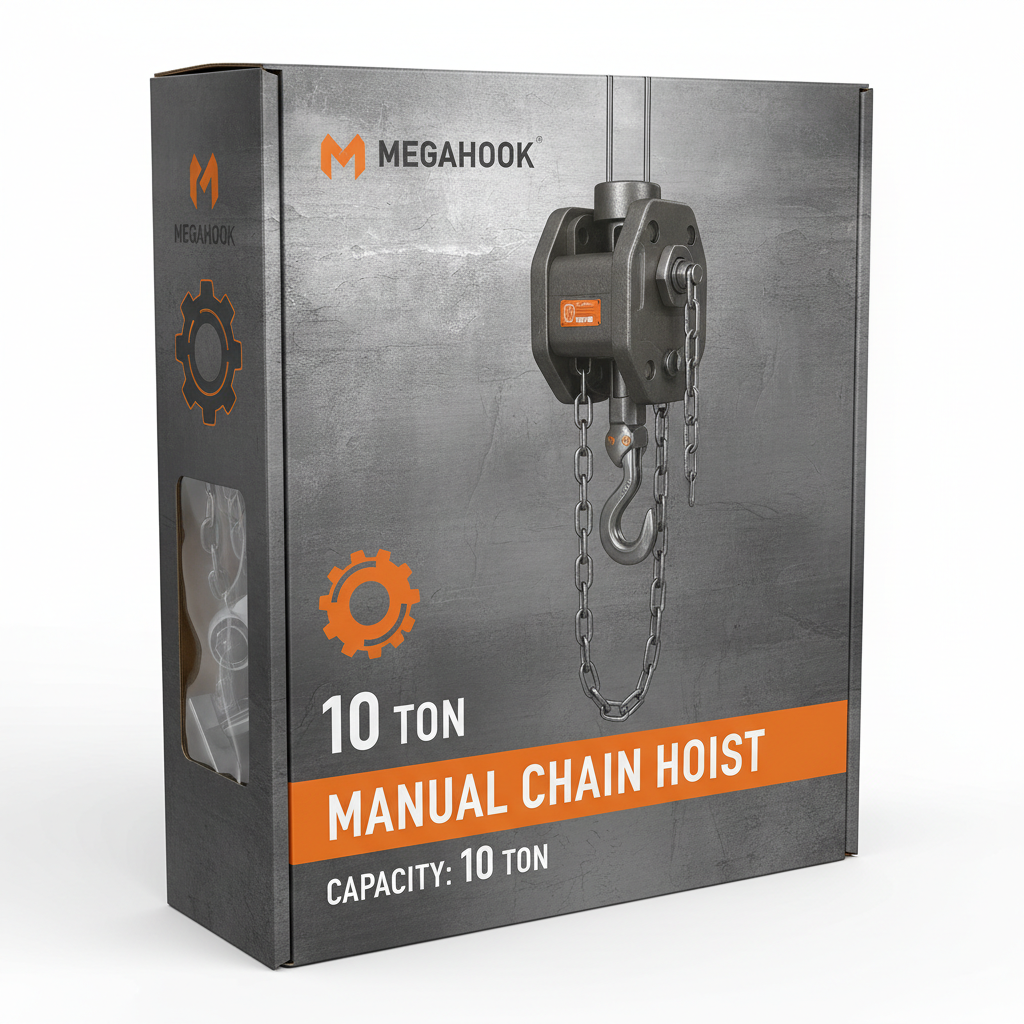
A 10 ton manual chain hoist is designed for heavy-duty lifting, typically used in workshops, warehouses, and construction sites. These hoists utilize a hand chain to operate, providing precise control over lifting and lowering. Key features include a rugged steel frame for durability, a high-quality lifting chain, and load-rated hooks. They are valued for their portability and ability to operate without external power sources. Qyjuli offers a diverse range of hoists suited for various industrial requirements.
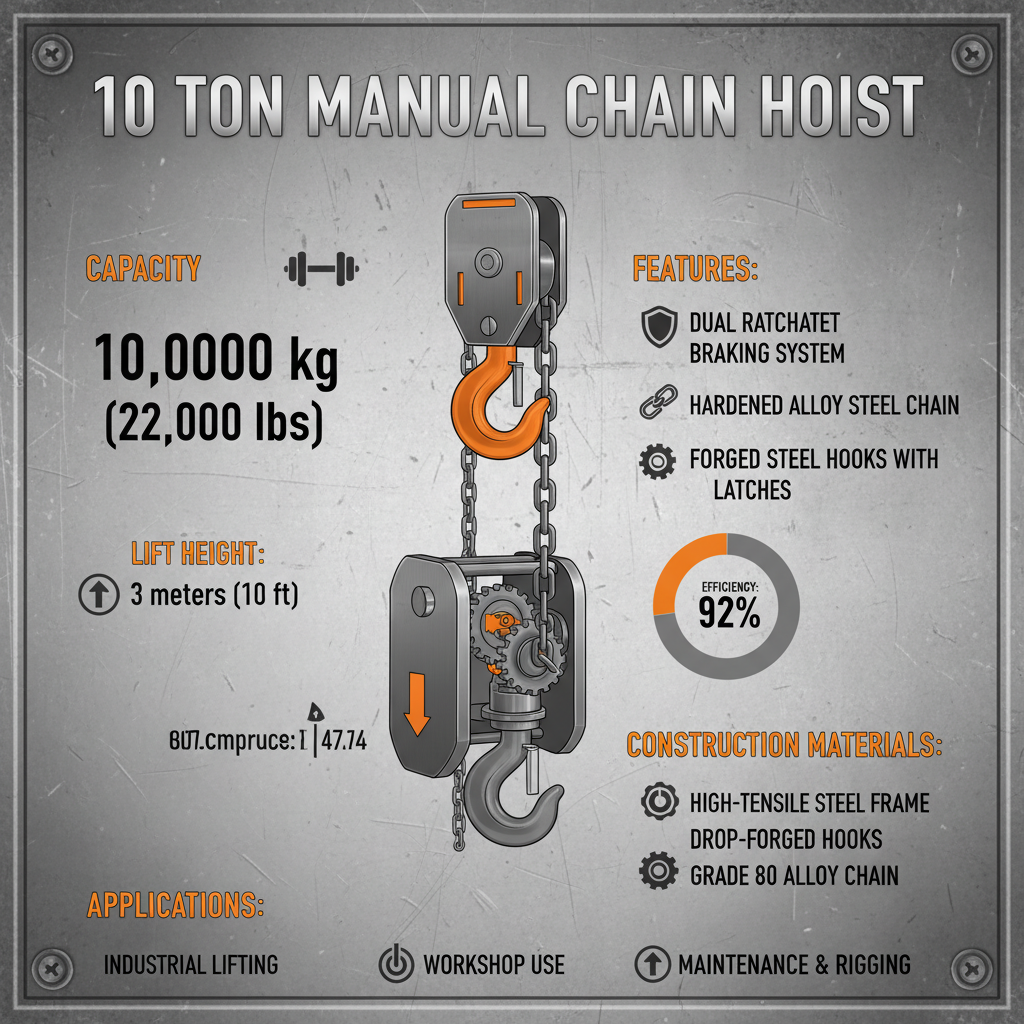
Key Highlights: Rugged steel frame, high-quality lifting chain, load-rated hooks, portable design, and manual operation for precise control.
The versatile 10 ton manual chain hoist finds applications in a wide range of industries. In construction, they are used for lifting heavy materials like steel beams and precast concrete elements. Manufacturing facilities utilize them for moving machinery and large components. Shipyards use them for lifting and positioning heavy parts during shipbuilding and repair. Additionally, they are useful in logistics for loading and unloading heavy cargo. Explore Qyjuli's range of chain hoists to find the ideal solution for your specific needs.
Application Benefits:
• Lifting heavy materials in construction
• Moving machinery in manufacturing
• Loading and unloading cargo in logistics
• Positioning parts in shipyards
Understanding the specifications of a 10-ton manual chain hoist is vital for ensuring safe and efficient operation. These hoists typically adhere to industry standards such as EN 13157. Here’s a typical specification table:
Safety is paramount when operating a 10-ton manual chain hoist. Always inspect the hoist before each use, checking for wear, damage, or deformation. Ensure the lifting chain is properly seated on the load and hook. Never exceed the rated capacity of the hoist. Workers should wear appropriate personal protective equipment (PPE), including safety helmets and gloves. Proper training on hoist operation is critical. Regular maintenance, including lubrication of moving parts, is essential for ensuring long-term reliability and safety. Qyjuli provides detailed safety guidelines with each hoist.
When choosing a lifting solution, it’s important to consider the difference between manual and electric chain hoists. Manual hoists, like the 10-ton version, offer portability and cost-effectiveness. Electric hoists provide faster lifting speeds and require less physical effort, but they depend on a power source and generally have a higher initial cost. The choice depends on the specific application and operational requirements.
Choosing the right 10 ton manual chain hoist is crucial for efficient and safe lifting operations. Factors to consider include capacity, lifting height, safety features, and compliance with industry standards. Qyjuli provides high-quality chain hoists and expert guidance to help you find the perfect solution for your needs. Prioritize safety and reliability when selecting this essential piece of equipment.
Regular maintenance is vital for ensuring the longevity and safety of your hoist. This includes regularly inspecting the chain for wear and tear, lubricating moving parts like the gears and bearings, and checking the hooks for any cracks or deformation. Additionally, visually inspect the entire hoist for any signs of damage. Proper lubrication reduces friction and wear, while regular inspections identify potential issues before they become major problems. Refer to the manufacturer's manual for detailed maintenance instructions.
Always wear appropriate PPE, including a safety helmet, gloves, and safety shoes. Ensure the load is balanced and securely attached to the hoist. Never exceed the rated capacity of the hoist. Keep bystanders clear of the lifting area. Inspect the hoist before each use. Do not operate a damaged hoist. Follow all manufacturer's instructions and guidelines. Proper training is essential before operating any type of hoist.
Manual chain hoists are more portable and don't require a power source, making them suitable for locations where electricity is unavailable or impractical. They are also generally more cost-effective than electric hoists. While they require more physical effort to operate, they offer greater control and are often preferred for precise lifting tasks.
Measure the distance from the lifting point to the highest point the load needs to be raised. Add some extra length to account for the hoist's own height and to allow for comfortable operation of the hand chain. It's always better to have a slightly longer chain than to come up short. Qyjuli offers hoists with various lifting heights and can advise you on the best option for your needs.


 Afrikaans
 Albanian
 Amharic
 Arabic
 Armenian
 Azerbaijani
 Basque
 Belarusian
 Bengali
 Bosnian
 Bulgarian
 Catalan
 Cebuano
 China
China
 China (Taiwan)
 Corsican
 Croatian
 Czech
Czech
 Danish
 Dutch
Dutch
 Esperanto
 Estonian
 Finnish
 French
 Frisian
 Galician
 Georgian
 German
 Greek
Greek
 Gujarati
 Haitian Creole
 Hausa
Hausa
 Hawaiian
 Hebrew
 Hindi
Hindi
 Miao
Miao
 Hungarian
 Icelandic
 Igbo
Igbo
 Indonesian
 Irish
Irish
 Italian
 Japanese
 Javanese
 Kannada
 Kazakh
 Khmer
Khmer
 Rwandese
 Korean
 Kurdish
 Kyrgyz
 Lao
Lao
 Latin
Latin
 Latvian
 Lithuanian
 Luxembourgish
 Macedonian
 Malgashi
 Malay
Malay
 Malayalam
 Maltese
 Maori
Maori
 Marathi
 Mongolian
 Myanmar
 Nepali
 Norwegian
 Norwegian
 Occitan
 Pashto
 Persian
 Polish
 Portuguese
 Punjabi
 Romanian
 Russian
 Samoan
 Scottish Gaelic
 Serbian
 Sesotho
 Shona
Shona
 Sindhi
 Sinhala
 Slovak
 Slovenian
 Somali
 Spanish
 Sundanese
 Swahili
 Swedish
 Tagalog
 Tajik
Tajik
 Tamil
Tamil
 Tatar
Tatar
 Telugu
 Thai
Thai
 Turkish
 Turkmen
 Ukrainian
 Urdu
Urdu
 Uighur
 Uzbek
Uzbek
 Vietnamese
 Welsh
Welsh
 Bantu
Bantu
 Yiddish
 Yoruba
 Zulu
Zulu
 English