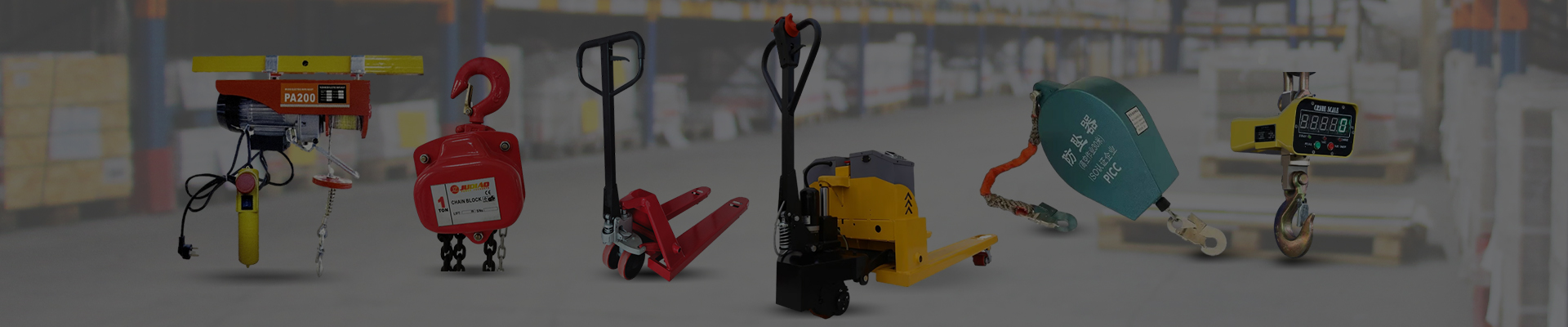


Having spent a good part of my career around industrial equipment, I can honestly say that single phase electric hoists tend to be the unsung heroes on many shop floors and maintenance yards. They’re compact yet surprisingly versatile, crucial where three-phase power isn’t available or practical — which is often the case in smaller workshops, garages, or remote sites.
Now, single phase electric hoists generally come with a straightforward setup: powered by standard 110/220V outlets (depending on your region), they are simpler and easier to integrate without extra electrical infrastructure. When I first started working with these, I noticed something: the models that balance solid build quality with user-friendly features tend to last longer and cut down on downtime. That bit of real-world reliability is what many engineers I’ve spoken to swear by, especially when lifting loads repeatedly throughout the day.
Oddly enough, many people overlook how crucial the design and materials are. Most hoists sport a robust steel frame and alloy gears — which means they're built to withstand tough working conditions. Plus, manufacturers often stress-tested their hoists with loads well above the rated capacity to ensure safety margins. (You don’t want any surprises.)
Speaking of specs, here’s a quick rundown of typical features you might want to check before investing in a single phase electric hoist:
| Specification | Details |
|---|---|
| Lifting Capacity | 250 kg to 1000 kg (varies by model) |
| Power Supply | Single phase 110V/220V |
| Lifting Speed | 4–8 meters/min |
| Motor Type | Gear motor with thermal protection |
| Control | Pendant remote control with emergency stop |
| Duty Cycle | 25% - suitable for moderate-use environments |
Of course, no two vendors are alike. That’s something I learned early on — you want a supplier who not only delivers reliable machinery but also knows their stuff when it comes to after-sales support. Here’s a little vendor comparison to keep in mind:
| Vendor | Product Range | Customization | Warranty | Lead Time | Customer Support |
|---|---|---|---|---|---|
| Vendor A | Basic & mid-range hoists | Limited custom options | 1 year | 2-3 weeks | Email and phone |
| Vendor B | Wide range including heavy-duty | Extensive customization | 2 years | 4-6 weeks | 24/7 support hotline |
| Vendor C | Entry-level units only | No custom options | 6 months | 1 week | Basic online resources |
In practice, I once worked on a project where downtime was critical. We switched to a single phase electric hoist that offered a smooth lifting speed and intuitive controls — it proved itself by keeping our assembly line moving without a hitch. Not all equipment gets to shine like that. In real terms, even small details like the pendant control’s grip or how well the motor heats manage made a difference over weeks and months.
And while it feels like such tech is “just a tool,” it really comes down to safety and efficiency every time. Many technicians stress that a well-chosen hoist isn’t just about lifting loads — it’s about making the whole operation safer and less stressful. So, if you find yourself needing a dependable lifting solution with the ease of single phase power, I’d say it’s worth looking into these machines carefully.
Whether you want to retrofit an older workspace or simply need a hoist that won’t demand excessive wiring work, the right single phase electric hoist can genuinely be a dependable partner — and frankly, that’s what I appreciate after all these years.
Takeaway: Choosing the right single phase electric hoist comes down to balance — between power availability, durability, and vendor support.
References:
1. Industry best practices on hoist safety protocols.
2. Manufacturer technical sheets and test certifications.
3. Feedback from field engineers and maintenance teams.


 Afrikaans
 Albanian
 Amharic
 Arabic
 Armenian
 Azerbaijani
 Basque
 Belarusian
 Bengali
 Bosnian
 Bulgarian
 Catalan
 Cebuano
 China
China
 China (Taiwan)
 Corsican
 Croatian
 Czech
Czech
 Danish
 Dutch
Dutch
 Esperanto
 Estonian
 Finnish
 French
 Frisian
 Galician
 Georgian
 German
 Greek
Greek
 Gujarati
 Haitian Creole
 Hausa
Hausa
 Hawaiian
 Hebrew
 Hindi
Hindi
 Miao
Miao
 Hungarian
 Icelandic
 Igbo
Igbo
 Indonesian
 Irish
Irish
 Italian
 Japanese
 Javanese
 Kannada
 Kazakh
 Khmer
Khmer
 Rwandese
 Korean
 Kurdish
 Kyrgyz
 Lao
Lao
 Latin
Latin
 Latvian
 Lithuanian
 Luxembourgish
 Macedonian
 Malgashi
 Malay
Malay
 Malayalam
 Maltese
 Maori
Maori
 Marathi
 Mongolian
 Myanmar
 Nepali
 Norwegian
 Norwegian
 Occitan
 Pashto
 Persian
 Polish
 Portuguese
 Punjabi
 Romanian
 Russian
 Samoan
 Scottish Gaelic
 Serbian
 Sesotho
 Shona
Shona
 Sindhi
 Sinhala
 Slovak
 Slovenian
 Somali
 Spanish
 Sundanese
 Swahili
 Swedish
 Tagalog
 Tajik
Tajik
 Tamil
Tamil
 Tatar
Tatar
 Telugu
 Thai
Thai
 Turkish
 Turkmen
 Ukrainian
 Urdu
Urdu
 Uighur
 Uzbek
Uzbek
 Vietnamese
 Welsh
Welsh
 Bantu
Bantu
 Yiddish
 Yoruba
 Zulu
Zulu
 English