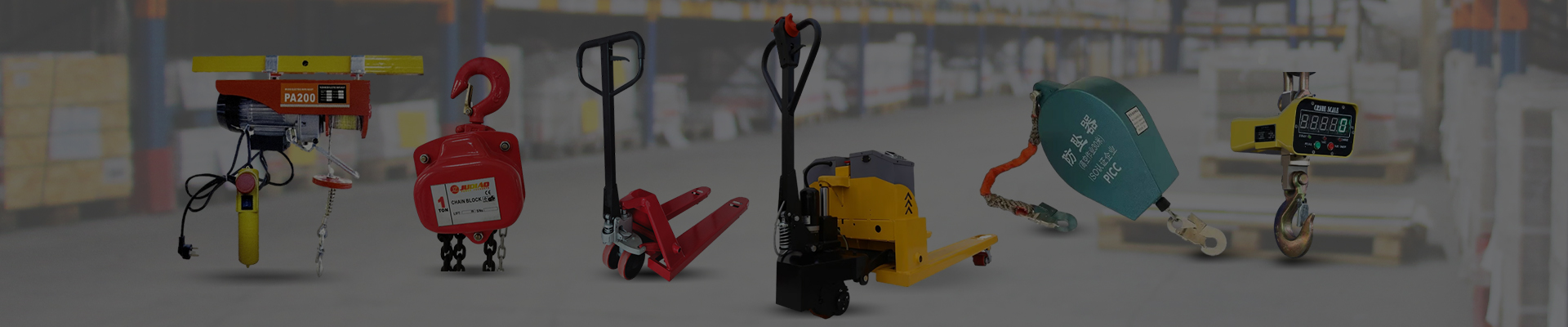


If you work in construction, manufacturing, or warehousing, the term one ton electric hoist likely rings a bell. But beyond the jargon, this tool plays a surprisingly vital role across industries worldwide. Essentially, it’s a machine designed to lift and move loads up to one ton (that’s roughly 2,200 pounds). Why is this so important? Because it mechanizes what would otherwise be backbreaking, risky manual labor, boosting safety and efficiency. Globally, as industries push for faster output and better safety standards, understanding this seemingly simple device can make a significant difference.
According to the International Labour Organization, workplace injuries due to manual material handling cause millions of lost workdays every year. The ISO and other standardization bodies emphasize mechanization like electric hoists to reduce these risks. Plus, in regions with growing infrastructure demands—from Asia’s booming construction sites to Africa’s emerging factories—a dependable one ton electric hoist is a valuable asset for development.
Mini takeaway: The one ton electric hoist is more than a lifting tool; it’s a critical link for global workplaces striving toward safety and productivity.
In the simplest terms, a one ton electric hoist is a motorized lifting device capable of moving loads of up to 1,000 kilograms vertically or horizontally along a track or beam. It works on electricity, eliminating the need for strenuous manual effort. While hoists come in various sizes and capacities, the one ton variety hits a sweet spot for many businesses—powerful enough for heavy loads, yet compact and user-friendly.
Where this really connects with modern industry is its adaptability. Whether it’s assembling machinery parts in a factory or loading cargo in a warehouse, it’s an energy-efficient, precise, and versatile helping hand. On a humanitarian level, electric hoists also assist in disaster relief logistics, enabling responders to move heavy supplies quickly in challenging environments.
Most one ton electric hoists are built tough—stainless steel and high-strength alloys abound—because they need to survive heavy duty cycles and harsh conditions. Longevity matters here; no one wants to deal with downtime in a critical lift.
A clear rating of “one ton” means the device is calibrated, tested, and certified for that maximum weight. Safety features like overload protection and emergency brakes are baked in to prevent accidents.
Some hoists come as compact, mobile units for rapid deployment. Others integrate with fixed overhead beams—either way, ease of installation and movement makes a big difference operationally.
Electric motors vary—from single-phase to three-phase power depending on usage. Increasingly, energy consumption and sustainability are pushing manufacturers to improve efficiency without sacrificing power.
Modern hoists use wired or wireless remote controls, offering precise speed and positioning. Intuitive controls reduce the learning curve and improve operator safety.
Regular upkeep is necessary, but many vendors now provide modular designs or self-diagnostic tools to simplify servicing and reduce unexpected breakdowns.
| Specification | Details |
|---|---|
| Max Load Capacity | 1000 kg (1 ton) |
| Lifting Speed | 4–8 meters/min |
| Power Source | 110V/220V Electric Motor |
| Control | Wireless/Wired Remote |
| Safety Features | Overload Protection, Emergency Stop |
| Weight | ~50 kg (varies by model) |
Mini takeaway: Knowing the specs helps select the right one ton electric hoist that matches your operational needs and safety standards.
The beauty of one ton electric hoists lies in their broad usability. In manufacturing hubs like Germany and China, they streamline assembly lines, helping position heavy components with precision. In developing countries, industries like mining and construction use them extensively to transport materials safely and efficiently.
Humanitarian organizations also rely on these hoists. For example, during earthquake relief in Nepal, responders used portable hoists to clear debris and transport supplies in rugged terrain. Shipping ports worldwide leverage them to load and unload containers swiftly.
| Vendor | Load Capacity | Features | Price Range | Warranty |
|---|---|---|---|---|
| QYJULI | 1 ton | Wireless control, overload protection | $700–$900 | 2 years |
| LiftMaster | 500 kg to 1 ton | Heavy-duty motor, wired control | $600–$850 | 1.5 years |
| ProHoist | 1 ton | Energy-efficient motors, compact design | $750–$950 | 3 years |
Choosing a reliable one ton electric hoist translates to cost savings: less manpower, fewer injuries, and quicker job completion. On the sustainability front, electrification reduces environmental impact compared to fuel-powered alternatives. Plus, it's a trust-builder with workers and clients alike—knowing the equipment prioritizes safety and consistency adds peace of mind. I sometimes find that the emotional comfort of reliable gear is as valuable as its practical benefits.
The next-gen ceases to be just about lifting heavier. Expect smart hoists with integrated IoT sensors for real-time load monitoring, predictive maintenance, and enhanced safety alerts. Green energy initiatives push for lower voltage operations and solar-compatible models. Automation is edging in too—some manufacturers explore robotic-assisted hoisting for entirely remote operations. It’s a dynamic space, honestly.
One big challenge is maintenance, especially in remote or developing regions where service centers might be sparse. Vendors like QYJULI are addressing this with modular parts and virtual maintenance guides. Another issue: inconsistent power supply can affect electric hoist performance—but built-in backup batteries or manual override options help mitigate that risk.
At the end of the day, a one ton electric hoist encapsulates how thoughtful engineering meets real-world needs: safer jobs, efficient workflows, and a friendlier footprint on the environment. If you’re looking to upgrade industrial lifting solutions, investing in one of these tools makes practical sense and speaks volumes about your commitment to safety and innovation.
For more details, specs, and expert advice, be sure to visit QYJULI’s official website. Your team and bottom line will thank you.
Oddly enough, sometimes the simplest machines reshape whole industries—and this is precisely one of those cases.


 Afrikaans
 Albanian
 Amharic
 Arabic
 Armenian
 Azerbaijani
 Basque
 Belarusian
 Bengali
 Bosnian
 Bulgarian
 Catalan
 Cebuano
 China
China
 China (Taiwan)
 Corsican
 Croatian
 Czech
Czech
 Danish
 Dutch
Dutch
 Esperanto
 Estonian
 Finnish
 French
 Frisian
 Galician
 Georgian
 German
 Greek
Greek
 Gujarati
 Haitian Creole
 Hausa
Hausa
 Hawaiian
 Hebrew
 Hindi
Hindi
 Miao
Miao
 Hungarian
 Icelandic
 Igbo
Igbo
 Indonesian
 Irish
Irish
 Italian
 Japanese
 Javanese
 Kannada
 Kazakh
 Khmer
Khmer
 Rwandese
 Korean
 Kurdish
 Kyrgyz
 Lao
Lao
 Latin
Latin
 Latvian
 Lithuanian
 Luxembourgish
 Macedonian
 Malgashi
 Malay
Malay
 Malayalam
 Maltese
 Maori
Maori
 Marathi
 Mongolian
 Myanmar
 Nepali
 Norwegian
 Norwegian
 Occitan
 Pashto
 Persian
 Polish
 Portuguese
 Punjabi
 Romanian
 Russian
 Samoan
 Scottish Gaelic
 Serbian
 Sesotho
 Shona
Shona
 Sindhi
 Sinhala
 Slovak
 Slovenian
 Somali
 Spanish
 Sundanese
 Swahili
 Swedish
 Tagalog
 Tajik
Tajik
 Tamil
Tamil
 Tatar
Tatar
 Telugu
 Thai
Thai
 Turkish
 Turkmen
 Ukrainian
 Urdu
Urdu
 Uighur
 Uzbek
Uzbek
 Vietnamese
 Welsh
Welsh
 Bantu
Bantu
 Yiddish
 Yoruba
 Zulu
Zulu
 English