

Selecting the right lifting equipment often comes down to a critical decision: balancing manual precision with mechanized power. In high-stakes industrial environments, the reliability of a hoist is not just a matter of productivity, but a fundamental requirement for operational safety.
While many facilities rely on a broad array of tools, the strategic partnership with a specialized chain block manufacturer ensures that the hardware meets rigorous international standards such as CE and GS. The shift toward integrated material handling systems has made it necessary to evaluate lifting tools not as standalone products, but as components of a larger safety ecosystem.
This analysis explores the technical benchmarks of modern hoisting machinery, the transition from manual to electric assistance, and the critical parameters buyers must consider to optimize their lifting workflows.


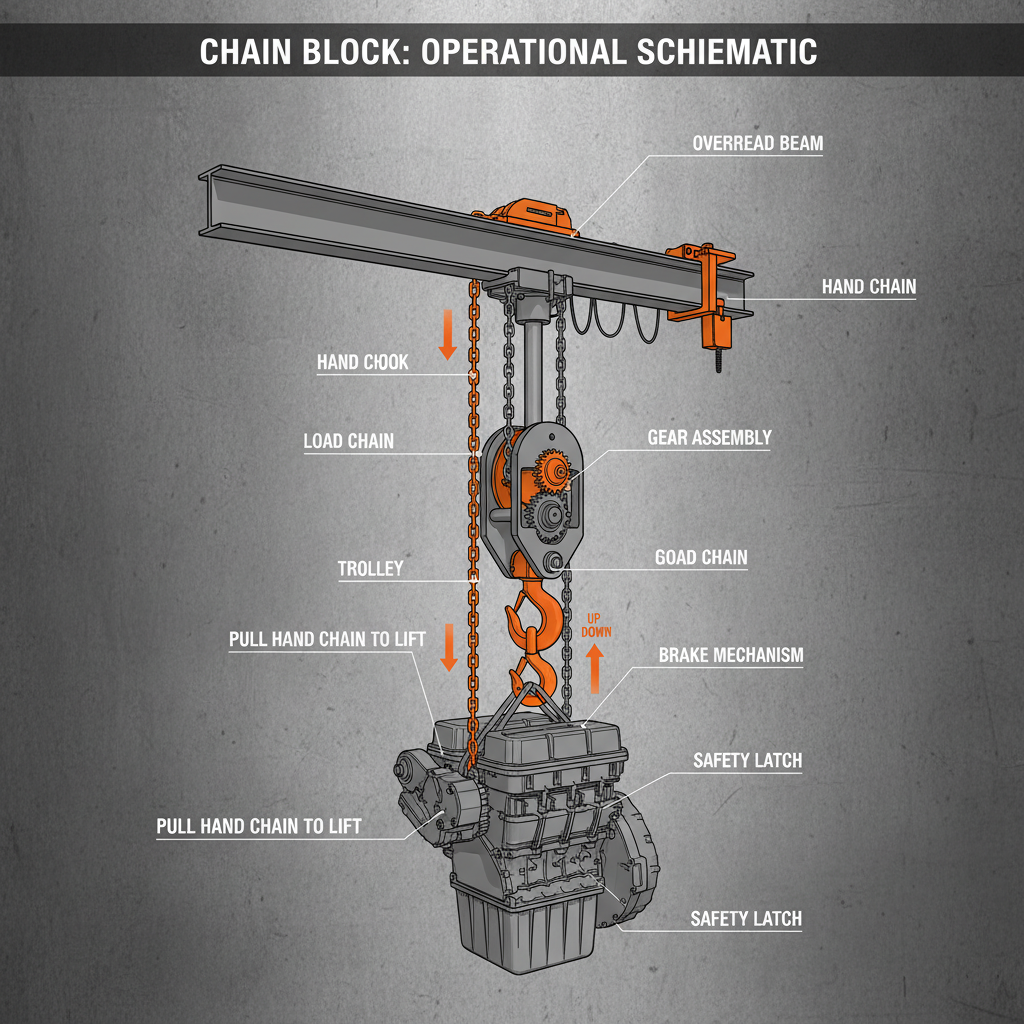
Load displacement in industrial settings relies on the conversion of input force into vertical lift. Manual chain blocks utilize a gear-and- sprocket system that provides a high mechanical advantage, allowing a single operator to lift several tons with minimal effort.
The efficiency of this process depends heavily on the quality of the load chain and the precision of the internal gearing. When a professional manufacturer implements high-accuracy machine tools, the result is a smoother operation with reduced friction and wear, extending the lifecycle of the equipment in abrasive environments.
To ensure structural integrity, lifting equipment must adhere to strict metallurgy standards. For instance, the use of manganese steel for hooks is standard because of its integrated casting properties and high load-bearing capacity, which prevents deformation under peak stress.
Beyond materials, the design logic focuses on "fail-safe" mechanisms. This includes the integration of automatic brakes that engage the moment power is lost or a handle is released, ensuring that a load never descends uncontrollably.
Certification processes such as ISO9001 and CE are not mere formalities; they validate that the product's rated capacity is verified through stress testing. A manufacturer's ability to maintain these standards across a 27,000 m2 production facility indicates a scalable quality supervision system.
The choice between a manual chain block and an electric hoist often depends on the frequency of use and the precision required. Manual tools offer portability and independence from power sources, making them indispensable for field maintenance and emergency setups.
The transition to electric assistance, such as the JPL-K1 Electric Hoist, represents a shift from labor-intensive lifting to efficiency-driven operations, where the primary goal is to reduce operator fatigue and increase cycle speeds.
However, the introduction of electricity introduces new variables. Power stability and motor heat dissipation become critical factors. High-quality motors utilizing thick copper wire spiral winding are preferred because they improve conduction and ensure stable operation under continuous load.
Electric winches with remote control have redefined workplace flexibility. By decoupling the operator from the winch unit, safety is significantly enhanced as the person can maintain a safe distance from the load. This is particularly critical when dealing with unstable loads or in confined spaces where direct contact is hazardous.
Performance is measured through rated line pull and motor efficiency. A winch capable of 13,500 LBS requires not only a powerful motor but also a robust cable diameter (typically around 9.5mm) and a precise drum size to prevent cable overlapping and premature wear.
In a typical industrial warehouse, the deployment of pallet trucks and mini electric hoists creates a seamless material flow. For instance, a manufacturer evaluating their assembly line might use a mini hoist for precision positioning of small components while employing a larger lever block for structural adjustments.
Outdoor construction sites present different challenges, where IP67 waterproof ratings for remote controls become essential. The ability to operate a winch from 30 meters away ensures that the operator can avoid mud, debris, and potential falling object zones, directly translating technical specifications into site safety.
Safety in hoisting has evolved from simple weight limits to intelligent protection systems. Modern equipment now frequently features overload protection functions that automatically cut off the power supply when excessive loads are detected, protecting both the hardware and the personnel.
Another critical advancement is the integration of anti-fall arresters and crane scales. By combining lifting power with real-time weight monitoring, operators can ensure they never exceed the safe working load (SWL) of their equipment, eliminating guesswork in the lifting process.
The industry is moving toward a "total safety" approach where the focus is not just on the strength of the hook, but on the interaction between the operator, the control system, and the environment. This holistic view is what distinguishes a basic tool from a professional lifting solution.
Choosing the correct tool requires a systematic analysis of the load, the frequency of movement, and the environmental constraints. A common error is selecting equipment based solely on maximum capacity without considering the "duty cycle"—how often the hoist will be used in a single shift.
For low-frequency, high-precision tasks, manual chain blocks and lever blocks remain the most cost-effective and reliable options. For high-frequency, repetitive lifting, the investment in electric winches or hoists is justified by the significant reduction in manpower and time.
Ultimately, the decision should be guided by a risk-benefit matrix that weighs the initial acquisition cost against the long-term operational efficiency and safety gains.
| Equipment Type | Primary Use Case | Key Constraint | Relative Suitability |
|---|---|---|---|
| Chain Block | Static Heavy Lifting | Operator Effort | High (Low Freq) |
| Lever Block | Tensioning/Pulling | Stroke Length | High (Precision) |
| Electric Winch | Dynamic Retrieval | Power Access | High (Efficiency) |
| Mini Electric Hoist | Light Workshop Lift | Load Capacity | High (Compact) |
| Pallet Truck | Horizontal Transport | Floor Surface | High (Logistics) |
| Crane Scale | Weight Verification | Calibration | Essential (Safety) |
To determine the correct capacity, you must calculate the total weight of the load, including any rigging hardware (slings, shackles, etc.). It is a critical safety rule to never exceed the Safe Working Load (SWL) indicated by the manufacturer. For safety, it is recommended to select a hoist with a capacity 20-25% higher than your maximum expected load to account for dynamic forces during lifting.
Remote-controlled electric winches offer three primary advantages: safety, efficiency, and flexibility. Safety is improved because the operator can stand away from the load. Efficiency is gained through electrical power, which eliminates manual cranking and reduces labor time. Flexibility is increased as the operator can move around the site to get the best vantage point of the load's movement.
Manganese steel is preferred due to its exceptional toughness and resistance to wear and impact. Integrated casting ensures there are no weak points or seams in the hook's structure. This material prevents the hook from snapping or bending under extreme tension, which is vital for preventing catastrophic failures during heavy-duty industrial lifting operations.
Overload protection typically works via a sensor or a thermal relay that monitors the current draw of the motor. When the winch attempts to lift a load that exceeds its rated capacity, the motor draws more current, triggering the protection circuit to automatically cut off the power supply. This prevents the motor from burning out and protects the structural components from mechanical failure.
Regular maintenance includes lubricating the load chain to reduce friction and wear, inspecting the chain for elongated links or cracks, and checking the hook for any signs of opening or deformation. It is also essential to verify that the braking system is engaging immediately and that all fasteners are secure. Professional recertification should be conducted annually by a qualified technician.
Yes, mini electric hoists are ideal for permanent installation in workshops for light-to-medium duties. They provide a consistent lifting solution for repetitive tasks. However, the installation must ensure that the mounting beam is rated for the hoist's maximum capacity and that the electrical supply is stable. For heavy industrial use, a more robust hoist system with a higher duty cycle rating is recommended.
The complexity of modern material handling requires more than just strong hardware; it requires a strategic approach to equipment selection. By understanding the technical nuances—from the metallurgical properties of manganese steel hooks to the efficiency of copper core motors—operators can build a safer and more productive workspace.
Whether utilizing the simplicity of a manual chain block or the advanced control of a remote-operated electric winch, the priority must always remain on verified quality and strict adherence to safety protocols. Investing in equipment from a certified manufacturer is the only way to ensure that productivity does not come at the expense of safety.