

Crane scale price, a critical factor in numerous industries, directly impacts operational efficiency and cost-effectiveness. Understanding the nuances of crane scale pricing – from initial investment to long-term maintenance – is vital for businesses involved in lifting and weighing operations. A well-informed decision regarding a crane scale's price can prevent costly downtime and ensure accurate measurements, safeguarding both financial resources and regulatory compliance.
Globally, the demand for precise and reliable crane scales continues to rise, driven by increased infrastructure projects, stringent safety regulations, and the growth of industries like construction, manufacturing, and logistics. The crane scale price varies significantly based on capacity, features, and brand reputation, requiring careful consideration to align with specific application needs. Factors like the scale’s intended use, environmental conditions, and required certifications influence the overall cost.
Essentially, crane scale price represents the total cost associated with acquiring and maintaining a crane scale system. This encompasses not just the initial purchase price of the scale itself, but also the costs of installation, calibration, ongoing maintenance, and potential repairs. Efficient management of this total cost is paramount for maximizing return on investment and maintaining safe and efficient lifting operations.
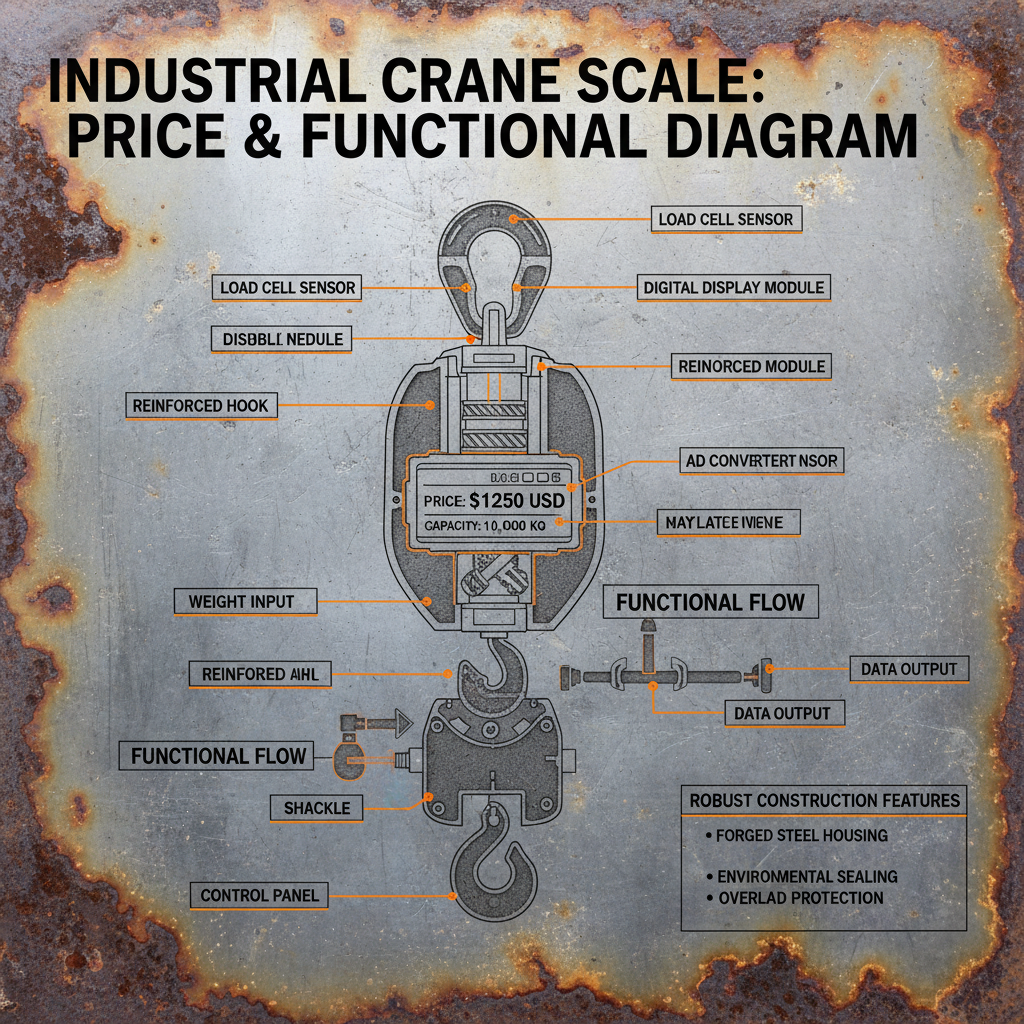
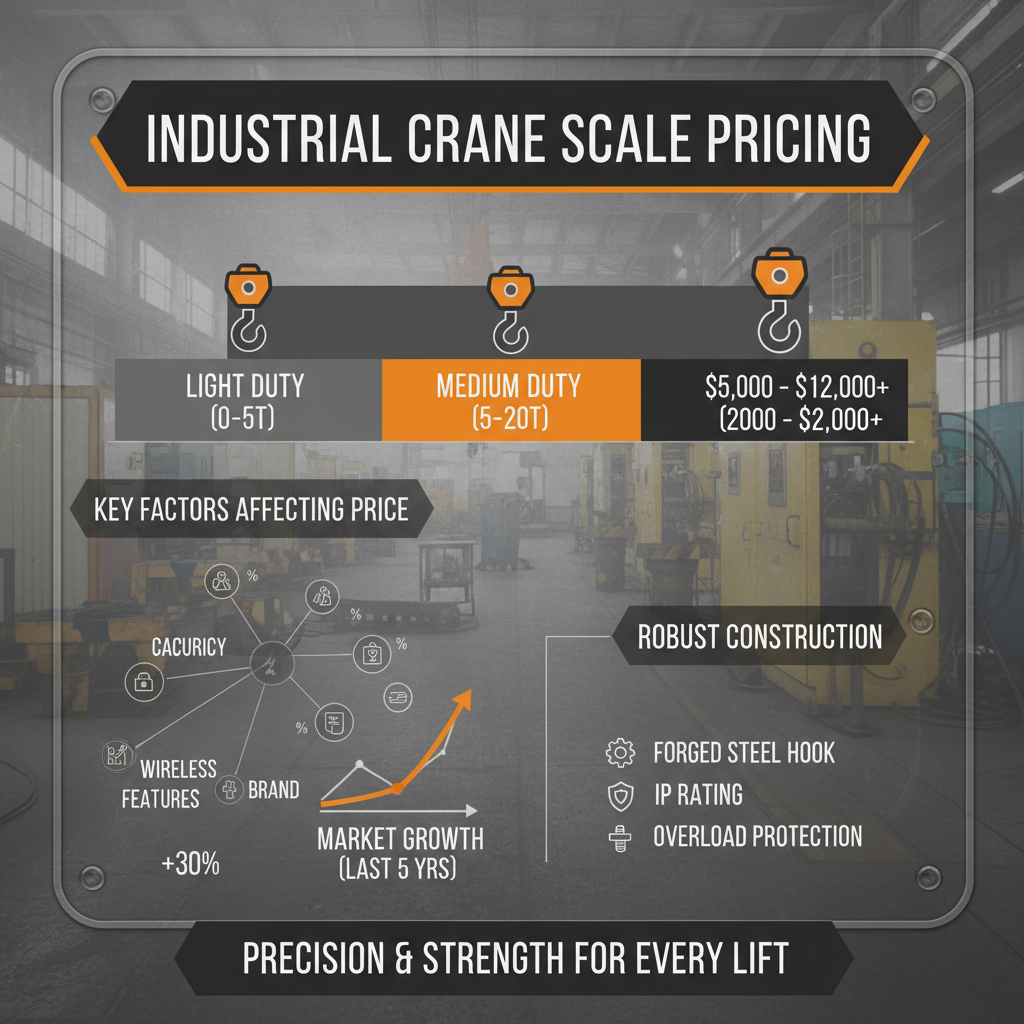
Accurately assessing crane scale price is not merely about finding the lowest upfront cost; it's about understanding the total cost of ownership. This includes considering factors like the scale’s lifespan, calibration frequency, potential repair costs, and the impact of inaccurate measurements on overall productivity. Ignoring these aspects can lead to hidden expenses and operational inefficiencies.
A thorough understanding of crane scale price empowers businesses to make informed investment decisions, optimizing their budgets and maximizing their return on investment. This knowledge also ensures compliance with industry standards and regulations, mitigating potential legal risks and protecting brand reputation.
The most significant factors affecting crane scale price include capacity, accuracy requirements, the presence of advanced features (remote displays, data logging, wireless connectivity), and any necessary certifications (e.g., explosion-proof). Higher capacity, greater precision, and more functionalities all contribute to a higher price point. The quality of the load cell also plays a critical role.
Crane scales should be calibrated at least annually, or more frequently depending on usage and industry regulations. Calibration services add to the total cost of ownership. Scales designed for easier calibration, or with self-calibration features, may have a slightly higher initial price but can reduce long-term maintenance expenses. Regular calibration ensures accuracy and compliance.
Digital crane scales typically have a higher upfront cost than mechanical scales due to their sophisticated electronics, sensors, and data processing capabilities. However, digital scales offer greater accuracy, features (like remote displays and data logging), and ease of use. Mechanical scales, while more affordable initially, may require more frequent calibration and offer limited functionality.
Yes, hidden costs can include installation, calibration, regular maintenance, repair services, replacement parts, and potential downtime if the scale malfunctions. It's essential to factor in these costs when evaluating the total cost of ownership. Choosing a reputable manufacturer with readily available service and support can help minimize these expenses.
Well-established brands with a proven track record of quality and reliability generally command a higher price. This is because they often invest more in research and development, quality control, and customer support. While more expensive upfront, reputable brands typically offer better performance, durability, and long-term value.
A well-maintained crane scale can typically last for 10-20 years, or even longer. Regular calibration, proper handling, and prompt repairs are crucial for maximizing its lifespan. Investing in a high-quality scale from a reputable manufacturer and adhering to recommended maintenance practices will significantly extend its service life and justify the initial crane scale price.
Understanding crane scale price transcends simply finding the cheapest option. It requires a holistic assessment of factors like capacity, accuracy, features, and long-term maintenance costs. A thoughtful investment in a quality crane scale ensures safety, efficiency, and regulatory compliance, ultimately contributing to a more profitable and reliable operation. Accurate measurements, facilitated by a dependable scale, are fundamental to success in diverse industries globally.
As technology continues to evolve, the future of crane scale price will be shaped by innovations in wireless communication, data analytics, and sustainable materials. Staying informed about these trends and partnering with reputable manufacturers will empower businesses to make informed decisions and maximize their return on investment. For more information and to explore our range of crane scales, visit our website: www.qyjuli.com.



 Afrikaans
 Albanian
 Amharic
 Arabic
 Armenian
 Azerbaijani
 Basque
 Belarusian
 Bengali
 Bosnian
 Bulgarian
 Catalan
 Cebuano
 China
China
 China (Taiwan)
 Corsican
 Croatian
 Czech
Czech
 Danish
 Dutch
Dutch
 Esperanto
 Estonian
 Finnish
 French
 Frisian
 Galician
 Georgian
 German
 Greek
Greek
 Gujarati
 Haitian Creole
 Hausa
Hausa
 Hawaiian
 Hebrew
 Hindi
Hindi
 Miao
Miao
 Hungarian
 Icelandic
 Igbo
Igbo
 Indonesian
 Irish
Irish
 Italian
 Japanese
 Javanese
 Kannada
 Kazakh
 Khmer
Khmer
 Rwandese
 Korean
 Kurdish
 Kyrgyz
 Lao
Lao
 Latin
Latin
 Latvian
 Lithuanian
 Luxembourgish
 Macedonian
 Malgashi
 Malay
Malay
 Malayalam
 Maltese
 Maori
Maori
 Marathi
 Mongolian
 Myanmar
 Nepali
 Norwegian
 Norwegian
 Occitan
 Pashto
 Persian
 Polish
 Portuguese
 Punjabi
 Romanian
 Russian
 Samoan
 Scottish Gaelic
 Serbian
 Sesotho
 Shona
Shona
 Sindhi
 Sinhala
 Slovak
 Slovenian
 Somali
 Spanish
 Sundanese
 Swahili
 Swedish
 Tagalog
 Tajik
Tajik
 Tamil
Tamil
 Tatar
Tatar
 Telugu
 Thai
Thai
 Turkish
 Turkmen
 Ukrainian
 Urdu
Urdu
 Uighur
 Uzbek
Uzbek
 Vietnamese
 Welsh
Welsh
 Bantu
Bantu
 Yiddish
 Yoruba
 Zulu
Zulu
 English