



Rough terrain pallet truck are specialized material handling vehicles designed to navigate challenging and uneven surfaces. They represent a critical component in logistics and supply chain management across a vast range of industries, from construction and agriculture to disaster relief and remote industrial operations. The ability to efficiently move palletized goods in environments where traditional forklifts are impractical makes them indispensable. Understanding their capabilities, applications, and ongoing innovations is vital for optimizing operational efficiency and responding to logistical hurdles in diverse settings.
The global demand for rough terrain pallet truck is driven by increasing infrastructure development, growth in e-commerce logistics, and a rising need for adaptable material handling solutions. According to a recent report by Market Research Future, the global rough terrain forklift market is projected to reach USD 2.5 billion by 2030, growing at a CAGR of 6.5% from 2023. This growth is particularly significant in emerging economies where infrastructure limitations are prevalent. These trucks directly address the problem of inefficient material transport in areas lacking paved surfaces or smooth access.
In essence, a rough terrain pallet truck is a forklift engineered with robust tires, increased ground clearance, and a powerful engine to operate effectively on unpaved or uneven ground. They bridge the gap between traditional forklifts limited to smooth surfaces and manual labor, offering a safer, faster, and more cost-effective method for handling palletized loads. This is particularly crucial in humanitarian contexts where rapid deployment of supplies is paramount, and in industrial settings where maintaining productivity in challenging environments is essential.
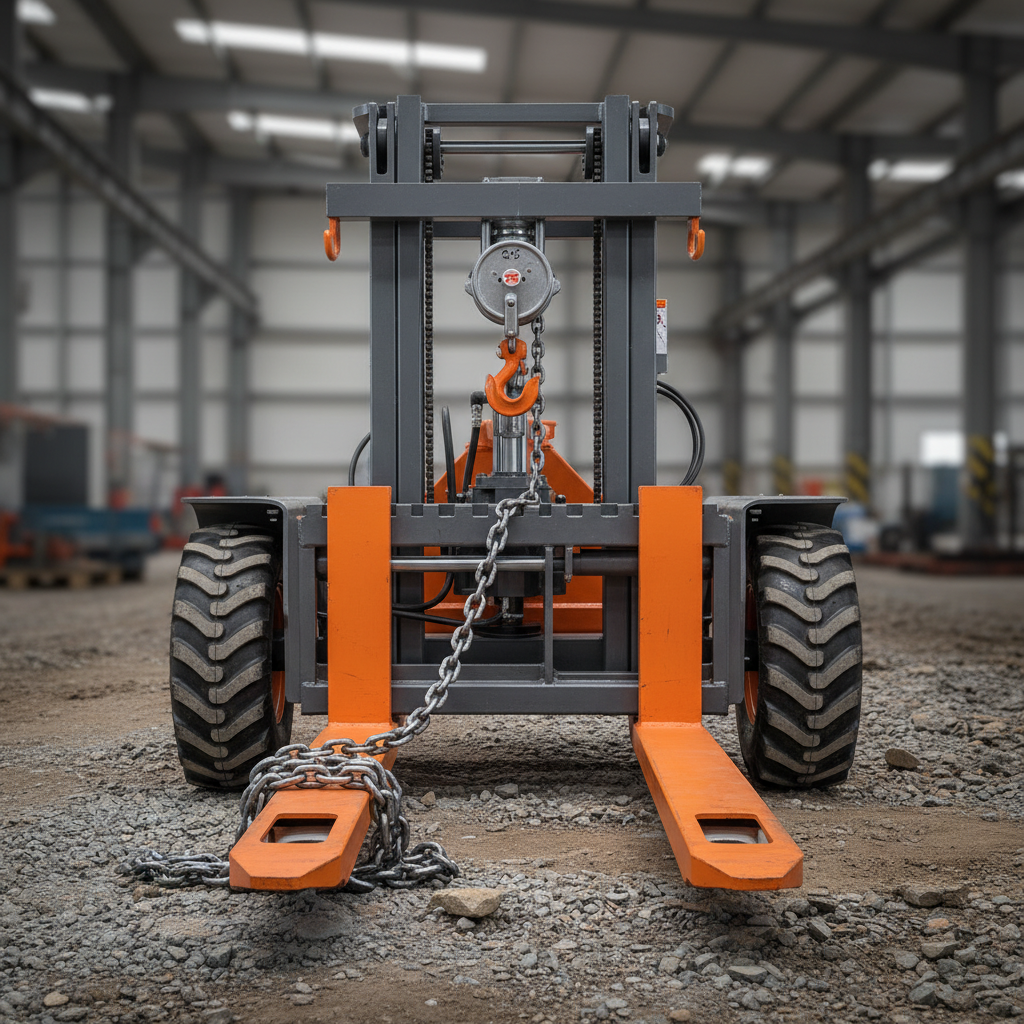
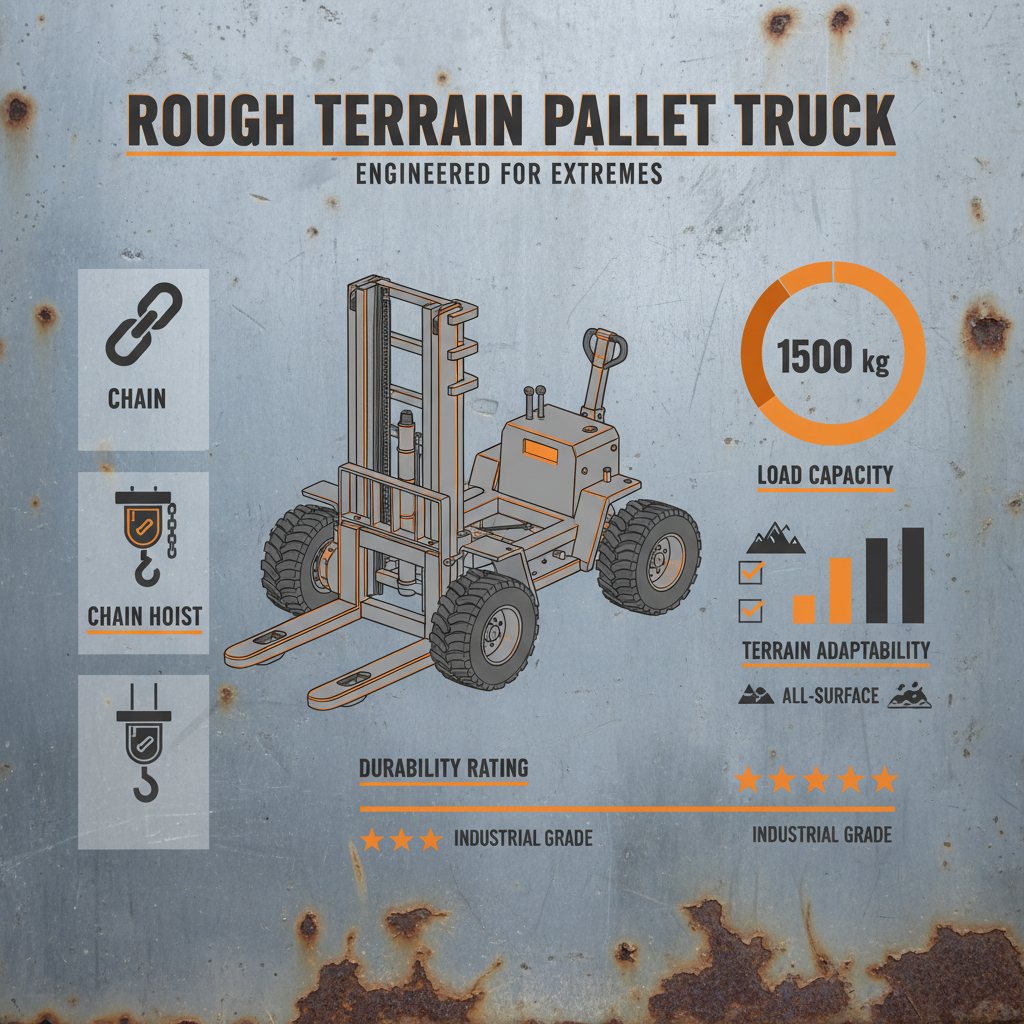
Rough terrain pallet truck are not simply forklifts adapted for off-road use; they are specifically engineered vehicles designed to overcome the limitations of conventional material handling equipment. Their robust construction, coupled with specialized tires and suspension systems, enables them to traverse muddy fields, rocky construction sites, and uneven warehouse yards with ease. This capability is crucial for maintaining productivity in environments where traditional methods are impractical or even dangerous.
The increasing demand for these vehicles reflects a broader trend towards greater logistical flexibility and adaptability. As businesses expand their operations into remote locations and face growing pressures to streamline supply chains, rough terrain pallet truck offer a valuable solution. They are particularly vital in industries reliant on outdoor operations or those operating in areas with limited infrastructure.
The primary difference lies in their ability to operate on uneven surfaces. Rough terrain forklifts have larger, pneumatic tires, increased ground clearance, and often four-wheel drive, allowing them to navigate muddy, rocky, or otherwise challenging terrains where standard forklifts would struggle. Their frames are also typically more robust to handle the added stress of off-road operation. This allows them to operate in environments where a standard forklift simply could not.
Essential safety features include a robust operator protective structure (OPS), seatbelts, load backrest extensions, and audible warning devices. Look for models with advanced stability control systems and features like tilt and load monitoring. Operator training is also crucial to ensure safe operation. Regular inspections and maintenance, including tire pressure checks and brake adjustments, are vital for preventing accidents.
With diligent maintenance, a well-built rough terrain pallet truck can easily last for 8-12 years, or even longer. This involves regular inspections, fluid changes, filter replacements, and timely repairs. Factors like the intensity of use, the operating environment, and the quality of the initial build will also influence its lifespan. Proactive maintenance significantly reduces the risk of costly breakdowns and extends the truck’s operational life.
Electric rough terrain pallet trucks have come a long way in recent years and are now capable of delivering comparable power and performance to their diesel or propane counterparts, particularly for many indoor/outdoor applications. Advances in battery technology have significantly increased runtime and power output. However, diesel and propane models generally still offer longer runtimes for demanding, continuous operation.
Rough terrain pallet trucks excel in disaster relief by providing a reliable way to move critical supplies—like water, food, medical equipment, and shelter materials—over damaged or impassable infrastructure. Their ability to operate independently of paved roads and their high lifting capacity makes them ideal for distributing aid directly to affected populations, even in remote areas. They can also assist in clearing debris and reconstructing damaged facilities.
Determining the correct load capacity involves assessing the weight of the heaviest load you'll be handling, factoring in the weight of the pallet itself, and adding a safety margin. Consider the terrain and any potential inclines the truck will need to navigate. It's crucial to choose a truck with a load capacity that exceeds your maximum requirements to ensure stability and prevent overloading, which can compromise safety and damage the equipment.
Rough terrain pallet truck represent a vital solution for material handling in challenging environments. Their unique capabilities—durability, traction, and stability—make them indispensable across a wide range of industries, from construction and agriculture to disaster relief and remote operations. Investing in these trucks translates to increased productivity, improved safety, and reduced operational costs.
Looking ahead, the future of rough terrain pallet truck is bright, driven by innovations in electric power, autonomous navigation, and digitalization. As businesses continue to expand into remote locations and prioritize sustainability, the demand for these adaptable and efficient vehicles will only continue to grow. To learn more about how a rough terrain pallet truck can benefit your operations, visit our website: www.qyjuli.com.




 Afrikaans
 Albanian
 Amharic
 Arabic
 Armenian
 Azerbaijani
 Basque
 Belarusian
 Bengali
 Bosnian
 Bulgarian
 Catalan
 Cebuano
 China
China
 China (Taiwan)
 Corsican
 Croatian
 Czech
Czech
 Danish
 Dutch
Dutch
 Esperanto
 Estonian
 Finnish
 French
 Frisian
 Galician
 Georgian
 German
 Greek
Greek
 Gujarati
 Haitian Creole
 Hausa
Hausa
 Hawaiian
 Hebrew
 Hindi
Hindi
 Miao
Miao
 Hungarian
 Icelandic
 Igbo
Igbo
 Indonesian
 Irish
Irish
 Italian
 Japanese
 Javanese
 Kannada
 Kazakh
 Khmer
Khmer
 Rwandese
 Korean
 Kurdish
 Kyrgyz
 Lao
Lao
 Latin
Latin
 Latvian
 Lithuanian
 Luxembourgish
 Macedonian
 Malgashi
 Malay
Malay
 Malayalam
 Maltese
 Maori
Maori
 Marathi
 Mongolian
 Myanmar
 Nepali
 Norwegian
 Norwegian
 Occitan
 Pashto
 Persian
 Polish
 Portuguese
 Punjabi
 Romanian
 Russian
 Samoan
 Scottish Gaelic
 Serbian
 Sesotho
 Shona
Shona
 Sindhi
 Sinhala
 Slovak
 Slovenian
 Somali
 Spanish
 Sundanese
 Swahili
 Swedish
 Tagalog
 Tajik
Tajik
 Tamil
Tamil
 Tatar
Tatar
 Telugu
 Thai
Thai
 Turkish
 Turkmen
 Ukrainian
 Urdu
Urdu
 Uighur
 Uzbek
Uzbek
 Vietnamese
 Welsh
Welsh
 Bantu
Bantu
 Yiddish
 Yoruba
 Zulu
Zulu
 English