

Selecting a reliable hand pallet truck exporter is more than a simple transaction; it is a strategic decision that impacts the entire internal logistics chain of a warehouse. In the material handling industry, the difference between a generic tool and a precision-engineered piece of equipment often manifests in long-term operational costs and worker safety.
For procurement managers and facility operators, the challenge lies in balancing the immediate cost of acquisition with the durability required for high-cycle industrial environments. A high-quality pallet truck must not only move loads efficiently but also maintain structural integrity under repetitive stress, which is where the expertise of a specialized manufacturer becomes critical.
This guide examines the technical benchmarks and procurement criteria necessary to evaluate international suppliers, ensuring that your investment aligns with the specific load capacities and environmental demands of your lifting and hoisting operations.

Evaluating the Strategic Role of Pallet Truck Export Partners

The global trade of lifting equipment is characterized by a wide variance in quality standards. When engaging with a hand pallet truck exporter, the primary objective is to ensure that the machinery complies with international safety certifications such as CE and GS, which serve as proxies for structural reliability and hydraulic stability.
A professional exporter does not merely move boxes; they provide the engineering bridge between a factory's design and the end-user's operational reality. This involves understanding the specific needs of different regional markets, from the high-humidity environments of Southeast Asia to the heavy-duty requirements of European logistics hubs.
By leveraging manufacturers like Qingyuan Juli Hoisting Machinery Co., Ltd, which integrates design, production, and sales, buyers can reduce the risks associated with third-party intermediaries and gain direct access to quality supervision systems and professional inspection equipment.
Core Technical Indicators for High-Performance Material Handling
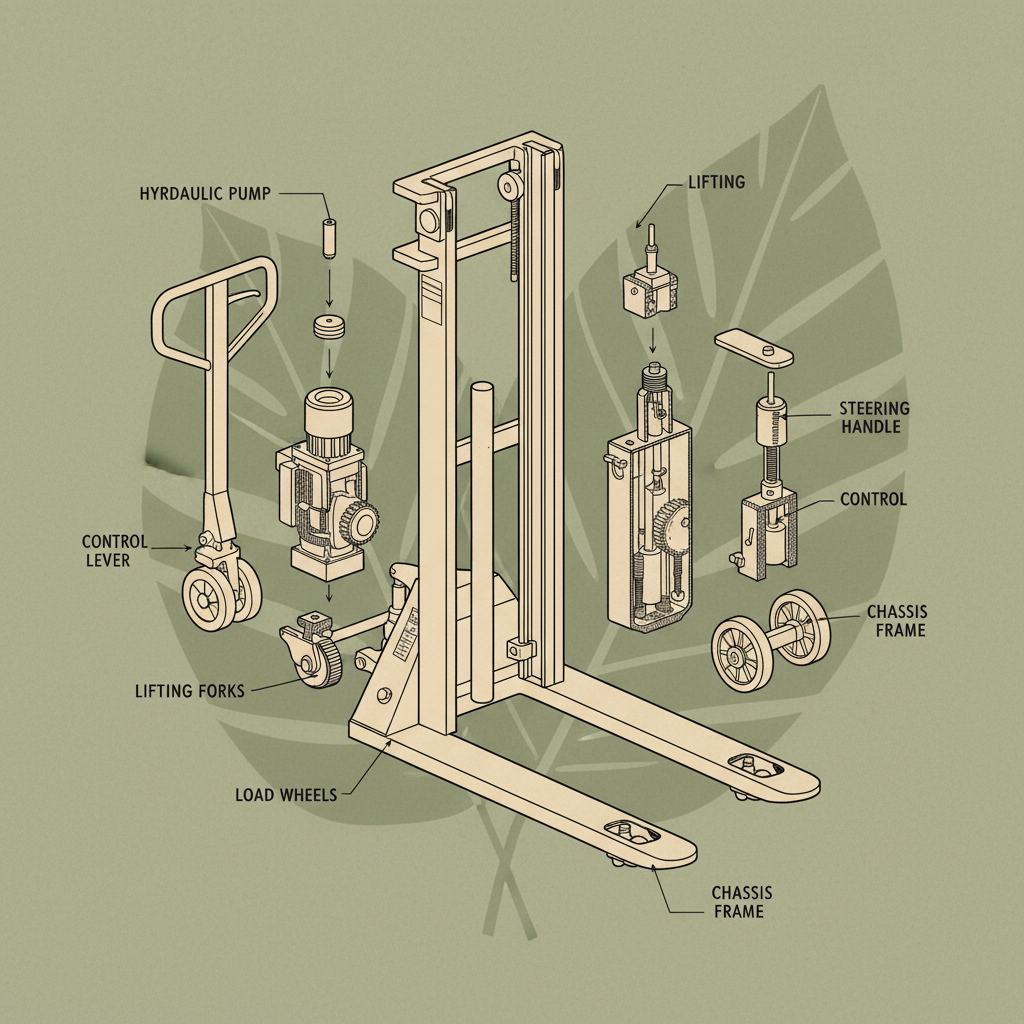
Technical excellence in hand pallet trucks is defined by the synergy between the hydraulic pump system and the chassis metallurgy. The pump must provide a smooth lift without hesitation, while the frame must resist deformation under maximum rated capacity, preventing the "bowing" effect common in lower-grade equipment.
Attention to detail in the manufacturing process—such as using high-accuracy machine tools and implementing rigorous testing protocols—ensures that the equipment maintains its precision. The integration of advanced manufacturing techniques, often adapted from high-standard Japanese methodologies, allows for a tighter tolerance in the pump assembly.
Furthermore, the choice of wheel materials (polyurethane vs. nylon) significantly affects the ease of movement and the protection of warehouse flooring, making the technical specification sheet a critical document for any buyer.
Operational Application Across Diverse Industrial Environments
The utility of a pallet truck extends beyond simple warehousing. In the manufacturing sector, these tools are indispensable for moving raw materials from receiving docks to assembly lines, where agility and a tight turning radius are paramount for navigating narrow aisles.
In cold storage facilities, the hydraulic fluid must be rated for low temperatures to prevent viscosity increases that could lead to sluggish lifting. Conversely, in high-temperature industrial zones, the equipment must resist thermal expansion and seal degradation to avoid leakage.
These tools also complement other hoisting equipment; for instance, a pallet truck handles the horizontal movement, while chain blocks or electric hoists manage the vertical positioning, creating a comprehensive material handling ecosystem within the plant.
Quantifying Equipment Efficiency and Load Stability Metrics
To objectively evaluate a supplier, procurement teams should look at performance metrics related to lifting effort, descent control, and structural deflection. A high-efficiency hydraulic system reduces the physical exertion required from the operator, directly impacting workplace productivity and reducing fatigue-related injuries.
When comparing standard equipment against precision-engineered models, the difference in "effort-to-lift" ratio is often significant. The following data illustrates the relative performance improvements when utilizing equipment from a certified, professional manufacturer compared to generic industry averages.
hand pallet truck exporter Performance Metrics
As indicated, the stability and durability scores are notably higher in professional-grade equipment, which translates to lower maintenance frequency and a longer total equipment lifespan, thereby reducing the total cost of ownership.
Critical Procurement Considerations for Global Supply Chains
Procuring material handling equipment from overseas requires a rigorous vetting process. Beyond the product specifications, buyers must evaluate the exporter's ability to provide after-sales support, spare parts availability, and the consistency of their quality control systems.
Verification of ISO9001 and CE certifications is a non-negotiable starting point. However, a deeper dive into the manufacturer's history—such as their evolution in product development from basic hoists to advanced pallet trucks—reveals their capacity for innovation and technical growth.
Logistics costs and lead times also play a critical role. A supplier with a robust export infrastructure can optimize shipping containers to reduce per-unit freight costs, providing a secondary form of value that exceeds the base product price.
Technological Shifts in Manual and Semi-Electric Hoisting
The industry is currently seeing a convergence between manual hand pallet trucks and semi-electric solutions. While manual trucks remain the gold standard for simplicity and reliability, the introduction of electric assistance for lifting or pulling is reducing worker strain in high-volume environments.
Innovation is also appearing in specialized equipment, such as the heat-safe mini electric hoists designed for temperatures up to 180 degrees. This trend toward "environment-specific" engineering suggests that future pallet trucks may feature adaptive materials for extreme cold or corrosive chemical environments.
As automation increases, the role of the manual pallet truck is shifting toward "last-meter" logistics, where human intuition and agility are still superior to fully automated guided vehicles (AGVs).
Comparative Selection Framework for Industrial Pallet Trucks
Choosing the right model depends on a matrix of load weight, floor type, and frequency of use. A lightweight truck may suffice for retail environments, but industrial manufacturing requires reinforced steel frames and heavy-duty hydraulic valves.
The following table provides a decision-making framework to help procurement officers match the equipment type to the specific operational requirement.
| Use Case Scenario | Recommended Model | Key Technical Priority | Maintenance Cycle |
|---|---|---|---|
| Light Retail/Office | Standard Duty Pallet Truck | Maneuverability | Annual Inspection |
| Heavy Industrial Plant | Reinforced Heavy-Duty Truck | Frame Rigidity | Quarterly Lubrication |
| Cold Storage/Freezer | Low-Temp Hydraulic Model | Fluid Viscosity | Bi-Annual Seal Check |
| Chemical Warehouse | Galvanized/Stainless Steel | Corrosion Resistance | Monthly Surface Audit |
| High-Volume Logistics | Semi-Electric Pallet Truck | Battery Endurance | Monthly Electrical Test |
| Narrow Aisle Storage | Compact Short-Fork Model | Turning Radius | Annual Wheel Check |
Ultimately, the goal is to align the equipment's capabilities with the facility's peak load requirements, ensuring a safety margin that prevents equipment failure during critical operations.
Frequently Asked Questions
Conclusion
The efficiency of a warehouse is only as strong as the tools used to move its inventory. Investing in high-quality material handling equipment from a proven manufacturer ensures that operational flow remains uninterrupted and that worker safety is never compromised.
By focusing on technical specifications, international certifications, and a strategic match between equipment type and use case, businesses can optimize their logistics costs. Those evaluating these systems can review detailed product and company information available through www.julihoisting.com to find the right fit for their hoisting and handling needs.