

The manual pallet truck, a cornerstone of modern logistics, plays a vital role in efficient material handling across a multitude of industries. From bustling warehouses to retail distribution centers, and even emergency relief operations, this deceptively simple tool facilitates the movement of goods, directly impacting supply chain efficiency and global trade. Understanding its capabilities, limitations, and evolving applications is crucial for professionals involved in logistics, warehousing, and disaster response.
Globally, the demand for efficient material handling solutions is ever-increasing, driven by factors like e-commerce growth, urbanization, and a need for optimized supply chains. According to the World Bank, efficient logistics are directly correlated with economic growth, and the manual pallet truck remains a critical component, particularly in environments where automation is cost-prohibitive or impractical. Its versatility and relatively low cost make it indispensable for small and medium-sized enterprises (SMEs) worldwide.
The impact of the manual pallet truck extends beyond mere operational efficiency. It contributes to workplace safety by reducing the physical strain on workers compared to manually lifting and carrying loads. Furthermore, its simplicity ensures ease of maintenance and operation, making it a reliable asset for businesses of all sizes. This simple yet powerful tool truly underpins much of modern commerce.
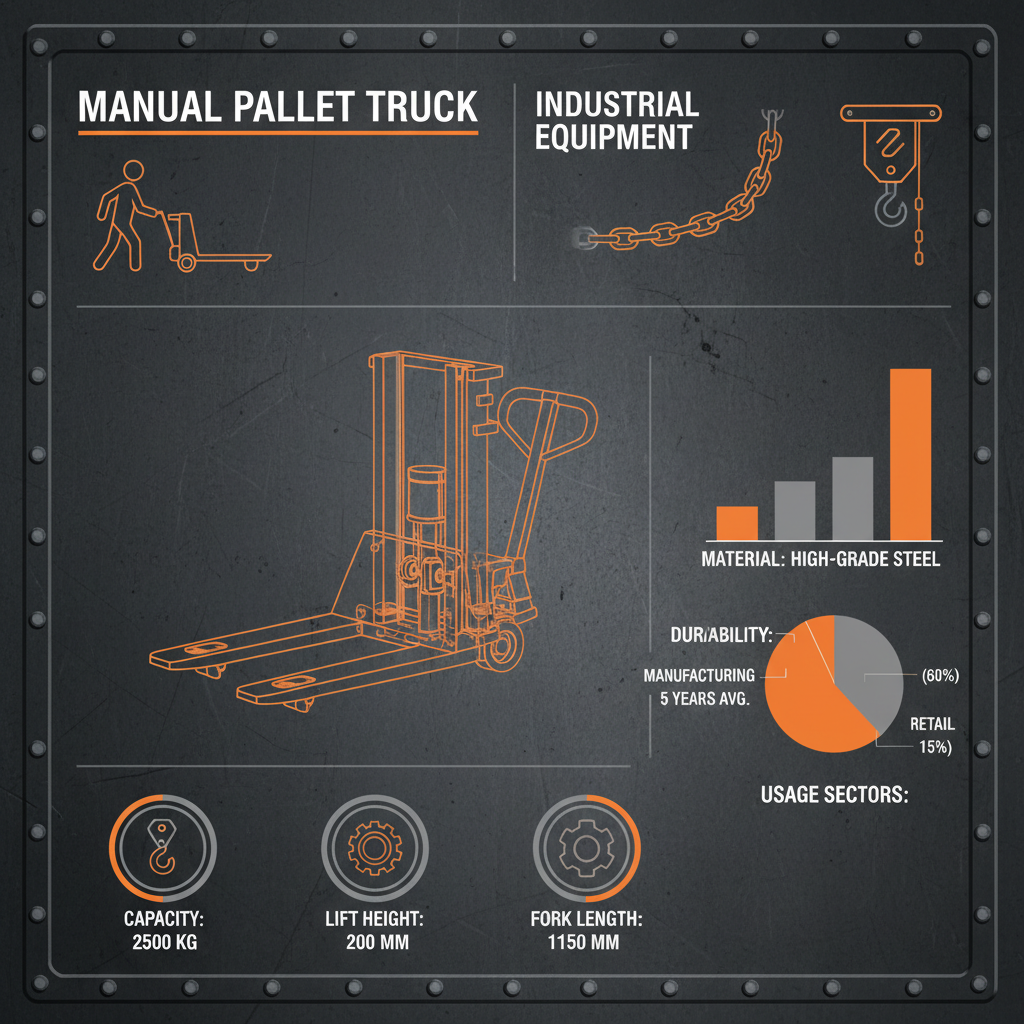
A manual pallet truck, sometimes referred to as a pallet jack, is a hand-powered tool used to lift and move pallets or skids loaded with goods. It’s an essential piece of equipment in countless warehousing and distribution scenarios, providing a cost-effective and efficient way to manage material flow.
The strength of the manual pallet truck lies in its simplicity and reliability. Requiring no external power source, it's readily deployable in diverse environments, from large-scale distribution centers to confined spaces where powered forklifts are impractical. This makes it an ideal solution for a wide array of industries.
A standard manual pallet truck typically has a weight capacity of around 2,500 kg (5,500 lbs). However, this can vary depending on the specific model and manufacturer. Always check the manufacturer’s specifications before using the truck to ensure you don't exceed its maximum load capacity. Overloading can lead to damage, instability, and potential safety hazards. Choosing the right truck for your needs is crucial for safe and efficient operation.
Regular maintenance is essential for ensuring the longevity and safe operation of your manual pallet truck. At a minimum, you should lubricate moving parts monthly, inspect the forks and wheels weekly, and check the hydraulic fluid level monthly. An annual thorough inspection of the frame and all components is also recommended. Following a preventative maintenance schedule will minimize downtime and extend the truck’s lifespan.
Always wear appropriate safety footwear when operating a manual pallet truck. Ensure the load is stable and evenly distributed on the pallet. Avoid traveling on uneven surfaces or slopes. Never exceed the truck's weight capacity. Be aware of your surroundings and watch for pedestrians. Always pump the handle slowly and smoothly to raise and lower the load, and never place hands or feet under the pallet while it's in motion.
The primary difference lies in the fork length. A standard manual pallet truck typically has forks long enough to accommodate most standard-sized pallets. A short manual pallet truck, also known as a pallet stacker, has shorter forks and is designed for handling pallets in confined spaces or for stacking pallets. Short pallet trucks often have a smaller turning radius, making them easier to maneuver in tight areas.
While manual pallet trucks can be used outdoors, it’s not always ideal. Exposure to the elements can accelerate wear and tear on the components. If using outdoors, consider a model with rust-resistant materials or coatings. Avoid using the truck in wet or icy conditions, as this can compromise traction and stability. Regular cleaning and maintenance are especially important for outdoor use.
Consider the weight of the loads you’ll be moving, the available space, and the type of pallets you’ll be handling. Determine the necessary fork length and width. Factor in the floor surface – smoother surfaces require less effort to maneuver. Assess your budget and consider the long-term cost of ownership, including maintenance and potential repairs. Choosing the right truck will optimize efficiency and safety.
In conclusion, the manual pallet truck remains an indispensable tool in modern logistics and material handling. Its simplicity, affordability, and versatility make it a cornerstone of countless operations, from warehousing and distribution to retail and disaster relief. Understanding its core components, practical applications, and future trends is essential for professionals seeking to optimize efficiency and safety in their respective fields.
Looking ahead, continued innovation in materials, ergonomics, and digital integration will further enhance the capabilities and value of the manual pallet truck. By embracing these advancements and prioritizing regular maintenance, businesses can maximize the lifespan and performance of this essential piece of equipment, ensuring a reliable and cost-effective solution for their material handling needs.



 Afrikaans
 Albanian
 Amharic
 Arabic
 Armenian
 Azerbaijani
 Basque
 Belarusian
 Bengali
 Bosnian
 Bulgarian
 Catalan
 Cebuano
 China
China
 China (Taiwan)
 Corsican
 Croatian
 Czech
Czech
 Danish
 Dutch
Dutch
 Esperanto
 Estonian
 Finnish
 French
 Frisian
 Galician
 Georgian
 German
 Greek
Greek
 Gujarati
 Haitian Creole
 Hausa
Hausa
 Hawaiian
 Hebrew
 Hindi
Hindi
 Miao
Miao
 Hungarian
 Icelandic
 Igbo
Igbo
 Indonesian
 Irish
Irish
 Italian
 Japanese
 Javanese
 Kannada
 Kazakh
 Khmer
Khmer
 Rwandese
 Korean
 Kurdish
 Kyrgyz
 Lao
Lao
 Latin
Latin
 Latvian
 Lithuanian
 Luxembourgish
 Macedonian
 Malgashi
 Malay
Malay
 Malayalam
 Maltese
 Maori
Maori
 Marathi
 Mongolian
 Myanmar
 Nepali
 Norwegian
 Norwegian
 Occitan
 Pashto
 Persian
 Polish
 Portuguese
 Punjabi
 Romanian
 Russian
 Samoan
 Scottish Gaelic
 Serbian
 Sesotho
 Shona
Shona
 Sindhi
 Sinhala
 Slovak
 Slovenian
 Somali
 Spanish
 Sundanese
 Swahili
 Swedish
 Tagalog
 Tajik
Tajik
 Tamil
Tamil
 Tatar
Tatar
 Telugu
 Thai
Thai
 Turkish
 Turkmen
 Ukrainian
 Urdu
Urdu
 Uighur
 Uzbek
Uzbek
 Vietnamese
 Welsh
Welsh
 Bantu
Bantu
 Yiddish
 Yoruba
 Zulu
Zulu
 English